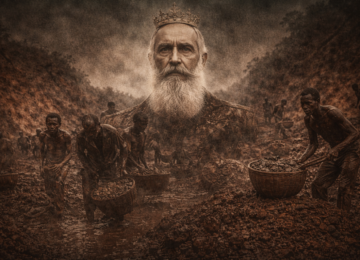
One of the most complicated and contentious individuals in contemporary African history is Robert Gabriel Mugabe. Some saw him as an unyielding autocrat whose policies crippled Zimbabwe’s economy and cut it off from the rest of the world, while others saw him as a fearless revolutionary who battled for freedom and black empowerment. A man who rose from colonial oppression to become a liberator and then ended his lengthy rule as a symbol of political excess and defiance, his story is one of ambition, intelligence, and contradiction. Mugabe gained the moniker “The Lone Wolf of Africa” for his journey, which was characterized by both genius and cruelty.
Early Life and Education
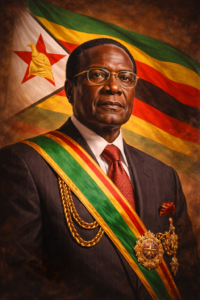
Mugabe, who was born in Kutama, Southern Rhodesia (now Zimbabwe), in 1924, was brought up by a devout mother who placed a high importance on education. He became one of Africa’s most educated leaders after completing several degrees in history, economics, and education. However, Mugabe received a political education in addition to an academic one. He experienced firsthand the inequities of racial segregation and white minority dominance while living under British colonial control. These encounters strengthened his resolve to fight for his people’s freedom.

Rise to Power and Independence
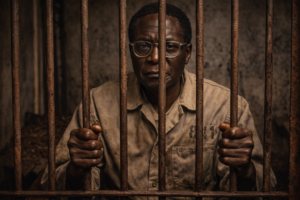
As the head of the Zimbabwe African National Union (ZANU), a group dedicated to bringing an end to white rule in Rhodesia, Mugabe’s ascent to prominence began in the 1960s. The colonial government imprisoned Mugabe for ten years because of his activism, but he continued to write, research, and motivate his supporters during his incarceration. After being freed in 1974, he immediately assumed leadership of the nationalist movement and emerged as its most prominent and resolute leader. He was feared and admired for his unwavering will, strategic mind, and political tenacity.
The Birth of Zimbabwe
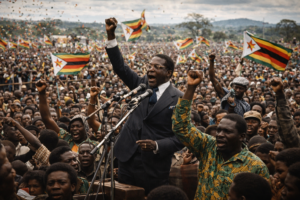
Following years of negotiations and guerrilla warfare, Zimbabwe gained her independence in 1980, and Mugabe was appointed as its first prime minister. Hope and reconciliation characterized his early years in office. His famous call for white farmers to remain and contribute to the economic recovery was part of his racial harmony policy. Early in the 1980s, Zimbabwe prospered thanks to its robust healthcare system, enhanced education, and robust agricultural output. People hailed Mugabe as a representation of black leadership and post-colonial achievement throughout Africa and beyond.
The Dark Years: Authoritarianism and Decline
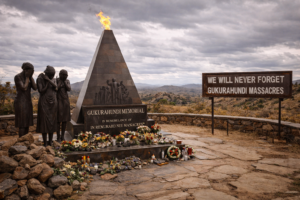
However, the realities of power quickly replaced the ideals of liberation. Mugabe’s administration consolidated power and repressed dissent as it became more authoritarian. The Gukurahundi massacres in the early 1980s, when government forces ruthlessly persecuted the Ndebele population in western Zimbabwe, were one of the darkest periods of his reign. Mugabe’s campaign against dissidents claimed thousands of lives, but it left the country with severe political and ethnic wounds.
Land Reforms and Economic Collapse
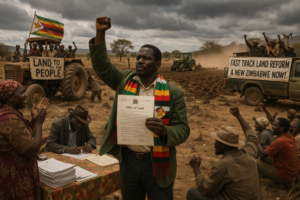
Mugabe’s leadership had become more rebellious and solitary by the 1990s. He turned to policies that tapped into nationalism and anti-colonial sentiment in response to mounting criticism and economic difficulties. His land reform program, which sought to redistribute land from white commercial farmers to black Zimbabweans, was his most contentious action in 2000. Although historical justice served as the foundation for the concept of land reform, its implementation was violent and disorganized. Without adequate planning, productive farms were taken, which resulted in a collapse in agricultural output and a catastrophic financial crisis.
The Legacy of the Lone Wolf
The paradox of African leadership in the post-colonial era must be addressed in order to understand Mugabe. He was an independent hero who ended up serving as a warning about the corrupting effects of power. His life reflected the struggles of the continent: emancipation and hope, followed by decline and division. People knew Mugabe as “The Lone Wolf of Africa” because he embraced isolationist inclinations, refused to compromise, and insisted on doing things his way. He followed his own path because he firmly believed in his own destiny, frequently going against the wishes of his people and even the opinions of the world.
Death and Historical Reflection
At 95 years old, Mugabe passed away in 2019, leaving a legacy as complex as the country he governed. Critics view him as a leader who wasted that legacy through oppression and mismanagement, while his supporters see him as the man who gave Zimbabwe its identity and defied colonialism. Mugabe embodied an intellectual warrior, but his refusal to relinquish power overshadowed his vision of liberation, and he came to symbolize both the triumphs and the tragedies of African independence.
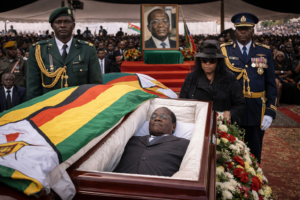
Robert Mugabe’s passing in 2019 closed a controversial yet defining chapter in Africa’s story.
Conclusion
Robert Mugabe, defiant, brilliant, and profoundly flawed, stood alone in the end. As a reminder that the fight for freedom does not end with independence and that leadership without humility has the power to transform freedom into oppression, his story is both inspirational and cautionary. He was fierce, unafraid, and unavoidably controversial; the Lone Wolf of Africa.