




































Introduction
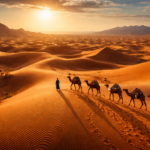
Spanning the entire region of North Africa, the Sahara Desert is the dominant feature on the continent, comparable to a great ocean of sand and rock. Not only is it the largest hot desert in the world, but it also means much more. Over centuries, the Sahara Desert has played an important role in the shaping of the history of the entire continent, being not only a physical barrier, but also a link between civilizations. Camels crossing the desert sands carried gold, salt, and even books and ideas of different people. Ancient empires flourished at the borders of the desert, and the lands there have been testing the limits of human endurance and inspiring many stories and myths about the area. Even today, the Sahara Desert influences Africa’s climatic conditions and peoples’ lifestyle in a great way.
What Is the Sahara Desert?
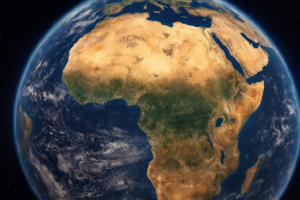
The Sahara Desert is the largest hot desert in the world, occupying about 9.2 million square kilometers of the northern regions of Africa. Its area includes more than ten countries such as Algeria, Libya, Egypt, Mali, Niger, Chad, Sudan, Mauritania, Tunisia, and Western Sahara. Contrary to popular belief, however, the Sahara Desert consists not just of large sand dunes.
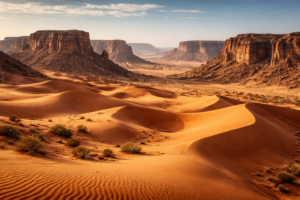
There are a lot of different features of this territory. In addition to towering sand dunes, the desert boasts rocky platforms called hamadas as well as flat areas with large deposits of gravel called regs. The Sahara Desert is also famous for its salt deposits, extinct volcanoes, and dried out river beds that tell the story of times when there were lakes and rivers there. Moreover, the desert hides huge deposits of underground water resources.
How Big Is the Sahara Desert?
The Sahara Desert is spread across a distance of 9.2 million square kilometers; that’s almost one-third of the African continent. From the west, it is stretched up to 4,800 kilometers to the Red Sea on its eastern side. In addition, it has an area of almost 1,800 kilometers stretching from north to south. This makes it almost equal to the geographical size of the United States and China.
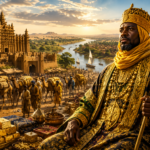
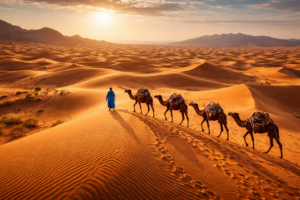
The Sahara has played a key role in determining the history of Africa for several thousand years. Being the largest desert in Africa, it created barriers in connecting people and civilizations across the northern part of Africa to those living in other parts. However, it also acted as a bridge for these people. Camel caravans traversed the desert carrying gold, salt, ivory, books, and thoughts from the mighty kingdoms of Ghana, Mali, and Songhai with North Africa and the Mediterranean world.
Climate and Extreme Conditions
The climate in the Sahara Desert is one of the most extreme in the world. The daytime temperature can reach up to 45°C and then fall down to almost freezing during nighttime as the desert air holds little moisture, thus cannot retain any heat. It barely rains anywhere within the desert, and even when it does, the rainfall might not amount to anything for several years straight. The desert has strong winds blowing constantly, resulting in the formation of huge dunes and dust storms.
However, the influence of the desert spreads beyond its boundaries and can be felt on a global scale. Dust filled with minerals carried away by the wind moves over the entire Atlantic Ocean and reaches the Amazon rainforest. This is how the desert keeps the nutrients of the soil renewed. Dust storms affect the air quality and weather conditions in many countries in Europe, Caribbean, and Americas.
Life in the Sahara Desert
In spite of the extreme conditions, the Sahara Desert has managed to become an ecosystem inhabited by plants and animals who have developed unique survival methods throughout many millennia.
Plants
The plants in the Sahara Desert have managed to find various ways to save water and withstand prolonged periods of drought. Acacia trees have long roots that help them obtain water from deep layers of the soil, while shrubs and desert grasses are able to live through dry spells thanks to their ability to require almost no water to survive. There are even some species of plants that collect water inside of their stems and leaves.
Animals
There are unique animals that inhabit the Sahara Desert due to their special adaptive qualities. The camels are great animals used for transportation in the desert because of their ability to move without any problems while having very limited access to water sources. Fennec foxes are able to maintain normal body temperature due to their big ears. Addax antelopes are known for their ability to survive on minimal vegetation.
Human Presence
Humans have existed in the Sahara and traveled through it for thousands of years, proving how one of the toughest environments on the planet is livable. Groups of nomads like the Tuareg, Toubou, and Berber became adept at traversing the desert before national boundaries cut up Africa. They relied on their expertise of stars, oases, and weather patterns to successfully lead caravans across immense expanses of desert sand and rocks.
These trading routes connected the wealth of West African gold with the Sahara salt, cities in North Africa, and Mediterranean markets. In addition to material commodities, these routes helped transfer ideas, cultures, languages, and religions between groups. The wealth created by this system made possible the development of wealthy kingdoms, including Ghana, Mali, and Songhai, and made cities like Timbuktu famous for their role in international trade and education. Contrary to popular belief, the Sahara was not a void but acted as a connection point between civilizations and shaped the politics, economics, and culture of Africa.
The Sahara’s Hidden History
Underneath its huge dunes and plains of rocks, the Sahara holds clues for a very different past. The ancient rock art found within the desert region shows giraffes, elephants, cows, rivers, fish, and vibrant human settlements. This rock art shows that thousands of years ago, the Sahara was a green landscape with plenty of grasslands, rivers, lakes, and wildlife. This contrasts greatly with the present-day image of the Sahara that we see.
As time progressed, and the climate became hotter and drier, humans changed and adapted to their surroundings in various ways. This included adapting to changes in their living areas by moving, forming new economic means, and creating new trade routes through the growing desert. This adaptation took place for some communities in the Nile Valley and other green spaces. For others, adaptation meant becoming adept at surviving in the desert. In this way, the rock art in the Sahara provides us with an insight into Africa’s environment history and its resilient people.
Why the Sahara Desert Matters Today
The Sahara Desert still influences Africa and the rest of the world in many ways other than the physical features of the desert itself. Scientific studies of the desert help scientists learn more about climate changes, desertification, and weather phenomena that affect ecosystems across continents. Due to the abundance of sunlight in the region, the Sahara becomes one of the most attractive places in the world when it comes to using renewable energy sources.
The desert also serves as a key pathway used for the purposes of migration and trade just like centuries ago, whereas its caravans and archeological sites provide evidence of the long-standing history of African civilizations. Indigenous groups such as the Tuareg continue to maintain their traditional practices that have survived over many years. Nowadays, Africans see the Sahara not as a deserted wasteland, but rather as a repository of their history, as well as an object of pride, since its landscapes serve as evidence of adaptation to changing environment throughout thousands of years.
Conclusion
The Sahara Desert is not just the largest hot desert in the world; it is one of the most significant natural features of Africa with a history that stretches back millions of years geologically and thousands of years culturally. Its harsh conditions have been a test of survival and a place of exchange between civilizations and preservation of artifacts from cultures that thrived before the desert had taken its current shape. To this day, the Sahara continues to have an impact on the world’s climate and support unique ecosystems and discoveries.
Exploring the Sahara is like reading about the history of Africa. Each dune, rocky plateau, and old trade route carries with it tales of survival, adaptation, and connection between civilizations. Not just an uninhabited desert, the Sahara continues to be a powerful symbol of Africa’s strength and proof that some of the continent’s best assets do not reside solely in its people.




Pingback: 10 African Destinations Every Traveler Should Experience - Real African Diary