









































Introduction
The Nyamwezi were some of the most influential groups in the history of Tanzania. For many years, they were at the forefront of building and maintaining the trade routes, organizing themselves politically, creating music, and engaging in religious practices in East Africa. They were not just marginal players in historical development; they were very much at the core of it. Through their activities, they ensured that crucial trade connections were made possible, linking the interior of East Africa to the Swahili coast and enabling the transfer of goods and cultures between different places. They were the movers behind caravans that traded items like salt and ivory across thousands of miles of Tanzania.
Learning about the Nyamwezi is the same as learning about the heartbeat of central Tanzania. This is because through their mobility and organizational capacity, as well as their culture, the Nyamwezi played a defining role in the region.
Who Are the Nyamwezi?
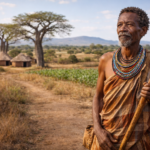
The Nyamwezi tribe is mostly located in the Tabora Province, a place historically referred to as Unyamwezi, meaning the land of moon. This term describes both the remoteness of the location and its orientation. Originally, the coastal merchants used the term “the west” to describe people who lived away from the coasts, thus highlighting the position of the Nyamwezi as gatekeepers to the inland African continent.
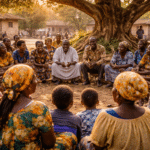
The Nyamwezi are famous for well-structured chiefdoms. Order and fairness were some key attributes of the political system of this tribe. Indeed, chiefs led the communities in which they were based; however, they had other people helping them in the governing process. Councils of elders helped chiefs make wise decisions. Besides, spiritual leaders played a significant role in advising about morality and other issues related to the functioning of this social structure. These political formations emerged many years ago, long before the colonization of the region by the foreigners. Hence, they demonstrate the ability of people to build complicated societies without the influence of other civilizations.
Trade, Caravans, and East African Connectivity
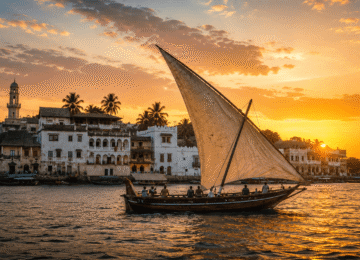
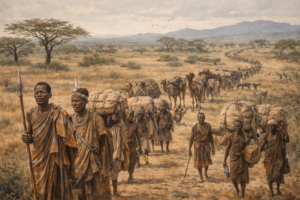
The Nyamwezi emerged as key players in the area of caravan trading in the 18th and 19th centuries. As major traders within the interior of East Africa, the Nyamwezi played an important role as the link between the Swahili Coast and the lakes and interior regions of East Africa. Caravan trading enabled the Nyamwezi to move different commodities from one place to another over large distances. Some of the most valued commodities were ivory, salt, copper, and agricultural produce among others. Caravan traders had to be disciplined, organized and very familiar with both routes and seasons when it came to transportation. The Nyamwezi caravan trading was known for reliability and efficiency and helped in bringing people together by means of trade and cultural interaction.
A large number of the caravan routes used during the Nyamwezi period went through Tabora which made it a commercial town. It acted as an important junction where different merchants met for business transactions. The emergence of the Nyamwezi as caravan traders contributed to Unyamwezi being one of the main centers of movement in East Africa. Trade was not only about the exchange of goods. It was also about the exchange of language, ideas, and culture. The Nyamwezi, through these trade routes, impacted the Swahili trade networks.
Social Structure and Community Life
The social organization among the Nyamwezi people is based on extended family groups. There is also clan membership, which plays an important part in forming one’s identity, inheriting rights, and belonging to a broader family unit that exists beyond generations. The elderly exercise power not by coercion but through their wisdom and experience as well as being the arbitrators whenever there is disagreement among community members.
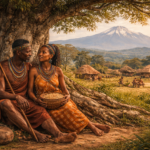
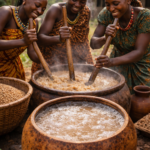
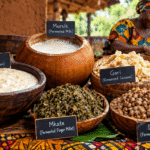
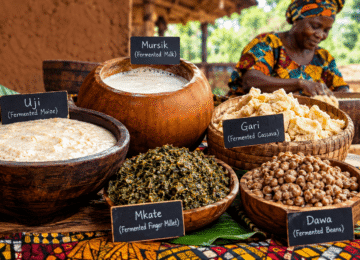
Marriages help to form a connection between different families as well as clans. Rituals that are performed by the people either during the harvest season or at initiation ceremonies help to reinforce their commitment to certain values. In such a manner, the Nyamwezi maintain their sense of collective identity. These people are distinguished by the high level of respect for their elderly, collective responsibility, diligence, and strict adherence to their agriculture practice. Such values are passed down from one generation to another. Agriculture is the core occupation among the people under discussion. This is demonstrated by planting crops such as maize, cassava, rice, and tobacco.
Spiritual Beliefs and Ancestral Connection
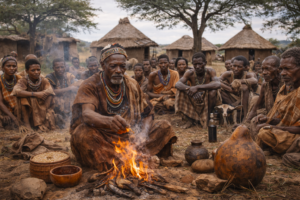
The spirituality of the Nyamwezi acknowledges the existence of a higher deity and worships the spirits of the ancestors, who act in the lives of people. The dead do not stay aloof but act as intermediaries between the living and the divine. They act as guides, protectors, and at times disciplining the society if balance is not maintained. Practitioners of spirituality guide the community in undertaking ritual ceremonies in the cases of illnesses, calamities, or imbalance in the society. In their role, they decipher signs, pray and undertake other rituals aimed at restoring balance in the physical and spiritual realm. Spiritualism is not an independent activity but one that is integrated into daily practices.
Spirituality plays a significant part in important events in the community. These include planting, harvesting, blessing children, marriage, and conflict resolution. Through all these activities, the Nyamwezi ensure that their relationship with the spirit world is continuous. Through all this, spirituality is a living practice for the Nyamwezi.
Music, Dance, and the Power of Rhythm
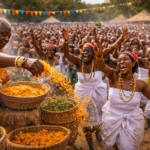
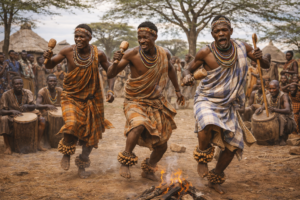
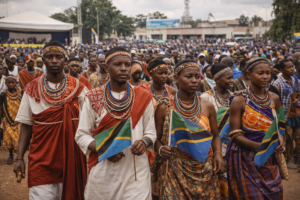
Musical performances form an integral part of Nyamwezi cultural practices. Drums, rattles, and string instruments are used by the Nyamwezi for the purposes of celebrating special occasions such as a bountiful harvest, rites of passage, and narrating tales. Rhythm dictates movement and provides a language. Another unique characteristic about this community is their distinctive dance moves, which are performed in line with rhythmic beats. The dancers usually wear special costumes according to the event and their clan affiliation. Music plays a crucial role in maintaining historical memory. Historical narratives including migration, lineage, valor, and moral teachings are passed on through music from one generation to another.
Music contributes to the building of cultural identities and creates unity among members of the community through various forms of expression.
Leadership and Historical Figures
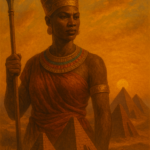
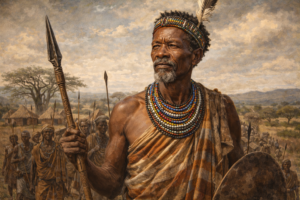
The Nyamwezi gave rise to notable leaders in the 19th century, especially Mirambo. Mirambo was an influential ruler who exerted considerable influence by consolidating power among various communities in his realm. The leader strengthened the structure of the military and established disciplined governance among these groups. With his skills in negotiation, diplomacy, and resistance against traders, he brought the territory of Unyamwezi to a level of significance. Leadership requires authority and prudence. Mirambo was a skilled leader who managed to unite different groups using diplomacy, trading, and internal cohesiveness. In this respect, he was able to create a relatively stable environment.
Leadership in the Nyamwezi society involves several functions such as taking care of the subjects, handling available resources, and promoting social cohesion. It entails creating harmony between development and peace.
Colonial Encounters and Transformation
However, with the advent of German colonialism at the end of the nineteenth century, the freedom of the Nyamwezi was challenged. New political systems, altered trading networks, and modified economic systems were implemented. Ultimately, this caused the loss of sovereignty and the subjugation of local leadership. Nonetheless, this process of colonial subjugation did not result in cultural extinction. Despite this period of turmoil, the Nyamwezi retained their language, upheld their traditions, and maintained their agricultural methods. They modified some aspects as required, without ever forgetting their cultural essence.
As such, it can be argued that adaptation in response to colonial challenges was a major attribute of the Nyamwezi culture. They readily embraced foreign influences without sacrificing their basic tenets. This allowed for the continuous development and transmission of their unique culture through many generations. In this regard, the concept of resilience took on a new meaning for the Nyamwezi people.
Contemporary Nyamwezi Identity
Currently, the Nyamwezi are fully integrated into the lives of Tanzania as a nation. This is reflected by their contribution to education, political process, and economic activities of the country. At the same time, the cultural foundation of the tribe is still maintained despite all changes. Festivals, oral tales, and music events play an important role in the preservation of identity of the group. In this regard, the young representatives of the nation find themselves at the crossroads between different realities. They study and work in urban areas and enjoy modern education, but still keep their traditions and use the language. The people are engaged in rituals and follow the customs wherever they live.
Tradition is not something static for this ethnic group. Instead, it is something alive and constantly updated with new ideas and concepts of today’s world. Thus, cultural traditions and identity are preserved consciously. Identity changes as time goes by. However, the main thing about this identity is maintained despite these changes. The identity of the tribe is evolving rather than disappearing.
Why Nyamwezi Culture Matters
The Nyamwezi people remind East Africa of the critical significance of the inland regions of the continent in the creation and evolution of civilizations. The caravans facilitated trade, and by doing so, they defined the economic pathways that linked distant peoples and made the center of the country a melting pot of various influences. Through trade, they impacted movement, interactions, and the spread of ideas. The musical heritage of the Nyamwezi people impacts the cultural identity of modern-day Tanzanians. Additionally, their agricultural techniques showcase their resilience and adaptive skills, which are essential traits that could be adopted in semi-arid areas.
In addition to these positive impacts, the Nyamwezi people offer a lesson about continuity. They prove that a nation can progress without losing its culture. The people have kept the majority of their traditions alive, including language and social organization. Therefore, the study of the Nyamwezi people allows understanding that the development of East Africa is closely connected to inland areas as well as coastal regions.
Conclusion
The Nyamwezi are not remnants of a long-lost civilization. They are still alive and thriving within the social and cultural context of modern-day Tanzania. It is not the end of the story but rather its continuation; the continuation of tales about trade, religion, politics, farming, and arts. Their culture is developing constantly but always staying true to its traditions and beliefs. Every poem, ritual performance, and harvested crop bears the imprint of the old Unyamwezi civilization. It teaches us that history is not about what has been done in the past but what people carry into the future.
In the end, it is precisely this sense of continuity that makes the Nyamwezi who they are. Understanding it means comprehending the essence of a nation that has managed to preserve itself despite all the challenges posed by the passing centuries.