










































































Introduction
Every year the rolling hills of KwaZulu-Natal are alive with color, song, and the beat of ancestors’ rhythm as thousands of young women in bright beadwork and traditional attire make their way to the annual Zulu Reed Dance, known locally as Umkhosi woMhlanga. It is not just a festival; it’s a living link between Africa’s past and present. A ritual of purity, unity, and timeless celebration of womanhood. In an age where modernity threatens to blur lines of cultural identity, the Zulu Reed Dance has stood proud, reminding that African traditions are not relics but roots.
A Tradition Rooted in Purity and Respect
The Zulu Reed Dance has its origins back in the era of Shaka Zulu as he unified the Zulu Nation from many tribes into one. The Reed Dance was created to show off the Zulu culture, as well as provide a rite of passage for the young women evolving from childhood to adulthood along with all the responsibilities that was included to their communities.
The main aim of the Reed Dance was to promote purity, honouring womanhood and a strong moral base for the community so as to show that the discipline, dignity and a shared identity were very important for the Zulu people’s continued strength and existence. The Reed Dance gave young women a confirmation of their rights to be part of the cultural hierarchy, which allowed the community to celebrate and protect these rights.
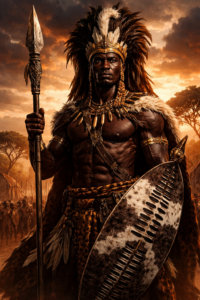
Girls would cut reeds from the riverbanks, symbols of purity and renewal, and present them to the king and queen mother. The reeds were not just plants; they represented community strength and the sacred duty of preserving life. In Zulu cosmology, purity is power, and womanhood, the vessel of life, should be honored and not exploited.
The Ceremony
In the modern event held at King Misuzulu kaZwelithini’s royal palace in Nongoma, thousands of maidens participate in colorful processions. The majority of the maidens participating in the event range in age between 13 and 21 years. The maidens represent different communities in the Zulu nation. Each of the maidens carries reeds with them. The maidens carry traditional regalia with intricate designs such as beads, cowrie shells, and other symbols.
The ceremony takes place over the course of days. The first event in the ceremony is the collection of the reeds. The event then concludes with the presentation of the reeds by the maidens at the palace of the king. The reeds hold significant meaning in the ceremony. A reed can easily snap or break when used separately. However, when reeds are tied together in bundles, they become strong and unbreakable. The reeds represent the strength of the Zulu people.
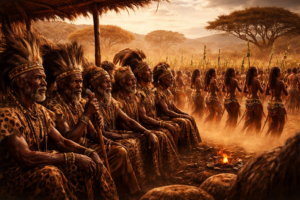
During the ceremony, the air is filled with the sounds of Zulu music, the beat of drums, and the ululation of the maidens. The sounds emanate the spirit of celebration among the ancestors. The sounds carry the spirit of the ancestors in the hills of Nongoma. The elderly participate in the event with pride. The young learn about the importance of reverence, discipline, dignity, and cultural identity. The event is not only about the celebration; it is more about the classroom where the young learn about their heritage.
Symbolism (The Sacred Feminine and the Strength of Culture)
At its core, the Reed Dance is not simply about chastity; it is about identity. It is a celebration of the feminine spirit, not as lesser or secondary to masculinity but as primary to creativity, continuity, and culture. In many African philosophies of life, woman is imbued with spiritual power. She is the conduit for life into the world. She is culture, and culture is life. Culture is the means whereby life is shaped and given direction. The Reed Dance is a celebration of both life and culture, physical and spiritual, in harmony and beauty.
But beyond the individual, there is another important aspect to the Reed Dance. This is the communal power of culture. It reminds us that culture is not simply passed on or inherited. It is enacted, enacted in communal rituals such as the Reed Dance. In this way, therefore, the Reed Dance can be seen as a celebration of continuity.
The reed itself is symbolic. It is hollow but strong and pliable; stands for humility, strength, and gentleness. It stands for greatness, but not for greatness as conceived in terms of pride or arrogance. Greatness is conceived in terms of purpose, discipline, and unity. Like reeds, which are strong together, so culture is strong when all members are together in identity and purpose.
Tradition Meets the Present
The Zulu Reed Dance has assumed a modern, dynamic, and exciting identity in contemporary South Africa. What was perceived as an archaic practice by critics has now become an embodiment of cultural identity and empowerment. The practice has, therefore, not become extinct over time but has assumed a modern identity and has become relevant to modern discourses on identity, cultural heritage, and social values.
The Reed Dance has been adopted by various bodies as an event for promoting gender education, cultural identity, and tourism. Thousands of visitors, both local and international, attend the event every year, thereby contributing to economic growth in the surrounding communities. Through this, the Reed Dance continues to emphasize the need to preserve indigenous cultures in contemporary society, despite the influence of globalized cultures.
Most importantly, the Reed Dance provides an enabling platform for cultural dialogue. The ceremony provides an enabling platform for discussing womanhood, sexuality, respect, and individuality, which are often discussed in hushed tones in contemporary society. Through this, it bridges tradition and modernity, thereby allowing cultural practices to remain relevant and dynamic in contemporary society.
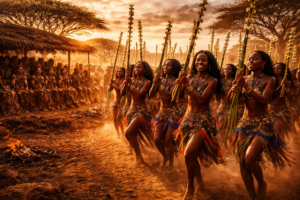
For many young women, participating in Umkhosi woMhlanga is an act of empowerment. A declaration that they can embrace both tradition and progress without contradiction.
The King and the Nation
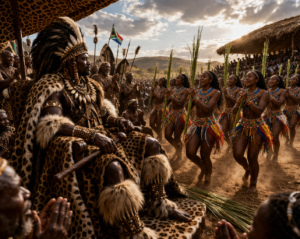
One of the most significant roles played by the Zulu monarch is the role of a custodian of culture. While the king, just like his father and the monarchs before him, does not just serve as a symbol of power and authority during the Reed Dance, he also ensures that the values and culture of the Zulu people remain alive.
The king’s presence ensures the unity of the Zulu nation. His presence symbolizes the connection between the past and the present. The king’s role ensures the connection between the generations. His presence ensures the connection to the younger generations and the culture of the Zulu people. As the king watches over the proceedings, the Reed Dance does not just serve as a cultural event; it also serves as a declaration of pride and belonging. It serves as a powerful declaration to the world that the power and strength of the people of Africa lie in remembering where they come from and in remembering to carry the memory forward.
Cultural Reflection
Similar rites of passage can be found in various parts of Africa. Each has its unique cultural setting but is similar in its purpose. For instance, there is the Umemulo rite in Southern Africa, Dipo initiation in Ghana, and Imbalu circumcision in Uganda among the Bagisu people. All these rites mark significant stages in the lives of those undergoing them.
These rites of passage celebrate life’s transitions, not as personal achievements, but as communal experiences. In them, families, elders, and the whole community play a crucial role in guiding, observing, and acknowledging the transition into a different stage of life. In this way, they affirm the essence of Africa’s philosophy: one’s identity is defined within the community. As the Zulu proverb goes, Umuntu ngumuntu ngabantu – a person is a person through others.
The Zulu Reed Dance, therefore, does not represent a single culture but transcends regional borders. It echoes as a Pan-African expression of continuity, identity, and values. It is a testament to the fact that Africa’s traditions, when honored with pride and purpose, have meanings both uniquely local and universally human.
Conclusion
And as the sunset’s soft glow hovers over Nongoma, with the last songs now fading and the reeds resting across the royal enclosure, the one vital thing that is alive is a single truth: The Zulu Reed Dance is not some ritual; it is Africa’s heartbeat. It is a declaration that womanhood is sacred, that purity and unity are strengths and not restraints, and culture, when pridefully lived, becomes the soul of a people.
As Africa strides into the modern age, may the reed never break, and let the rhythm of Umkhosi woMhlanga always remind us: to honor our women is to honor life itself.




Thanks for all your efforts that you have put in this. very interesting info .
Pingback: Ubuntu Philosophy: “I Am Because We Are” - Real African Diary