












































Introduction
The concept of Pan-Africanism does not confine itself strictly to political thinking. It represents rather a philosophy of belonging which goes well beyond geography in embracing memories, identity, and shared destiny. Thus, a very important question is raised: What connects the people of Africa beyond borders, beyond the ocean and through generations? This gives birth to a great idea which sees Africa as an integral civilization whose development was determined by continuity, endurance, and common experiences.
This concept was born due to disruption. Millions of Africans were relocated overseas because of the transatlantic slave trade, cutting off their ties with their homeland and their ancestral origins. Artificial boundaries established through colonial policy destroyed societies whose existence was determined by fluid cultural and economic relations. Thus, there was a certain loss of identity, and history was distorted as well. After this great disruption, Pan-Africanism appeared as a means to restore the connections between the people and bring back its unity and dignity.
Understanding Pan-Africanism as a Philosophy
Pan-Africanism has frequently been referred to as a movement, yet its essence lies in the fact that it represents a world view that goes beyond national boundaries and any identities created artificially. Firstly, it recognizes the unity of the experience and destiny of African people who have experienced displacement, oppression and resistance to oppression, whether on the African continent or in the diaspora, and because of that, share a common destiny. Unity is a key concept. Fragmentation is an issue that is contested. Commonality of identity is accepted.
The theory rejects the view that the differences in the African continent are a manifestation of nature. Rather, it argues that most of those differences stem from the artificial lines created as a result of colonialism that divided peoples into various nations. However, underneath all these lines, there is an essential continuity which can be seen in linguistic patterns, culture, spirituality and memories.
Historical Foundations of Pan-African Thought
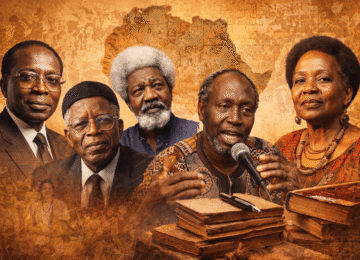
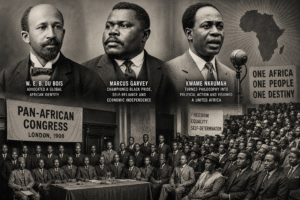
The philosophical origins of Pan-Africanism go back to the late 19th and early 20th centuries. In response to oppression, colonization, and uprooting, the African thinkers created the ideological framework for their liberation from foreign rule and a vision of their collective dignity and identity. For instance, W. E. B. Du Bois promoted the concept of a global African identity connecting the experiences of oppressed Africans living both in Africa and abroad. Similarly, Marcus Garvey propagated Black pride, self-sufficiency, and economic independence to mobilize masses in his support. Ultimately, Kwame Nkrumah translated philosophical ideas into practical political decisions, arguing for the necessity of forming a single African country as long as Africans remained divided.
Pan-African Congresses became significant venues where thinkers came together to advocate for liberty and equality of African people. The ideological work carried out during these events provided the foundation for the development of Pan-African ideology and its further practical implementation.
Core Philosophical Principles of Pan-Africanism
The Pan-African idea is based on a series of interconnected concepts which underpin its ideology concerning unity, dignity, and common progress. Although they are not necessarily articulated as such, these principles consistently provide the foundation for Pan-African ideology and practices.
- Unity Beyond Colonial Border – Boundaries created by the colonial powers are seen as artificial, arbitrarily drawn lines which separate one people divided by history and common destiny. Pan-Africanism promotes the idea of Africa as a cohesive whole; rich in cultural diversity, but connected by common history and aspirations.
- Collective Identity – Collective identity goes beyond citizenship, as it is built around ancestry and historical experience. The sense of collectivity is extended to all Africans both on the continent and in the diaspora.
- Liberation and Autonomy – Political liberation and independence from foreign rule are seen as a basis for further development. However, liberation involves economic autonomy, intellectual and spiritual liberation, and independence from foreign influence.
- Cultural Reclamation – African cultures should be seen as integral living cultures with their languages, arts, philosophy, and spiritual traditions rather than dead objects of study or artifacts.
- Common Development – Pan-Africanism envisions a united economic development based on cooperation and solidarity.
Pan-Africanism and Cultural Identity
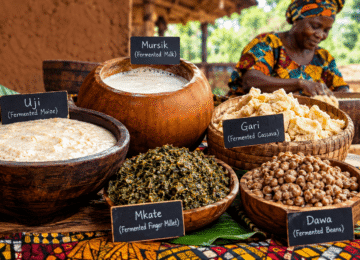
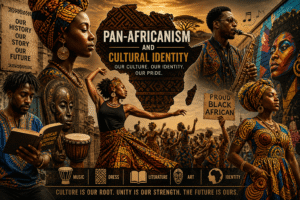
The concept of Pan-Africanism emphasizes culture as being central in shaping one’s identity. For many centuries, African culture was demeaned or misrepresented because of the influence of colonial powers, with the languages considered inferior, cultural practices considered primitive, and their systems of knowledge ignored. Through this philosophy, it becomes clear that African culture is neither inferior nor outdated, but alive and evolving with time. Culture is seen as a living phenomenon; one that is influenced by history but able to adapt and respond to contemporary reality.
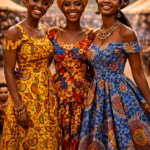
In Africa as well as in the African Diaspora, culture takes different forms like music, dress code, literature, and art among others. These are used to express one’s identity and resist the negativity associated with African identity. As such, this kind of cultural revival is never approached in terms of nostalgia, but as a form of restoration and reclamation of pride in the present era.
The Economic Vision of Pan-Africanism
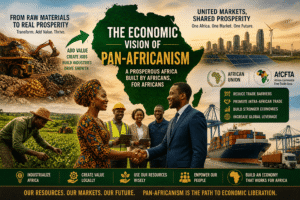
Pan-African philosophy also goes beyond the economic domain. It raises a significant question regarding how such a resource-rich continent as Africa can be considered a dependent one. The system of sending raw materials and receiving the final products as exports and imports is questioned. Unification is advocated. Cooperation within regions is encouraged. Internal trade is prioritized. Such initiatives as the African Union and African Continental Free Trade Area represent attempts to put this principle into action through lowering trade barriers, promoting internal markets, and increasing the leverage position. Nevertheless, implementation becomes a complicated process due to infrastructure problems, policies, and dependence on other countries.
Nevertheless, the idea is straightforward: the economy of Africa must operate in favor of its development. Value needs to be created within the continent, local industries promoted, and resources optimized.
Pan-Africanism in the Modern World
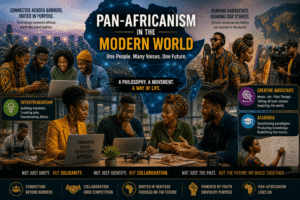
However, Pan-Africanism is not a thing of the past; it continues to develop through the eyes of future generations as they give their own interpretations of it. Today’s society sees connections like never before thanks to technological advancements. African youth can connect across borders, collaborate in real time, and create a dialogue that changes the concept of identity and belonging. Moreover, it is no longer a political ideology, but rather a philosophical perspective that manifests itself in different spheres of life. The emergence of startups working to solve problems specific to African societies can be seen in the field of entrepreneurship. In the creative industry, musicians, designers, and filmmakers share African stories with people worldwide. Finally, academic space is changing, and scholars start questioning the existing paradigms.
It turns out that the current generation creates something entirely different than what their predecessors believed. Instead of unity, they promote collaboration that transcends the notion of homogeneity. Thus, today’s Pan-Africanism is a blend of memory and methodology, a philosophy that shapes how Africans perceive themselves.
Challenges Facing Pan-Africanism
While appealing in nature, Pan-Africanism is subject to several significant difficulties. States tend to have national concerns that override collective considerations, especially when it comes to their own stability and politics. Uneven economic development between states creates inequality, leading to imbalanced cooperation and sometimes creating barriers to effective partnership. Political instability is yet another factor influencing regional relations. Variety of languages, although beneficial, can be a source of trouble for negotiations. Different laws, infrastructure, and even forms of government are other elements adding to the complications.
These challenges should not be seen as obstacles that contradict the principles of Pan-Africanism. On the contrary, this philosophical concept does not pretend to simplify anything. Instead, Pan-Africanism embraces diversity and strives to find unity in it. While facing these complexities, Pan-Africanism requires active negotiations, patience, and flexibility.
Conclusion
Pan-Africanism is not a completed venture; rather, it is a continuous journey of reunion and reassessment. Pan-Africanism encourages introspection just as much as it encourages action. It urges the African peoples to reconnect with their common bonds despite artificial barriers. A common past is recognized. A common destiny is anticipated. The philosophy remains a call for unity; not for homogeneity, but for harmony. The philosophy recognizes plurality as a strength to be aligned, not a liability. Despite cultural, linguistic, and experiential differences, Pan-Africanism reminds us that our narratives are interconnected, our challenges are shared, and our success is best achieved collectively.
It is a heritage and a directive; a tradition based on the past, but geared towards the future. Pan-Africanism is not about creating something fresh out of Africa. Rather, it is about creating a cohesive and complete Africa; a self-aware, self-defined, and united Africa.