









































































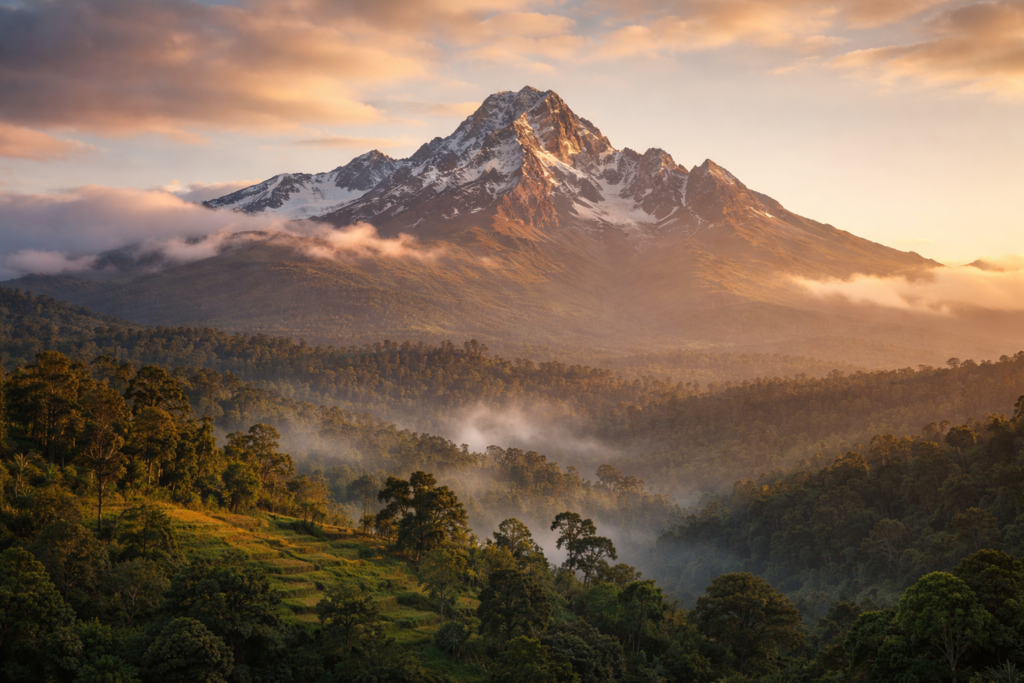

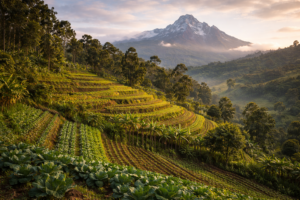
When you gaze upon Mount Kenya on a clear morning, its peak divides the sky like a promise. But for the Kikuyu, the promise holds a voice. The mountain is known to the Kikuyu as the home of Ngai; the creator, the lawgiver, the witness. Mount Kenya is not a landscape element in the lives of the Kikuyu. Mount Kenya is presence. It listens, it receives, it responds.
Meaning is accorded to the mountain before there is any verbal expression. From the homesteads that lie before its slope to the rivers that flow out of its forests, Mount Kenya is the ruler of orientation. To be near the mountain is to be in its watchful eye, which is one of accountability.
The Mountain as a Living Dwelling of Ngai
According to Kikuyu beliefs, height and clarity are preferred by Ngai. The mountain’s snow-capped summit provides a suitable dwelling; one that is elevated, radiant, and majestic. While praying, the elder kikuyu looks towards Mount Kenya. While presenting milk or making a promise, he looks upwards, confident that Ngai listens from above.
These actions inform discipline. The mountain transforms prayer into pose and faith into direction. Children learn where to stand in response to gratitude and in response to crisis, and as such, faith is embodied. This is achieved through actions and not through teaching.
Sacred Groves, Stones, and the Geography of Memory
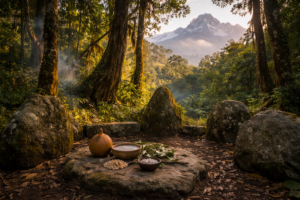
Special (sacred) sites mark the lower slopes of this mountain. It is where groves exist in a setting of stones and ritualized spaces where ritual carries some import. Such sites do not shout to attention. The teaching of these sites occurs in hushed tones.
Each site retains a memory. Some remember the time when rains came after a drought. Some remember an oath taken, a dispute resolved, a lineage restored. In going back, the Kikuyu recall their past and their responsibility simultaneously. The land retains their memories.
Rivers That Carry Blessing and Obligation
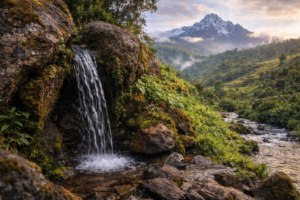
There flow rivers from Mount Kenya that irrigate farms deep down. The rivers themselves do not fall by happenstance. In Kikuyu philosophy, they fall in beneficence and in reminder.
Springs are protected because they embody the generosity of Ngai. Forests are protected because they nurture the sources of life. Conservation is the natural spin-off from faith; reverence is conservation without the need for translation. To damage the mountain is to upset the religious symmetry that exists between humanity and the deity.
Ritual, Law, and Social Order
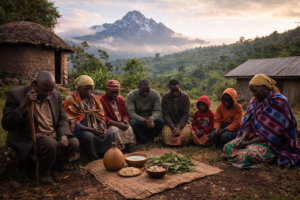
Mount Kenya schools people in the law. The elders derive the power of law from the traditions nurtured under the shadow of the mountain. They settle disputes based on the stories of the law delivered under particular ridges or beside particular trees.
The ritual brings the community not only to pray but to remember how to live. It is through the ritual that individuals affirm hierarchy, obligation, or restraint. Identity is established as communal recognition as opposed to personal affirmation.
Continuity in a Changing World
The age of modernity has brought about new faiths, institutions, and pressures. But the mountain remains a point of reference. Many Kikuyu manage both the church pews and the ancestral shrines harmoniously. They accommodate form while preserving meaning.
The young can come equipped with modern tools, but they still have to deal with Mount Kenya when they are needed to humble themselves or toughen up. Ritual has survived because it has answers to questions that cannot be answered by bureaucracy: Who are we? Who is watching? What do we owe to the earth and to each other?
A Mountain That Still Speaks
Mount Kenya is more than a mountain in elevation. Mount Kenya is memory made manifest. It is through ritual that the Kikuyu speak to Ngai, consult with their ancestors, and regulate their communal life. They keep this belief not by storing it. They keep this belief by living it, by turning to the mountain once again.
As long as the people turn towards Mount Kenya in moments of thanksgiving and in moments of crisis, Ngai’s house shall never be left. It shall never be occupied by rocks alone but shall be occupied by meaning.



Pingback: The Kikuyu Creation Story: How Gĩkũyũ and Mũmbi Founded a Nation - Real African Diary
Pingback: African Cosmology: How Ancient Africans Understood the Universe - Real African Diary