

















































Introduction
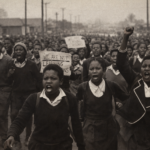
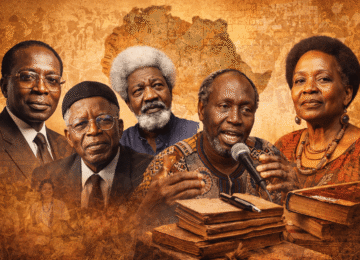
In Africa, literature has never just been about art; it has always been about resistance, memory, and political imagination. In the colonial era and the post-independence period that was marked by political instability, African writers used literature to fight against colonialism and reclaim identity. From Dakar to Nairobi, these writers used literature to turn the pen into a tool for liberation. They used literature to fight against colonialism, corruption, and the imposition of a foreign language on the African people. This article seeks to discuss some of the most influential Pan-African writers.
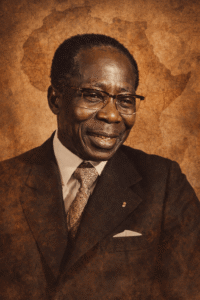
Léopold Sédar Senghor: Poetry and the Philosophy of Negritude
The discourse on Pan-African literary movement is incomplete without discussing the life and ideas of Leopold Sedar Senghor. A man who united in himself the qualities of a poet, philosopher and statesman. Senghor was an outstanding person because his vision of Pan-Africanism did not remain just a philosophical idea. Instead, it gave way to a political project, which led him to become the President of Senegal. Thus, Senghor proved that the ideas of intellectuals had the power to influence the future of a country. Senghor played an important role in the development of Negritude as an ideological reaction to colonial oppression that took place in the 1930s.
The aim of the Negritude movement was to affirm the significance of black culture by proving its superiority to the colonial ideologies that considered African traditions primitive and barbaric. In his poems like “Chants d’ombre,” Senghor glorified African nature, rhythm, spirituality and communal culture emphasizing that African identity had its unique philosophical basis. Poetry, according to the Negritudist’s ideology, was the instrument of cultural revival. Thus, Senghor did not consider literary texts just as artistic expressions but as the means to restore and assert the cultural identity of Africa.
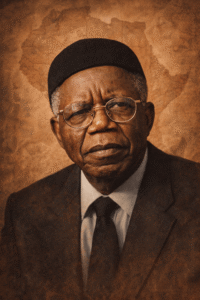
Chinua Achebe: Reclaiming African History
The Nigerian author Chinua Achebe redefined how the world perceived the entire continent through his groundbreaking novel, Things Fall Apart. Written in 1958, the book defied conventional European views that had perpetually portrayed Africa as a backward and uncivilized continent bereft of any historical development whatsoever. Instead, Achebe brought out the intricate nature of Igbo society, showing that its members lived within an elaborate structure of government, morality, and spirituality even before the arrival of European colonialists.
Through his book, Achebe awakened the world to the understanding that Africa had its history and culture before colonization. For him, storytelling was a tool to regain the dignity and humanity of the African people. European literature had distorted this image. By incorporating Igbo proverbs, language style, and cultural expression into his work, Achebe maintained authenticity. At the same time, he reached a wider audience. Thus, his contribution to history went beyond storytelling to redefine its very scope.
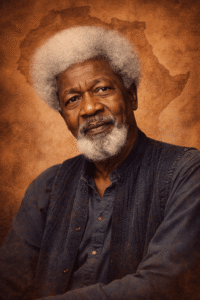
Wole Soyinka: Theatre and Political Courage
Wole Soyinka, another prominent literary personality in Africa, has made significant contributions by combining artistry with politics. Soyinka has always been vocal about dictatorial practices and political injustices in his country and used his literary talent and activism to fight against tyranny. When Nigeria was engulfed in civil war, he was arrested by the ruling forces due to his opposition and advocacy for peace.
Soyinka is renowned in literary circles for being the first African author to win the prestigious Nobel Prize in Literature in 1986. His literary works, which include plays, essays, and poems, are rich in Yoruba mythology, yet they address current political situations. In his works, he incorporated ancient beliefs, thus proving that African mythology was pertinent to today’s social and political problems, including those related to power struggles, corruption, and human rights violations.
Ngũgĩ wa Thiong’o: Decolonizing the Mind
Few authors can claim the dedication to literary resistance exhibited by Ngũgĩ wa Thiong’o. Ngũgĩ was born in colonial Kenya. He became one of Africa’s most powerful literary minds. His work focused on the struggles of people seeking liberation from colonial rule and oppression. In his early works, such as Weep Not, Child and A Grain of Wheat, he explored themes of oppression and identity. Later, he rejected writing in the oppressor’s language and declared it unacceptable.
One of his seminal works in this context was Decolonizing the Mind. In it, he convincingly argues that language is culture and that true decolonization must necessarily involve the adoption of indigenous languages as means of expression. As fate would have it, Ngũgĩ was detained in prison in 1977 for writing an incendiary play criticizing social inequality. However, this persecution only served to further galvanize his resolve to continue the struggle. For years to come, his concepts would serve to inspire many African intellectuals and writers.
Women Voices in Pan-African Literature
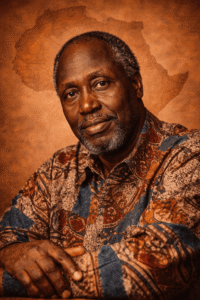
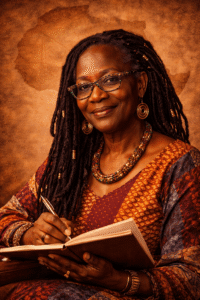
Another important component of literary resistance in Pan-Africanism comes from the perspectives of great African female writers such as Micere Githae Mugo and Efua Sutherland. Micere Githae Mugo is a renowned poet and academician whose literary output merged pan-African ideology, feminism, and indigenous African philosophy. Through her works, Mugo challenged colonial and patriarchal systems. In doing so, she focused on the intellectual, leadership, and cultural roles of African women.
In the case of Efua Sutherland, her impact was felt mainly in her contribution to establishing Ghana’s cultural framework. This was achieved by building theater organizations, advocating for indigenous African storytelling, and fostering collaborations among artists from across Africa. Sutherland helped train an entire generation of artists who were passionate about preserving their cultural heritage.
Overall, the examples set by Micere Githae Mugo and Efua Sutherland prove that Pan-African literature had two main functions: resistance against colonial oppression and advocacy for feminism.
Literature as Political Resistance
The emergence of African literature occurred during an era of significant political changes in Africa and was influenced by authors who witnessed the effects of colonialism, nationalism, and postcolonial struggles. Unlike other literary movements, which tend to ignore real issues, African literature dealt directly with the problems of its times. It condemned colonial brutality, explored African culture, uncovered corrupt and dictatorial regimes, discussed the politics of language and emphasized the wisdom of the African tradition.
By writing in such a way, these authors were able to document histories misrepresented and distorted by colonial accounts, thereby ensuring that it was Africans who determined their history. In addition, the intellectuals fought against imperial dominance of ideas through writing. For African intellectuals, literature was a tool of resistance, a weapon against silencing and domination. Through literature, African intellectuals were able to express themselves, fight oppression and determine the future course of the continent’s intellectual and political affairs.
Conclusion
The Pan-African authors transformed literature into a forum of ideas. They upheld culture, fought against oppression, and envisioned possibilities for Africa. From Senghor’s poetry to Ngũgĩ’s quest for linguistic liberation, they demonstrated that literature had the power to resist authority and liberate nations. Their impact is felt in contemporary African authors who still weave tales grounded in identity, authenticity, and liberation. Storytelling is not a passive act in Africa. It is an act of remembrance, identity formation, and inspiration.
Because stories in Africa are not simply stories. It is liberation.





Yes,It’s good,I like this