





































































Introduction
When Fela Kuti died in 1997, he didn’t leave behind just an incredible musical legacy. His death saw the departure of a philosophy of resistance, of a courageous voice against wrongs and of music that revolutionized African music. In his lifetime, he was adored by common folks and at the same time censored, jailed and maligned by the powerful forces that sought to silence him. But his legacy kept growing over the years and inspired countless musicians, activists and scholars around the world.
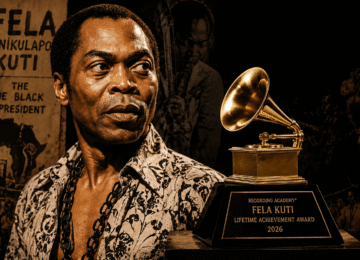
Some twenty-nine years down the line, the Recording Academy would recognize Fela’s work with a posthumous Grammy Lifetime Achievement Award. This recognition was never meant to enhance his legacy; it merely validated it. It was a validation of what the continent had known all along: that Fela Kuti was not an artist but a living legend whose music was an eternal tool of truth, liberation and Africa.
What Is the Grammy Lifetime Achievement Award?
The Grammy Lifetime Achievement Award is one of the Recording Academy’s most prestigious awards which honors musicians who have had a deep impact on the development of music throughout the course of their lives. In contrast to awards which honor the musician for producing a successful album or song, this award honors the contribution of musicians to music throughout their lives.
Fela is one such artist who deserves the Grammy Lifetime Achievement Award. Fela did not simply create music, he created an entire genre of music through the fusion of highlife, jazz, funk, and traditional Yoruba rhythms called Afrobeat. His genre was political and social at the same time. With his music, he entertained people, educated them and raised questions about injustice.

Why the Award Came After His Death
Change tends to happen gradually when institutions are called to address uncomfortable truths. Fela did not mince his words when challenging authority. He accused people in power of corruption, ridiculed them, exposed injustice and spoke his mind despite knowing that doing so would make him unpopular among politicians and businessmen alike. The government arrested and beat him up. The media was only too happy to present him as an agitator rather than a visionary. Across the globe, people danced to Afrobeat, but most failed to appreciate the political message in each one of those tunes. The Grammy Awards came around late in recognizing Fela’s contribution to music because he was always right.
By 2026, the whole world had realized what Africa knew decades ago: Fela’s music foresaw the language of modern protests. Fela criticized police brutality, oppression by governments, inequality in the economy and the abuse of power. What used to sound like revolution had become all too familiar.
Afrobeat as Architecture, Not Entertainment
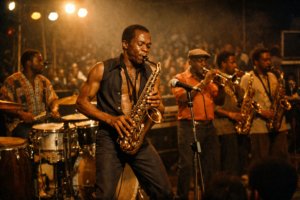
Fela used music as infrastructure. He did not write songs to merely entertain; he constructed them to make an argument, confront power structures, and raise awareness. By using repetition, he made sure that certain difficult truths were highlighted to the extent that they could no longer be ignored. By singing in Pidgin English, he was able to communicate with the common man, not only the elite few. Taxi drivers, market women, factory workers, and students all heard their stories in Fela’s songs. Afrobeat did not ask for permission to be heard. It insisted on its listeners’ attention.
This tradition continues long after Fela. Musicians all over Africa and the world continue to use Fela’s template not only artistically but also politically. Whether it’s in Lagos, London, Johannesburg or Brooklyn, the unmistakable beats of Afrobeat continue to carry their stories of resistance, of identity, and of social justice.

Recognition Without Erasure
This recognition didn’t sanitize Fela. It didn’t make him less edgy, more tame, or less of what he was. It celebrated him as he was: raucous, rebellious, unapologetically African, and unwilling to be anything less than completely committed to the pursuit of truth. That’s why this award is so meaningful. The world tends to recognize African artists in spite of their message. They celebrate them in spite of their politics. But this award was different. It understood that Fela’s message was essential to who he was as a performer and as an artist. It understood that Fela was revolutionary because he never apologized for being unafraid to criticize injustice.
This award honored a great musician and an even greater artist.
What the Award Means for African Artists
Fela’s posthumous Grammy Lifetime Achievement Award conveys a significant message to all African artists: The truth you carry cannot be diminished by the lack of recognition in the world. Recognition may take a while, but your identity, your beliefs, and your voice are not supposed to change for it. If your art tells the truth of your community, your struggles, your values, it may not be popular, but it can stand the test of time and rewrite history.
The Grammy Lifetime Achievement Award bestowed on Fela serves as a challenge to those who act as gatekeepers of culture. Which art do we celebrate? Do we only celebrate art which is marketable and politically correct or do we also celebrate art that dares to challenge the status quo and demands justice? By awarding such an artist, Grammy recognizes the importance of the art, which makes people think, challenges authority, keeps the memory alive, and speaks on behalf of those who could not find their voices otherwise. This is the legacy no African artists should ever give up on.
Conclusion
Fela Kuti was not after awards. He was after justice. Fela created a republic of sound, where music defied authority, denounced corruption, and gave voice to regular Africans. And for that belief, he suffered greatly through arrests, physical beatings, censorship, and persecution. But he never stopped fighting his message or his principles.
The Grammy Lifetime Achievement Award is not about any form of validation, but rather a recognition of the legacy that has already made changes to African and global cultures. History has already recognized that his greatness was not tied to institutional recognition. The smokes of Kalakuta still linger in the air. The horns are still at loggerheads. The drums are still in accusation. Each generation that listens to the Afrobeat music receives the message and courage to challenge the unjust and tell the truth to power.
And now, formally, albeit belatedly, the world recognizes.





Pingback: Fela Kuti: The Rebel Who Gave Africa Its Voice Through Afrobeat - Real African Diary