



































Introduction
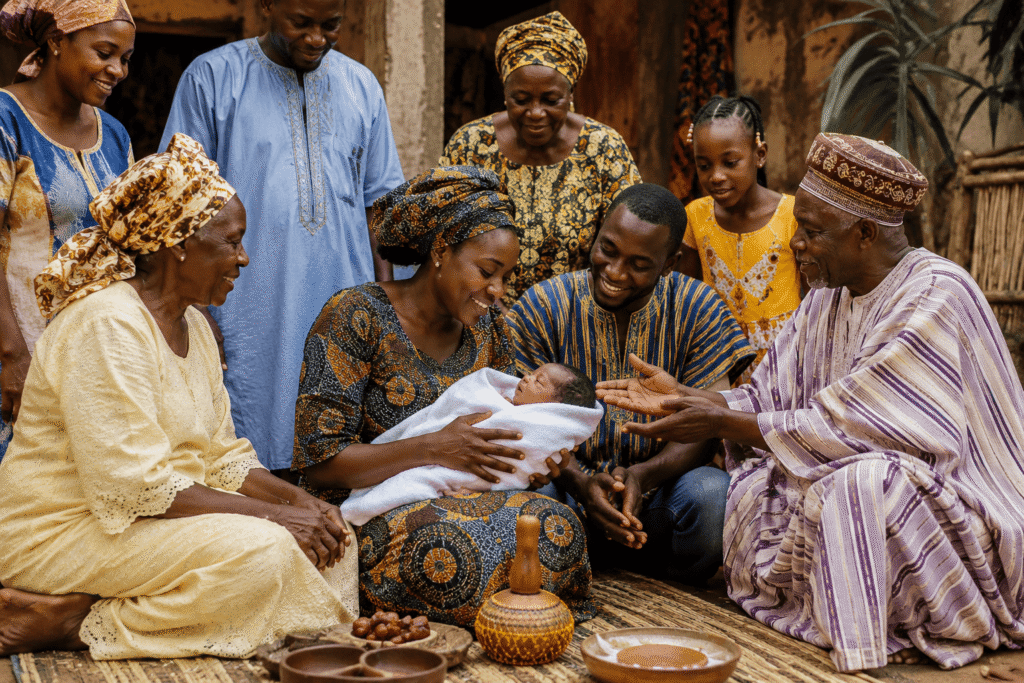
For many communities in Africa, a name represents much more than just the sound that identifies a person. It preserves the history of the family, expresses hopes for the child’s future, honors the relatives and depicts the circumstances around the child’s birth. Naming a newborn is considered to be one of the ways in which the child is warmly welcomed into the community.
Naming ceremonies in African communities vary widely due to the large number of different cultures in the continent. A naming ceremony in a Yoruba community of Nigeria will be different from a ceremony of an Akan community in Ghana, a Gikuyu community in Kenya and a Zulu community in South Africa. But there is something which remains the same in many ceremonies; the child becomes part of the family and the community. Prior to the advent of birth records, Africans used names and traditions in their societies as means of preserving their family histories. Names were therefore chosen from among family members or relatives of the deceased to perpetuate the memories of the departed souls.
Names Preserve Family History
A name could be a gateway to learning about one’s family history. For instance, a grandparent could talk about the reason behind a name and the person who had it before. In the process, the child is informed about the values, accomplishments, challenges and experiences that define the family. Thus, a name becomes more than just an identity; it is also part of the family’s history. Among the African community, the act of giving a child a name of a respected or deceased relative ensures continuity in the family. In addition to remembering that individual, the family ensures that the personality of that individual lives on through the child.
Naming Welcomes a Child Into the Community
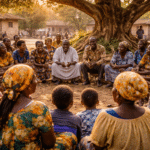
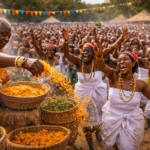
In many African communities, the arrival of a new baby is seen as a community affair rather than a family affair. Extended family members, neighbors, seniors and friends might come together to greet the baby and the family as a whole. It is an event where the child is introduced to the people who will be a part of his social circle and a reminder to all that bringing up a child is not a solo act. It is also through such an event that people get an opportunity to bless and encourage the new parents. By not restricting the baby to just the immediate family, the ceremony acknowledges the broader circle around the family.
Elders Keep the Tradition Alive
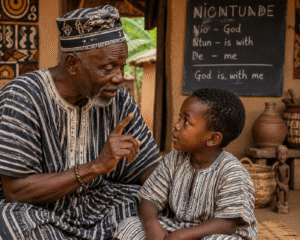
The elders usually assume a pivotal role because they hold information on customs, kinship ties and the community’s history. The involvement of the elders makes the ceremony continuous from one generation to another. An elder’s blessing of a baby, giving counsel or explaining the significance of the name connects the child’s present to the past which existed even before the birth of the baby. It becomes an opportunity for the new generation to hear first-hand accounts of old customs from those who remember them. Through a naming ceremony, therefore, elders have a chance to teach the young ones values and traditions.
African Names Tell Stories
Many African names carry tales about life. The family could decide on a name based on the feelings the family had when they named the child. These could include happiness, thankfulness, struggles, faith, hopes, or even the story around the birth of the baby. Through naming a baby, parents and grandparents pass along their experiences and hopes for the future. The child asking the question of “What is the meaning of my name?” could get more than just an answer to a question. He could learn how the language of the name works, why the name was chosen and who the people were that the family knew. Through this, he learns about his history and tradition.
Naming Helps Preserve African Languages
Language is yet another important aspect of the naming culture in Africa. Many of the indigenous languages of Africa are under threat of being overshadowed by the dominant national and international languages, particularly in urban settings. The naming of babies from their indigenous languages ensures that these languages remain relevant. A name can serve to inspire the child to learn about its pronunciation, meaning, and origin. The name then becomes a fragment of language heritage. The teaching of the meaning and pronunciation of names by parents to their kids becomes an important practice. The act is very important for the African communities in urban or foreign locations where the next generation does not have much exposure to their native language.
The Spiritual Meaning of Naming
Spirituality is yet another element associated with naming in many societies. However, it is essential to appreciate that spirituality in African societies is diverse and should not be homogenised into one belief system. Some families will incorporate prayers or blessings while others integrate their traditional beliefs with Christianity or Islam. This demonstrates the ability of families to retain cultural heritage in an ever-changing spiritual environment. The spiritual element is varied in different African societies. Some families may concentrate on prayers and thanksgiving, while others may concentrate on ancestor worship or blessings. What is constant is the wish to celebrate the birth of the child with blessings and protection.
Naming Ceremonies Strengthen Family Bonds
Contemporary life in Africa has altered the way families plan their ceremonies, but the importance of coming together has not been eliminated. It is possible for members of a family to be spread out across cities like Nairobi, Johannesburg, Lagos, Accra, or anywhere else away from their native lands. A naming ceremony provides an occasion for members of the family to come together once again and exchange memories. If family members have been separated due to factors like employment, education, and relocation, then such ceremonies take on even more significance. An infant becomes an excuse for family members to reunite and celebrate their newfound joy.
Tradition Is Adapting to Modern Africa
Technology has similarly transformed the way families conduct their festivities. Families where some relatives may be unable to attend due to distance will still be able to join through video conferencing, while families may keep pictures and recordings for posterity electronically. In addition, some families conduct their celebrations at homes, community centers, or other contemporary settings instead of their ancient villages. It is not always necessary for African families to forsake their traditions in their effort to modernize them. On the contrary, families continue to integrate their old traditions into their contemporary lives. In such cases, an individual’s family may conduct a traditional baby naming ceremony and even live stream parts of the celebration via social media networks.

Names Strengthen Cultural Identity
African naming practices can assist young Africans in defining themselves within the globalized environment. An individual may be fluent in several languages, go to a progressive school and reside in a big city but still have a name that connects him/her to his or her family background. The name will serve as a link to his or her parents, grandparents and community without restricting the modern aspirations of that individual. Such a link becomes especially important for Africans residing outside the African continent. A traditional name will make the children aware of their family background regardless of how far away from the home community of their parents and grandparents they end up growing up.
A Name Can Carry Values
Moreover, the significance associated with a name could influence one’s sense of responsibility. If the name of a grandparent of repute is used, it could serve to imbue the child with his qualities. Through the process, the child will learn that the name symbolizes not only honor but also qualities such as bravery, kindness, wisdom, strength, or public service. Through this process, the parents can instill their children with a sense of heritage and hence their responsibilities. However, the child is not expected to follow the footsteps of the individual whose name he bears but the qualities of that person can be an example for him.
Conclusion
African naming ceremonies continue to be relevant because they provide an identity and meaning to what is possibly the most important event in a person’s life, the birth of a new generation. Such ceremonies provide a link between children, parents, grandparents, ancestors and communities while safeguarding tales and stories which may otherwise get lost. With names, families honor those who preceded them and set the expectations for those who would follow them.
Africa has continued to change with time, as towns expand, as families migrate across borders and as technology alters communication. However, none of these changes means the cultural practices have to be sacrificed. African families can find ways of adapting naming ceremonies to meet modern lifestyles yet continue to uphold the importance attached to such ceremonies. A name is a permanent reminder of a child’s origin, the community’s values and why its heritage should always matter. This is a reminder of language and history which a child can keep forever in his mind. This is the reason why African naming ceremonies are relevant: they let all generations progress and remember their roots at the same time.