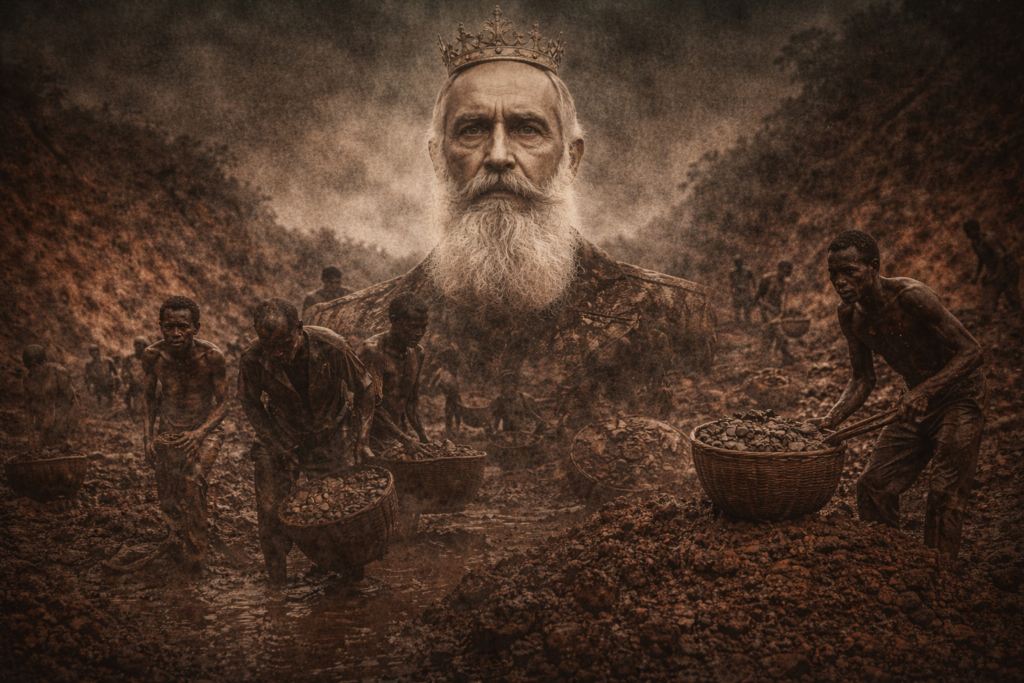

The history of the Democratic Republic of the Congo carries a ghost story that has been passed down through generations and whispered along the banks of its rivers. The ghostly presence is that of a man who created one of the most cruel personal colonies in history without ever setting foot in the heart of Africa.
He was not a distant historical figure but the mastermind behind a foundational trauma that continues to influence the country’s turbulent present. King Leopold II still haunts the modern Democratic Republic of Congo and represents the agonizing prologue to understanding the Congo’s current struggles.
The Philanthropic Mask
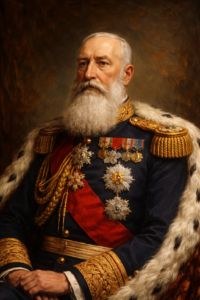
Leopold II skillfully disguised his imperial aspirations in humanitarian endeavors during the Berlin Conference in the late 19th century, when European powers divided Africa. He portrayed his International African Association as a charitable mission to eradicate slavery, advance Christianity, and promote civilization.
In 1885, he won the Congo Free State. A region 76 times bigger than Belgium, through a shrewd public relations campaign. For Congolese people, the name became a cruel irony because it was neither a state nor a place of freedom. In reality, it belonged to a European monarch, granted to him by complicit nations that believed his humanitarian claims.
A System of Terror
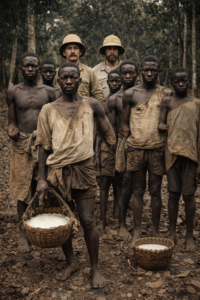
When global demand for rubber exploded, the mask of philanthropy fell away. Leopold established an industrial-scale system of terror to exploit the wild rubber vines in his private colony. The Force Publique, his private army, compelled Congolese men to harvest rubber while taking women and children hostage. Violence was rampant, and impossible quotas were imposed on villages. The chicotte; a sun-dried hippopotamus-hide whip, could tear flesh from bone.
The most chilling practice was the amputation policy, where soldiers were required to present a right hand for every bullet fired, proving ammunition hadn’t been wasted. This created a monstrous economy of severed hands and unimaginable suffering.
The World Awakens
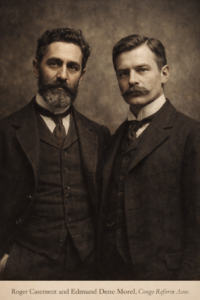
Brave individuals like journalist Edmund Dene Morel and diplomat Roger Casement exposed the horror. Their tireless work created the first international human rights campaign of the 20th century. Through testimonies, photos, and reports, they forced the world to confront the atrocities. Under growing pressure, the Belgian state seized the colony from Leopold in 1908, renaming it the Belgian Congo.
By then, an estimated 10 million Congolese had perished under 25 years of Leopold’s rule. A demographic catastrophe whose scars remain today.
The Ghost in the Modern DRC
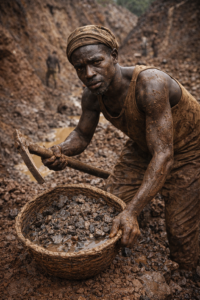
Leopold’s legacy lives not just in history books but in the economic and social systems of the modern Congo. He built an extractive model that viewed the territory as a resource depot, not a nation. Today, rubber and ivory have been replaced by cobalt, coltan, and diamonds, yet the “resource curse” endures. His rule destroyed traditional governance structures and instilled distrust in authority.
The Force Publique became a blueprint for oppressive security forces, setting a precedent for decades of corruption, dictatorship, and militia violence.
Echoes of Reckoning
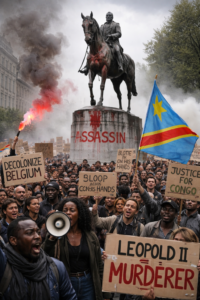
Modern debates in Belgium about removing Leopold’s statues mark a symbolic beginning of accountability. But for the DRC, the deeper issue lies in healing historical wounds, not in European monuments. It’s about addressing systemic inequality, trauma, and the enduring pain born from one king’s greed. To recall Leopold II is to understand the deep fractures in a nation overflowing with wealth yet burdened by suffering.
Until this history is faced and truly reckoned with, the ghost of the Congo Free State will continue to haunt its people and soil.