






















































Introduction
North of the coast of Kenya, where the vastness of the Indian Ocean meets years and years of rich history, lies an island that stands out from all other islands in Africa in its uniqueness. Lamu Island does not represent anything of the kind that most people expect an African country to stand for today. Rather, Lamu Island represents silence, stone, sail, and story, rather than any of skyscrapers, highways, and constant hurry.
Lamu Island is something more than just an African island. It represents something like a living historical archive, a synthesis of centuries of influences of various cultures, languages, architecture, and traditions of Africans, Arabs, Persians, and Indians who used to trade on this island. Going to Lamu Island, one can experience not just a journey in a traditional sense but an experience of completely different approach to history and time. History here is everywhere, alive in the streets, in the air, in the sea, and in the life of the islanders.
An Island Shaped by the Ocean
The Indian Ocean is an integral part of the history of Lamu for more than one thousand years. Prior to the emergence of any political divisions in Africa, Lamu belonged to the region called the Swahili coast, which included settlements located on the coast of the Indian Ocean from modern day Somalia to Mozambique. There were traders from all over the world, and they exchanged everything: gold, ivory, spices, fabrics, and much more. With time, a special civilization appeared thanks to these contacts. African traditions merged with the cultures of the peoples who came from across the ocean.
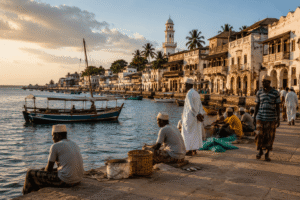
Lamu managed to preserve its originality despite being a place of such significant cultural influence for centuries ago. The sea still determines life here. The local fishermen go to fishing at the crack of dawn. Dhows are still using their sails according to the same rules their ancestors taught them. The sea remains the main road here and provides people with means for survival. It is impossible not to mention the sea when talking about the history of Lamu Island since this element played such an important role in the development of the area.
The Soul of Swahili Civilization
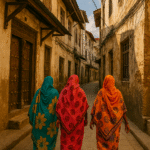
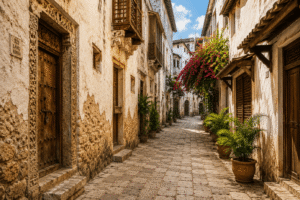
Lamu is often cited as one of the best-preserved relics of Swahili culture in East Africa. Walking through its old streets is like walking through a living piece of African history. Lamu’s buildings are a reflection of decades of building skills. The huge wooden doors boast elaborate carvings that stand for status, religion, and the rich lineage. The coral-stone buildings tower above narrow streets that were created to protect from the tropical sun. The roofs look down at courtyards where conversations took place centuries ago.
What makes Lamu special is not only the beauty of the buildings but also the continuity they represent. People still live in the houses their ancestors lived in. The traditions are still being practiced. The sound of prayer resonates in the town just like it did for centuries. In Lamu, history does not sit behind glass. History lives. It is precisely due to this remarkable conservation that Lamu Old Town has been included on the UNESCO World Heritage List as an important cultural landmark of Africa.
Where Donkeys Rule the Streets
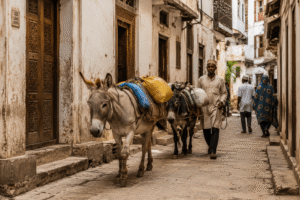
One of the first observations that a visitor makes is the lack of vehicular movement. One does not see endless rows of vehicles. There are no traffic lights. Neither are there engines roaring everywhere. The movement of the place is completely different. For instance, donkeys have remained to be the major form of transportation inside the town. They move the cargo down the narrow streets that cannot accommodate conventional means of transportation. It is one of the major things that distinguish the island of Lamu.
From an outside perspective, such may seem weird. However, from the locals’ point of view, this is what makes sense. The layout of the streets was done way back when there was no car to think about. Consequently, the town retained its initial shape.
The Wind, the Dhow, and the Art of Sailing
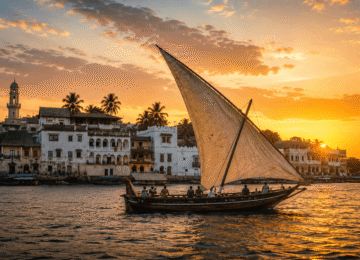
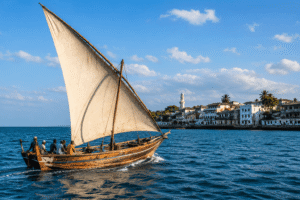
There are few better images which symbolize the essence of Lamu than the image of a dhow. For many years, dhows have been plying the oceanic waters of the Indian Ocean, being made according to techniques passed down through generations of masters and apprentices alike. No one can think of Lamu without conjuring up the image of the white sails moving in time to the wind during dusk hours.
Here, sailing is not only about fun but also an indication of harmony with the environment. This is because those who go sailing in Lamu have to have a deep understanding of the current, the wind, and the tide. The movement of the dhows at dusk time is simply magical; the ocean seems to turn into a pool of gold.
The Spiritual Heart of the Island
Religion is an integral part of the people’s daily routine in Lamu. There are plenty of mosques in the area, which date back to many centuries ago. The call to pray sets a particular tempo and rhythm for people’s everyday lives, tying them up with common spiritual traditions. However, spirituality here does not refer to any religious practices solely. It is represented by the culture of hospitality, reverence to the elder generation, storytelling, etc. Thus, faith is not just about praying in mosques. It can be seen in small acts of humanity and mutual assistance as well.
The overall atmosphere in Lamu inspires introspection. Time flows differently there. One is more willing to spend time having long conversations with locals. All this creates a special atmosphere that allows for reflection, which is quite a rare phenomenon in the modern world.
Festivals That Keep History Alive
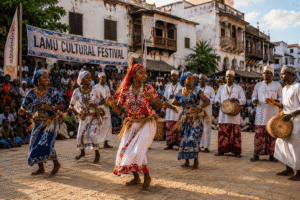
Lamu preserves its culture by having cultural festivals that draw tourists from across the globe. The Lamu Cultural Festival takes place annually and consists of music, poetry, arts, donkey racing, and dhow competitions. The entire island becomes a colorful and joyful place where locals show off their rich culture. Not only do these festivals entertain, but also help preserve collective memory.
Culture is transmitted through various means such as oral tradition, festivals, music, arts, among others. Younger generations learn culture from the elder ones who pass down everything they have been taught by their ancestors. Tourists get to experience culture that has been around for centuries. Cultural knowledge keeps evolving instead of fading away. In this case, cultural festivals serve as an essential tool for the preservation of culture.
The Beauty of Slowness
For contemporary society, speed equates to development. Swift communication, swift transportation, swift decision-making. Achievement is judged according to the swiftness of results. Lamu gives a contrasting view on that. In Lamu, being slow does not mean being feeble. On the contrary, it denotes sagacity. The town shows its visitors that there are things in life which have no need of speed at all. Relations demand time. Craft demands time. Insight demands time. The painstaking efforts of fishers, mariners, craftsmen, and narrators demonstrate a lifestyle defined by concern rather than haste.
A stroll around Lamu makes one aware of numerous things, which are disregarded elsewhere; the structure of coral stone buildings, the murmur of the sea, the aroma of spices borne by sea breeze, and the beauty of mundane encounters. By taking its time, Lamu proves that life can be more fulfilling when savored than hurried.
Why Lamu Still Matters
Lamu is important in its role of sustaining what is becoming increasingly scarce; continuity. In today’s fast-paced society, the island exemplifies that there is no need for modernization to clash with conservation; that cultures and societies can move towards the future while respecting their past. Lamu also contradicts prevailing beliefs about African history by showcasing a culture that was flourishing centuries before the arrival of colonizers and their architectural influences.
Lamu proves once again that the history of the continent is much richer, much older, and much more interconnected than people might think. To comprehend the significance of Lamu is to learn about a period of African history made by sailors, traders, artisans, scholars, and regular citizens.
Conclusion
Lamu island is one of those unique African locations that do not hide their historical significance deep underground. It can be felt in the air around each alley, ship, carved door, and every conversation held against the background of coastal nature. The atmosphere of centuries-old traditions and culture is felt everywhere; the island continues to follow the principles of trade and exchange that have been around for many years. In addition, history still plays an important role in the development of local residents.
Travelers who come here looking for natural beaches and picturesque views return to their hometowns realizing that history and heritage play a key role in progress.