Introduction
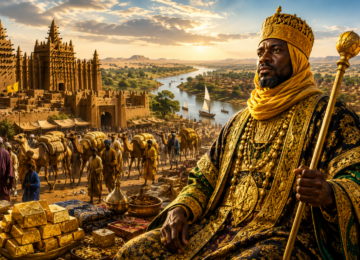
Long before the world spoke of Rome, long before Europe opened its first libraries, and long before the word “civilization” was associated with the Mediterranean, the deep heart of Africa beat with the power of an ancient kingdom: Kush.
The Kushites, from the southern banks of the Nile in what is now Sudan, built a realm of kings and queens, warriors, priests, scholars, and builders. It is a story of resilience and cultural brilliance and of pride as an African people too often buried beneath Egypt’s shadow, yet older than many empires glorified today.
Kush was not a footnote in someone else’s history. Kush was history; mighty, independent, unmistakably African.
The Birth of a Nile Kingdom
The Nile was not just Egypt’s lifeline but also nurtured several African civilizations further south over thousands of years. Here arose the ancient Kingdom of Kush, partly a desert, partly a river oasis, and partly a savannah, with teeming cities like Kerma, Napata, and later Meroë, the crown jewel of Africa’s ancient world.
The archaeologists found evidence that the Kushites mastered architecture, pottery, agriculture, spiritual philosophy, and trade long before many cultures even began writing.
Kush was African, brilliant, and unapologetically proud.
Kush and Egypt
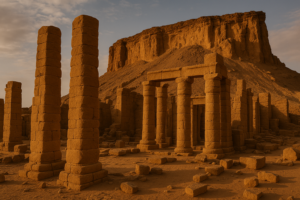
For centuries, the relationship of Egypt and Kush had been intertwined into a complex dance of trade, war, marriage, diplomacy, and cultural exchange. The two were not simple neighbors but powerful civilizations staring into each other’s mirror. But the world was forever changed when the Kushites rose from the south and conquered Egypt.
Yes, it was Africans who ruled Egypt. Not by accident, but by the right of power and legitimacy.
The 25th Dynasty: Africa’s Black Pharaohs
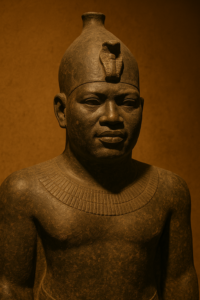
About 750 BCE, the Kushite king Piye marched north and united Egypt and Kush under one throne. It gave birth to the legendary 25th Dynasty, the Dynasty of the Black Pharaohs. These were kings and queens whose skin was dark as the Nile silt, whose crowns were adorned with ram-horn diadems, and whose rule restored Egypt’s temples, spirituality, and architectural glory.
Among others:
- Piye — the unifier
- Kashta — the architect of Kushite expansion
- Taharqa — the golden king whose reign is spoken of in the Bible
- Amanirenas – the warrior queen who later defeated the Romans
Their impact was such that even the Assyrians and Romans wrote about them in wonder.
Meroë: The African City of Iron and Innovation
When its capital was moved to Meroë, the kingdom reached its golden era. The sound of blacksmiths forging iron weapons, artisans carving into pottery, and scribes inscribing into Meroitic; one of Africa’s oldest written scripts-echoed throughout the city. Travelers wrote that Meroë’s furnaces burned day and night, making it the industrial powerhouse of the ancient world.
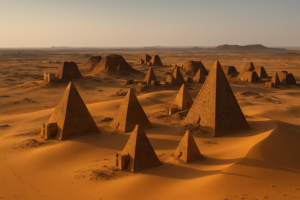
The pyramids of Meroë; numerous but smaller than those of Egypt — celebrated queens, kings, and noble families who were responsible for determining African history.

Women of Kush: The Kandakes
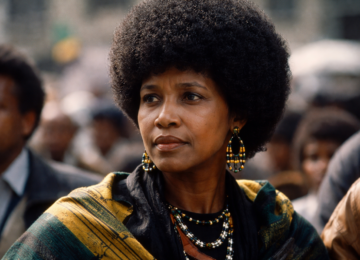
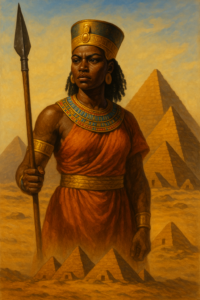
Kushite women were not ornaments; they were leaders. They ruled as queens, queen-mothers, and commanders. The title Kandake (Candace) referred to a queen or queen mother with real political authority. Some Kandakes led armies. Some negotiated peace. While some confronted the world’s greatest empires.
Queen Amanirenas famously fought Rome around 25 BCE, defeating their forces and forcing Emperor Augustus into a rare peace treaty-one of Rome’s few military defeats in Africa. Kushite women walked beside kings, not behind them.
Spirituality, Art, and the Soul of Kush
The Kushite spirituality combined African traditions with Egyptian influences. They worshipped Amun, the lion god Apedemak, and other deities in most effective, distinctively African forms. Their art celebrated:
- Deep dark skin
- Curly hair
- Broad noses
- Full lips
- Strong African physiques
These images stand as a rebuke to modern attempts at erasing Africa from ancient history. The Kushites celebrated themselves, and left their beauty in stone.
The Fall and the Eternal Legacy
Kush declined around the 4th century CE, weakened by shifting trade, desertification, and emerging powers. Its legacy lives in:
- Nubian languages
- Oral traditions
- Archaeological sites
- Sudanese culture
- The pyramids that still rise from the desert
Kush was not an echo of Egypt. Kush was an African empire that helped to shape the ancient world.

Conclusion
The Kingdom of Kush is more than a curiosity of history. It reminds one that Africa’s past is rich, powerful, and foundational to human civilization. These were Black pharaohs ruling mighty kingdoms, building pyramids, commanding armies, and shaping the Nile long before outsiders claimed Africa had no history.
To know Kush is to reclaim Africa’s voice; boldly, proudly, and truthfully.