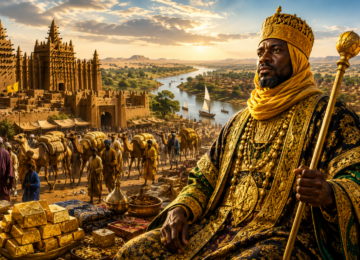

When people think of ancient civilizations, Rome, Greece, or Egypt are often the first that come to mind. Yet, long before European contact, Africa was home to some of the most advanced and sophisticated kingdoms in the world. Recent archaeological discoveries continue to reveal the rich historical legacy of the African continent, uncovering complex societies that dominated vast trade networks, developed advanced technologies, and left lasting legacies that influenced the ancient world.
The Kingdom of Kush
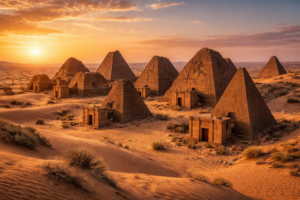
The Kingdom of Kush, one of the most important civilizations in Africa, came into being along the Nile River in the southern part of Egypt. Its history spans over 1,200 years, from about 1070 BCE to 350 CE. The Kingdom of Kush established itself along the important trade routes that connected Central Africa, Egypt, and the Red Sea. Over time, it gained the reputation of being one of the richest civilizations in terms of gold, iron, and craftsmanship.
Moreover, the Kingdom of Kush is known to have developed a unique culture that reflected both Egyptian and Nubian influences. At one point in history, the Kingdom of Kush even came to rule Egypt, with the rulers of the 25th Dynasty of Egypt being part of the Kushite dynasty. The city of Meroe is also known to have been an important center of ironworking and trade, characterized by the construction of the famous pyramids. With the military prowess, economic power, and cultural achievements of the Kingdom of Kush, it is safe to say that it played an important role in the history of Africa.
The Kingdom of Aksum
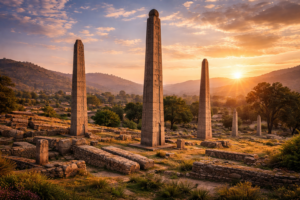
In the Horn of Africa, the Kingdom of Aksum emerged between the 1st and 7th centuries CE. It became one of the great trading empires of the ancient world. The Kingdom of Aksum was based in the region now occupied by Ethiopia and Eritrea. Its capital was the city of Aksum. This location gave the kingdom control over important trade routes along the Red Sea. These routes connected Africa with Arabia, India, and the Mediterranean region. The strategic position enabled the kingdom to acquire wealth through trade. Key commodities included ivory, gold, and agricultural products. As a result, Aksum became an important hub in the global economy.
The Kingdom of Aksum also developed an advanced system of government. It introduced its own currency and constructed monumental stone obelisks. These structures remain as testaments to the architectural skill of the civilization. In the 4th century, the kingdom adopted Christianity under King Ezana. It became one of the first Christian states in the world. The Kingdom of Aksum therefore stood as an important empire in the ancient world. It was defined by its economic strength, political organization, and cultural achievements.
The Ghana Empire

Between the 6th and 13th centuries, the Ghana Empire emerged as one of the first great civilizations in West Africa. It paved the way for later empires such as Mali and Songhai. The empire was situated in the Sahel, with its capital city located in Kumbi Saleh. The Ghana Empire established its dominance through control of vital trade routes. These routes connected West Africa to North Africa. Through this control, the empire built its power and influence across the region.
The empire became known for its enormous wealth, especially from the gold trade. It exchanged gold for salt, fabric, and other commodities. This trade strengthened its position as a major economic power. Under the leadership of powerful kings, often referred to as the Ghana or “war chief,” the empire developed a centralized political system. It maintained a strong military and an organized taxation system on trade activities. The capital city, Kumbi Saleh, grew into a thriving center of trade and culture. It featured designated areas for royal authority and Islamic traders. This reflected a blend of local traditions and Islamic influence.
The Ghana Empire therefore stood as a powerful state in pre-colonial Africa. It was defined by its economic strength, political organization, and urban development.
The Mali Empire
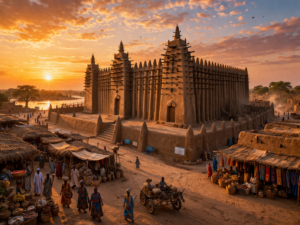
In the 13th century, the Mali Empire was founded, becoming one of the most dominant and influential empires in the history of West Africa, coming after the fall of the Ghana Empire. The empire was founded by the legendary Sundiata Keita, who extended the empire to cover vast territories filled with gold and agricultural products, gaining control of the most important trade routes in the region. The empire, which originated from the capital city of Niani, created a strong empire through the establishment of governors, taxation, and trade routes.
During the leadership of Mansa Musa, the empire reached the height of its success, becoming a global sensation due to the richness of the empire, especially after the legendary pilgrimage to Mecca, which showcased the richness of the empire to the world. The empire, which included cities such as Timbuktu, became a symbol of economic, political, and intellectual success in pre-colonial Africa.
The Songhai Empire
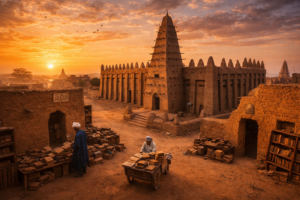
In the 15th century, the Songhai Empire emerged to greatness after the decline of the Mali Empire. Songhai thus became one of the most dominant empires in the history of Africa. From its capital city, Gao, Songhai expanded to vast territories along the Niger River. These vast territories were strategically important due to the significant trade routes connecting West Africa to North Africa. Through military organization, especially under the leadership of Sunni Ali, and administrative reforms under Askia Muhammad, Songhai developed an impressive system of administration characterized by regional administration, taxation, and rule of law.
Some of the major cities that developed in Songhai include Timbuktu and Djenné. These cities became important centers of learning, especially in Islamic studies. Songhai, therefore, became an empire that was not only significant politically and economically but also intellectually and culturally.
Great Zimbabwe

Between the 11th and 15th centuries, one of the most notable urban centers in southern Africa emerged in the form of Great Zimbabwe, which became the epicenter of a highly successful empire. Situated in what is currently Zimbabwe, the urban center became famous due to the sophisticated structures made from stone, particularly the Great Enclosure, which featured high walls without the use of mortar, signifying the high level of engineering acumen in the region. The economic success of Great Zimbabwe can be attributed to the fact that the urban center became an integral part of the trade routes, particularly in the region, which linked the Indians in the Indian Ocean trade, exchanging gold, ivory, and other natural resources in exchange with the people from the Swahili Coast.
The ruling class, which held economic and political power, ensured the success of the urban center, which became a symbol of economic success, sophisticated structures, and the ability of the indigenous people in Africa to create empires, dispelling the myths of the past about the pre-colonial empires in Africa.
Why These Kingdoms Matter Today

Understanding these early African empires is essential. They demonstrate that long before colonization, Africa was home to complex, thriving civilizations that shaped world history. These kingdoms established diplomatic relations across continents, pioneered technological and architectural innovations, and contributed immensely to global trade, culture, and knowledge. From Ghana’s economic systems and Mali’s diplomacy, to Kush’s ironworking and Aksum’s maritime trade, their achievements embody timeless lessons in leadership, creativity, and resilience.
As archaeologists continue to uncover new evidence, the world gains a deeper appreciation of Africa’s pivotal role in human civilization and its enduring contribution to our shared global heritage.