










































































Introduction
Across the sweeping plains of southern Kenya and northern Tanzania, where acacia silhouettes lean into endless skies and dust rises beneath the hooves of cattle, the Maasai people have lived in a deep relationship with the land for centuries.
Their story is not only about culture, beadwork, or bravery; instead, it is a story of conservation. A philosophy inborn in the indigenous worldview in which nature is not viewed as a resource to be exploited but as a living partner to be respected.
Long before NGOs, wildlife rangers, and ecological policies appeared, it was the Maasai who managed landscapes, protected migratory routes, and maintained a relationship of balance with some of Africa’s most iconic species: lions, elephants, zebras, giraffes, and many others.
In a time when climate change and human expansion threaten ecosystems, the Maasai way of life offers something the world urgently needs: A model of coexistence among people, livestock, and wildlife.
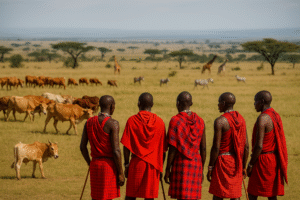
The Maasai Philosophy of Land and Life
To the Maasai, land is not a commodity but ancestral memory, spirit, and lifeline. Their traditional semi-nomadic lifestyle prevents overgrazing and allows grasslands to recover naturally. Moving with the seasons, following rains, and reading subtle signs in the earth, they ensure enough pasture for both cattle and wildlife.
Enkishon is a concept that guides their environmental philosophy, referring to living in balance, prosperity, and harmony with nature. In this worldview:
- Grass is life.
- Water is to be shared.
- Wildlife has a right to existence.
- Human beings must use only what they require.
This is not taught through textbooks but through oral wisdom passed along by elders around evening fires, accompanied by stories of lions, spirits, ancestors, and the land itself.
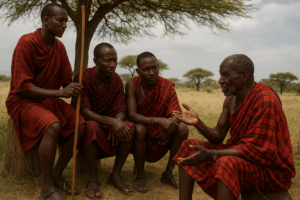
Wildlife as Neighbours, Not Enemies
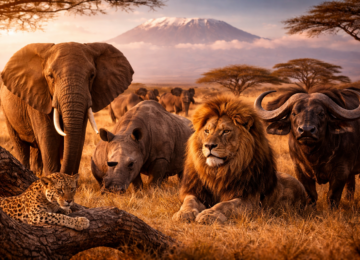
Unlike the pastoral communities around the world, the Maasai have lived for centuries in territories dominated by predators. Lions, hyenas, leopards, and cheetahs walk the same plains as their cattle. And yet conflict is surprisingly rare. Why? Because the Maasai do not consider wildlife as invaders but as co-inhabitants.
Traditional transhumance routes bypass the known denning sites. Pastures are rested deliberately to serve migratory animals. Fortification of nighttime kraals reduces conflict with lions. When a predator takes a cow, elders often interpret it as a sign:
“The lion reminds us that we share the land.”
Modern conservationists now hold the Maasai up as one of the world’s most peaceful models of predator coexistence.
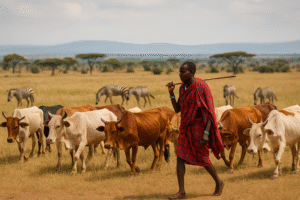
The Role of Traditional Grazing in Ecosystem Health
The Maasai do not fence their lands, nor do they plough them. They do not convert them to monoculture farms. This single cultural choice has preserved some of the most intact natural ecosystems in Africa. Rotational grazing; moving cattle seasonally across vast rangelands, prevents:
- Overgrazing
- Soil erosion
- Invasive species dominance
- Water source depletion
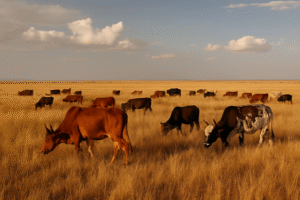
Studies have indicated that the areas managed by the Maasai have more biodiversity compared to protected parks. Why? Because livestock are mimicking old migration patterns, stimulating grass growth much as wildebeest once did across the plains. Maasai cattle are unknowingly yet elegantly taking care of the savannah.
Sacred Spaces and Wildlife Sanctuaries
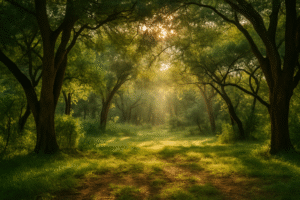
Certain hills, forests, and springs are considered sacred by the Maasai. These places, such as oloibon prayer sites, sacred fig trees, and hidden groves, are strictly protected. It is not allowed to hunt there, trees are not cut, fires are not lit. These have gradually come to be like unofficial sanctuaries for the following:
- Antelope
- Birds
- Leopards
- Medicinal plants
- Rare herbs
Conservation through spirituality flourishes.
From Warriors to Rangers: The New Guardians of the Plains
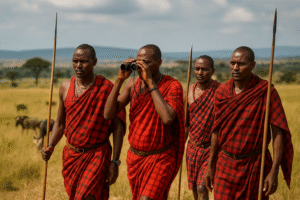
In modern times, many Maasai morans have become wildlife rangers, community scouts, and ecological monitors. Tracking skills, deep familiarity with the land, and a fearless spirit make them exceptional protectors. Community conservancies have given Maasai communities in areas like Maasai Mara, Amboseli, Tsavo, and the Ngorongoro region a chance to:
- Income from tourism
- Land-use rights
- Education programs
- Wildlife protection training
The result? Recovering elephant populations, less illegal grazing, stabilizing lion prides; thanks to local communities leading the future.
A Model for the World
As global conservation continues to evolve, researchers increasingly stress that indigenous knowledge is not outdated; rather it is essential.
The Maasai are living proof that sustainability does not start in boardrooms or laboratories. It begins with stories, in relationships, in respect for land, in ancestral memory. The world’s future may depend on looking backward; toward cultures that understood the land long before crisis forced us to care.
Conclusion
Maasai conservation is not a project, program, or policy; it is a way of life. A philosophy. A rhythm of coexistence passed down through generations. From the cattle grazing to the elders singing, mapping sacred hills to calming lions near kraals, the continued protection of wildlife by the Maasai is not by force, but with wisdom.
Their message to the world is simple:
“When you respect the land, the land protects you.”




I’m often to blogging and i really appreciate your content. The article has actually peaks my interest. I’m going to bookmark your web site and maintain checking for brand spanking new information.
Pingback: Meet the Samburu People of Kenya - Real African Diary
Pingback: Symbolism in African Art: Colors and Meanings - Real African Diary