


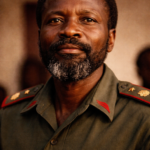

































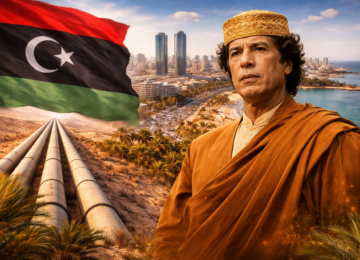


Some names stand out in the history of liberation, their stories inscribed in the flaming rhetoric of revolution. Others, such as Amílcar Cabral, are addressed with the respect that a master teacher deserves. Cabral was an agronomist, poet, political theorist, and military strategist. His role as the founder of Guinea-Bissau and Cabo Verde, two sovereign African countries, is his most enduring legacy. His tale is not just founded on armed struggle but of a deep, intellectual, and cultural war against imperialism.
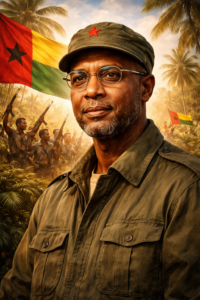
The Engineer of Liberation
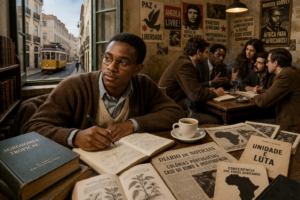
Cabral was born in Guinea-Bissau in 1924 to Cape Verdean parents. Due to his unique upbringing, he found himself at the intersection of two worlds: the mainland and the islands. He received a scholarship to study agronomy in Lisbon, where he flourished alongside Agostinho Neto of Angola and other future leaders of the African liberation movement. He returned to Guinea-Bissau to work as an agronomist for the Portuguese colonial government. His duties included conducting a land census. His greatest strategic advantage was this work because he could perform a personal, on-the-ground survey of the people, their complaints, and the land that would serve as his battlefield.
He used the same level of accuracy he would use when surveying a field to engineer his people’s liberation.
The Weapon of Culture
Cabral co-founded the African Party for the Independence of Guinea and Cape Verde (PAIGC) in 1956. Cabral developed a unique and sophisticated philosophy of liberation rooted in reality, in contrast with other movements leaning heavily on external Marxist-Leninist dogma. Cabral maintained that the destruction of a people’s culture, history, and identity was the most violent aspect of colonialism. The liberation movement needed to be a “re-Africanization of the mind” in order this aspect. Regaining their cultural sovereignty was more important than simply assuming state power. This required appreciating regional dialects, customs, and knowledge bases.
“Always bear in mind that the people are not fighting for ideas, for the things in anyone’s head. They are fighting to win material benefits, to live better and in peace, to see their lives go forward, to guarantee the future of their children,” he famously advised his fighters.
The PAIGC’s struggle was extremely personal and universally applicable to the peasantry because of its practical, and culturally grounded approach.
A War of Transformation
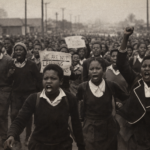
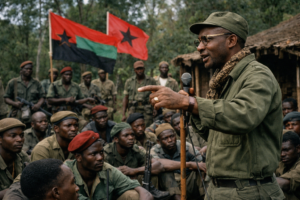
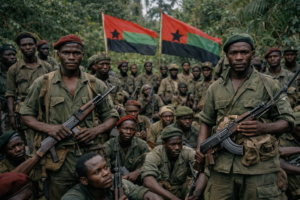
The PAIGC began a liberation war in 1963 under Cabral’s command. However, this was a national endeavor rather than just a military operation. In addition to establishing military camps, they built schools, hospitals, and retail establishments in the areas they liberated. They empowered women to assume roles far beyond those allowed by colonial rule, and taught farmers better agricultural practices. Cabral realized that the struggle was about destroying the old oppressive society as much as it was about creating a new one. He cautioned against the “petty bourgeoisie” taking the place of the white colonists without altering the fundamental systems of exploitation.
He believed that the revolution must be an ongoing process of critical thinking and self-improvement, or it would not be a revolution at all.
The Tragic Paradox and Enduring Legacy
Cabral’s assassination on January 20, 1973, is the cruelest paradox in his life. It happened just months before the PAIGC’s military triumph would result in Guinea-Bissau’s unilateral declaration of independence, which Portugal would recognize a year later. He was killed by a disgruntled former comrade within his own movement in a plot probably influenced by the colonial power. The father of the nations did not live to witness the birth of his offspring.
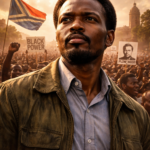
However, his assassination could not kill his ideas. Guinea-Bissau and Cabo Verde became independent, while his theories on national liberation, the role of culture, and the dangers of a revolutionary class betraying its own people became texts in post-colonial studies worldwide. His impact was global, inspiring revolutionaries from Brazil to Vietnam and Black Power movements in America.
Legacy
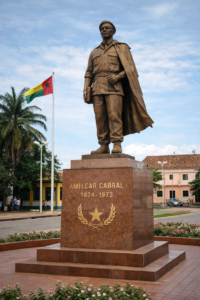
The legacy of Amílcar Cabral2 is a complicated mix of insightful theory and painful “what ifs”. Even though the two countries he fathered have experienced significant political difficulties since gaining their independence, his intellectual contribution continues to serve as a beacon of hope. He taught that real liberation involves more than just raising a new flag; it also entails decolonizing the mind and putting constant effort to create a society deserving of the sacrifices made by its citizens. According to his well-known description of the revolutionary’s role, he was a
“tool in the service of the struggle.”





Pingback: Nkrumaism: The Ideology of African Liberation and Unity - Real African Diary