





















































Introduction
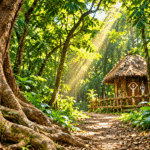
Across Africa, forests hold stories that extend far beyond their trees. Some stand beside villages, rivers and ancient settlements. Others shelter shrines, ancestral burial places and sites where communities continue to observe traditional ceremonies. For generations, African communities have protected these landscapes because they connect people to their ancestors, spiritual beliefs and shared histories. These sacred forests reveal a relationship with nature that goes beyond the value of timber, land or natural resources. They show how cultural beliefs can influence environmental protection and how communities can preserve biodiversity through traditional knowledge and customary rules.
From Kenya’s coastal Kaya forests to Nigeria’s renowned Osun-Osogbo Sacred Grove, these landscapes preserve an important part of Africa’s cultural and ecological heritage. They remind us that protecting nature also means respecting the people, memories and traditions that give certain places their meaning.
Understanding Africa’s Sacred Forests
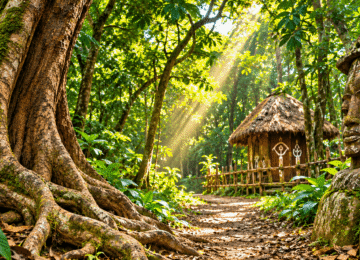
Sacred forests are natural environments which the community protects due to the religious, spiritual, cultural or ancestral values attached to them. African communities associate these forests with particular deities, ancestral spirits, historical events and traditional rites. Different communities use these sacred spaces in different ways. Some reserve specific areas for prayer, initiation, reconciliation and other ceremonies. Others protect particular trees, rivers, clearings and burial sites because their traditions recognize these places as sacred.
African spirituality has no universal approach. There is a wide variety of beliefs and practices that differ from one community, ethnic group or region to another. While one community recognizes certain forest area as their ancestral place, in other communities, this forest will mean something totally different. The only common thing about all of these places is the belief that certain natural sites require special respect and protection. Certain rules are usually established to control entry and activities in such sites, as well as resource collection. Such traditions have protected forests long before conservation programs developed their own environmental laws.
The Kaya Forests of Kenya: Where Ancestors and Nature Meet
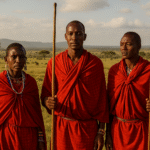
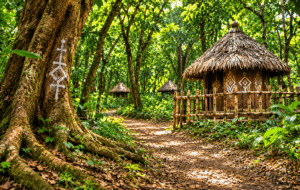
In the coastal region of Kenya, there exist the sacred Kaya forests, which maintain an important link between the cultural identity of the Mijikenda people, their ancestral culture and environmental conservation. The Mijikenda is an aggregate of nine ethnic groups that have Kaya culture at the center of their cultural identity. Kaya settlements date back to the sixteenth century. Although the communities relocated from Kaya settlements to other areas, the still consider them sacred.
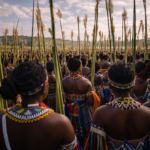
Today, the council of elders referred to as kambi, conserve the Kaya forests as well as their associated culture. The communities come together in these forests for prayers, swearing, burials, initiation and reconciliation. These activities serve to strengthen social ties, besides transferring ancestral knowledge to young generation. In addition, the traditional practices are useful in restricting and regulating access to forest resources and vegetation and thus biodiversity at the coastal area. The sacred Mijikenda Kaya Forests were declared by UNESCO as World Heritage Sites in 2008 while the associated cultural practices were inscribed as Intangible Cultural Heritage in Need of Urgent Safeguarding in 2009.
The Kaya thus conserves not only a rich natural environment but also a living heritage of that environment.
Osun-Osogbo Sacred Grove: Nigeria’s Living Spiritual Forest
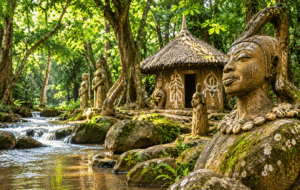
Osun-Osogbo Sacred Grove in southwestern Nigeria represents a unique relationship between the spiritual life, cultural heritage, and natural resources of the Yoruba people. It is situated near Osogbo in Osun State and encompasses the meandering Osun River, which Yoruba mythology considers a manifestation of the goddess Osun, who symbolizes fertility and the vital importance of water. The grove has shrines, sculptures and other sacred places for worshiping Osun and other deities from the Yoruba pantheon. People still visit the sacred grove, and priests and priestesses perpetuate rituals and customs transmitted from generation to generation.
Annual celebration of Osun-Osogbo festival attracts devotees and visitors for the worship of the goddess and cultural activities that reinforce the spiritual traditions of the community. Customary prohibitions against hunting, cultivation, and cutting of trees in some parts of the forest contribute to the preservation of the biological diversity of the area. The Osun-Osogbo Sacred Grove was listed as a World Heritage Site by UNESCO in 2005.
Sacred Forests and the African Understanding of Nature
Most of the traditional belief systems practiced in Africa provide for relationships between human communities, natural environments and the spiritual world. Sacred forests provide physical locations for such relationships to be demonstrated. Trees, rivers, mountains, rocks and particular clearings may have deeper meanings than just being parts of the natural environment. Human communities connect these features to the presence of their ancestors, spiritual guardianship, healing and even significant events of their history. This approach helps in the environmentally-friendly attitude towards nature. People who think of the forest as being sacred will try to abstain from cutting down some trees, disturbing burial sites and exploiting resources inside it.
It does not mean that all African communities have identical beliefs or all sacred landscapes are kept intact. It means that the values of culture and customary management help to determine the use of natural resources. Sacred forests preserve traditional ecological knowledge which is passed from generation to generation. Elders and other cultural custodians can teach medicinal plants, seasons, wildlife and sustainable resource exploitation inside the forest. The traditional ecological knowledge is a part of Africa’s cultural heritage along with language and oral history.
The Ecological Importance of Sacred Forests
There are a number of ways in which sacred forests aid biodiversity conservation. The restriction on activities like logging, hunting, farming, and harvesting enables communities to allow natural habitats to survive in increasingly developed environments. Such forests may serve as habitats for birds, insects, small animals, reptiles, and plant species. Their vegetation may further help in soil protection, support of water systems in the locality and ecological links of natural habitats.
The Kaya forests exemplify this connection in a special way. The restrictions imposed by traditional customs and practices have helped save forest patches in the coast of Kenya despite increasing development and alteration of land use, which have resulted in depletion of natural vegetation. The Osun-Osogbo Sacred Grove is another good example because it helps conserve an important remnant of the high forest of southern Nigeria. Plant species within it have been traditionally known to be used for medicine.
However, the fact that they cannot be used as replacements for large-scale conservation programs cannot be ignored. The small forest patches may be affected by development around, isolation, invasive plants, and changing land use. The main lesson of these forests is in their protection of nature.

The Role of Elders and Traditional Custodians
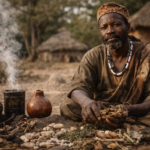
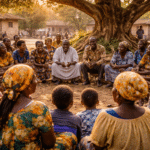
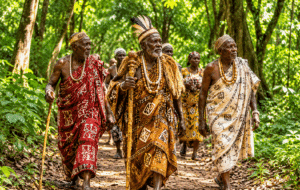
Elders in the community play an essential role in preserving many sacred sites. They usually have the information related to the origin of sacred sites, traditional rites, access restrictions, and other norms related to the management of resources. The elders’ councils are responsible for maintaining the connection between the community and their ancestral grounds in the case of Mijikenda Kaya forests. In Osogbo, traditional religious leaders and community organizations help sustain the spirituality of the Osun-Osogbo Sacred Grove. Custodians not only help in sustaining traditions but also in the transfer of knowledge and cultural rules.
There are many factors that threaten the continuity of traditional custodianship. These factors include urbanization, changes in lifestyle, land scarcity, and decreased involvement in customary practices that can disconnect young people from their ancestors. When communities lose the traditions that explain why they must protect a forest, conservation efforts also lose an important source of local support. Supporting the elders in documentation of oral history with community consent and involvement of youth in cultural education can help.
Threats Facing Africa’s Sacred Forests
Despite their cultural and ecological importance, sacred forests face several threats.
- Urbanisation and land pressure: Expanding towns, roads, agriculture and commercial development can reduce forest cover and fragment natural habitats. Sacred sites may lose their protective surroundings as settlements grow closer.
- Declining traditional knowledge: Younger generations may have fewer opportunities to learn the customs, languages and responsibilities associated with sacred forests. As traditional practices weaken, communities can struggle to maintain established conservation rules.
- Illegal resource extraction: Unauthorized tree cutting, hunting, harvesting and other activities can damage habitats and undermine customary protection systems.
- Tourism pressure: Visitors can support local conservation and cultural education, but poorly managed tourism can disturb sacred spaces. Littering, noise, disrespectful photography and disregard for access restrictions can damage both the environment and the dignity of local traditions.
- Weak community participation: Conservation programmes can fail when authorities exclude traditional custodians from decisions about their ancestral landscapes. Effective protection requires cooperation between communities, cultural institutions, conservation organisations and government agencies.
These threats show why sacred forests need more than formal recognition. They need active protection, community participation and respect for the traditions that have sustained them.
Protecting Sacred Forests for Future Generations
The future of sacred forests in Africa depends on how well the two aspects of natural environment and cultural heritage will be preserved.
- Legal means of protection, ecological restoration and provision of resources for the process can be used by governments and organizations engaged in conservation. But these measures should take into consideration the role of traditional custodians.
- Communities themselves can encourage young people to be interested in their cultural heritage through cultural education, collecting of oral history and participation in traditional activities.
- Tourism can help conservation as long as tourists will follow guidelines of local communities, respect restrictions and participate in community-run initiatives. Sacred forests should not turn into recreational places where visitors do not care about the belief of custodians.
- Documentation is an important aspect as well; researchers, museums and other cultural institutions can document oral history, traditional ecological knowledge and historic information. But they should cooperate with communities and get permissions first.
More importantly, conservation programs should understand that sacred forest is not just nature but also cultural heritage.
Conclusion
Africa’s sacred forests tell stories of belonging, memory, responsibility and continuity. They reveal how communities have maintained relationships with the natural world through beliefs, customs and traditional systems of protection. The Kaya forests of Kenya preserve the ancestral heritage of the Mijikenda people. Nigeria’s Osun-Osogbo Sacred Grove continues to sustain Yoruba spiritual traditions along the banks of the Osun River. These landscapes demonstrate that forests can serve as living repositories of cultural knowledge as well as important natural habitats.
Their survival depends on more than planting trees or drawing conservation boundaries. It requires respect for local communities, support for traditional custodians and a willingness to recognize the cultural values that have protected these places for generations. When Africa protects its sacred forests, it protects more than biodiversity. It safeguards ancestral memory, cultural identity and a valuable understanding of the relationship between people and nature.
These forests remind us that some landscapes cannot be measured by their natural resources alone. Their deepest value lies in the stories they carry and the generations they continue to connect.