










































































Introduction
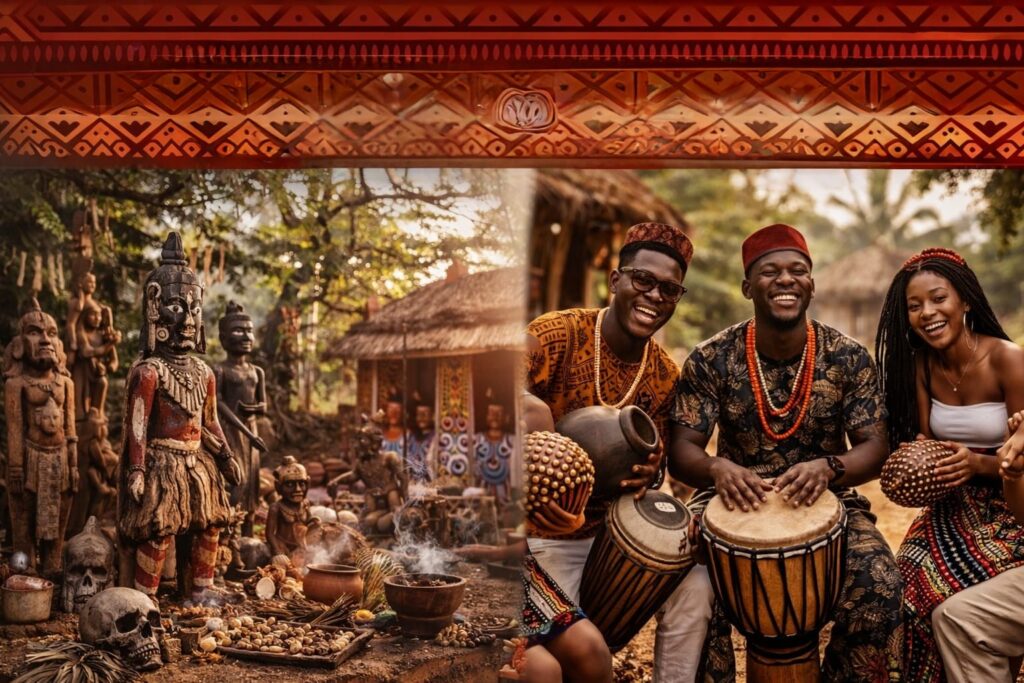
The Igbo people of southeastern Nigeria are among the most vibrant and spiritual populations on the African continent. Igbo traditional beliefs constitute a rich and complex belief system that binds together humankind, nature, and the divine. It is a belief system in which every living and non-living entity is imbued with meaning and purpose in the universe.
At the heart of Igbo spirituality is the belief in balance, or equilibrium, between good and evil, life and death, and the physical and spiritual worlds. There is no isolation; every act, every force, and every entity is involved in the maintenance of equilibrium within the universe.
Chukwu: The Supreme Being
The Igbo believe in Chukwu (also known as Chi Ukwu), the Almighty Creator of the universe. Chukwu is the ultimate source of existence in the universe. He is above all; no one can comprehend Him. Chukwu is not seen; however, His presence is felt in the universe. As the source of life and destiny, Chukwu determines the universe’s order and the existence of things in the universe.
Chukwu is not distant or passive in the Igbo worldview; however, His presence is felt in the rhythm of life, in nature, and in the destiny of human beings. Every human being is connected with the divine through his or her personal spirituality expressed as chi. The existence of chi reveals the personal spirituality of human beings.
Although Chukwu is the supreme being in the Igbo worldview, human beings cannot relate with Him directly. They relate with Him through lesser deities such as alusi or mmuo. Alusi or mmuo is the term used by the Igbo to refer to the lesser deities or the divine messengers. The Igbo relate with the divine through the lesser deities or the divine messengers because they believe that these deities control different aspects of life.
Chi: The Personal Spirit
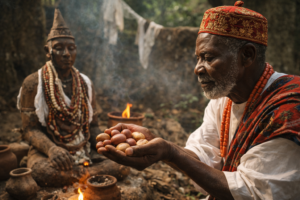
Each Igbo person has a Chi, which is a personal god or spiritual double that is always with him or her throughout life. This is the guiding force in one’s life, which shapes one’s destiny and influences the way one’s life is lived. The Chi of an individual makes his or her fortunes, but it does not operate in isolation from the individual. It is the individual’s actions, decisions, and character that influence his or her Chi. In this way, one’s destiny is not static; it is dynamic. One’s efforts, discipline, and character can either enhance or undermine his or her Chi.
The Igbo proverb, “Onye kwe, Chi ya ekwe,” which translates into “When one agrees, his Chi agrees,” brings together the idea of one’s destiny and free will. It asserts the idea that it is the individual’s responsibility to live his or her life in a way that is in harmony with his or her Chi.
Ancestral Spirits: The Living Dead
According to Igbo cosmology, death does not mark the termination of existence; it is a metamorphosis. The ancestors, referred to as Ndichie, live in the spirit world but at the same time are closely linked with the world of the living. They are not distant figures from the past but are actively involved in the life of the living.
The Igbo believe that the ancestors are actively involved in the protection and guidance of the living. They believe in the ancestors’ role in keeping things in harmony between the two worlds. Those who lived a virtuous life are honored in the spirit world as ancestors, influencing the lives of successive generations.
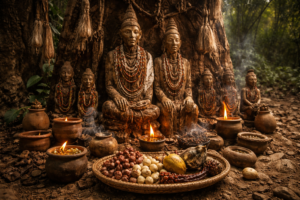
The Igbo perform rituals in veneration of the ancestors, including libations, prayers, and periodic sacrifices. They have ancestral shrines in order to maintain communion with the deceased members of their families.
The Role of Deities and Spirits
The Igbo pantheon consists of various deities (alusi) that control important aspects of life and ensure balance in the universe. These spiritual beings do not exist independently but interact with the world of the living, influencing morality, justice, fertility, and the universe.
Some of the major gods include:
- Ala (Ani) – This is the goddess of the Earth and one of the most revered gods. She is the patron deity of morality, fertility, and the land. Ala (Ani) is the goddess of morality and is responsible for punishing those who violate moral standards.
- Amadioha – This is the god of thunder and justice, depicted by lightning. Amadioha is responsible for enforcing truth and punishing falsehood.
- Ekwensu – This is the trickster god, depicted by chaos, negotiation, and war. Ekwensu is responsible for illustrating the complex nature of life.
Igbo people have dedicated various places to their gods. These places include temples, shrines, and groves. At these places, Igbo priests and priestesses (dibia) perform various rituals and ceremonies. These rituals and ceremonies include offering sacrifices and performing healing ceremonies. These ceremonies ensure balance and harmony between the spiritual and physical worlds.
Divination and Spiritual Guidance
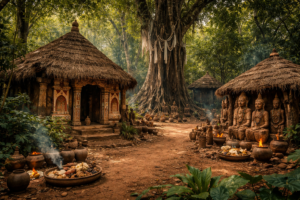
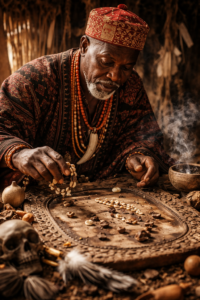
Divination (afa) is an important part of Igbo spirituality. It helps people understand divine will, resolve conflicts, and diagnose both physical and spiritual issues. Instead of leaving things to chance, communities see divination as a structured and sacred process that allows the unseen world to communicate with the living.
The diviner, called dibia afa, serves as a spiritual mediator. He interprets messages from ancestors, deities, and spiritual forces, providing guidance on decisions, misfortunes, and uncertainties in life. People turn to the dibia during significant times, such as before major events, during illness, or when looking for clarity about the future.
Using symbolic tools like cowrie shells, seeds, chalk, and divination boards, the dibia uncovers patterns and meanings that guide actions. This process helps restore harmony among individuals, the ancestors, and the gods, ensuring balance in both the physical and spiritual worlds.
Festivals and Rituals of Renewal
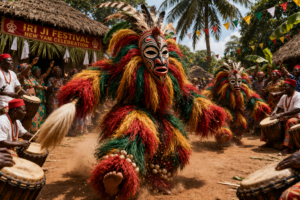
The Igbo calendar is full of festivals that celebrate life, harvest, and renewal. These events mark important changes in both the physical and spiritual realms. The most famous is the New Yam Festival (Iri Ji), a lively thanksgiving to the Earth goddess Ala for a good harvest and the ongoing fertility of the land. During this festival, communities offer the first yams to the gods and ancestors before they eat, showing gratitude and respect for the sources of life. It also signals the start of a new agricultural season, strengthening the bond between people, the land, and the divine.
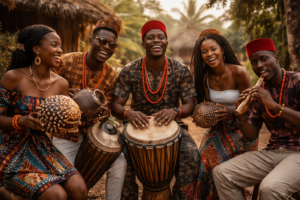
These festivals unite communities through dance, song, drumming, and masquerades. Each performance holds symbolic meaning, often embodying ancestral spirits and moral lessons. In these moments, the line between the living and the spiritual world blurs, reinforcing unity, continuity, and the cycle of renewal that upholds Igbo cosmology.
Modernity and Continuity
Though Christianity and Islam have influenced many Igbo communities, traditional beliefs continue to thrive. They often blend with these modern faiths in everyday life. Instead of disappearing, indigenous spirituality has changed, finding new expressions alongside church practices and contemporary ways of living.
Rituals, proverbs, and ancestral wisdom remain central to Igbo identity. They guide moral conduct, shape social relationships, and provide a framework for understanding life’s challenges. Even in urban areas, traces of these traditions show up in naming practices, festivals, family structures, and respect for elders. The strength of these beliefs reflects a deeper truth: the Igbo spirit cannot be erased. It evolves with time, adjusts to changing realities, and endures across generations. This preserves a sense of continuity between the past and the present.
African Spirituality is our Soul
Beliefs in Igbo culture go beyond religion. They represent a way of life, a living connection between what we can see and what we cannot, between the present and the eternal. These beliefs shape how people view the world, interact with each other, and find their place in the universe. In this view, every river, every tree, and every heartbeat holds a bit of the divine.
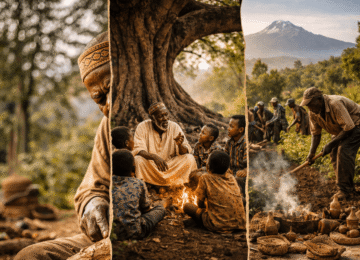
Spirituality is part of daily life. It flows through language, rituals, relationships, and the land itself. It teaches respect for nature, honor for ancestors, and awareness of forces beyond human sight. To live in this context means to engage in a sacred reality. Understanding Igbo spirituality means understanding Africa’s soul; ancient, sacred, and alive. This soul has endured through time, changing yet staying rooted. It reminds us that identity, spirit, and existence are closely connected.


wohh exactly what I was searching for, thanks for posting.
Magnificent web site. Plenty of useful information here. I am sending it to some buddies ans also sharing in delicious. And naturally, thanks in your sweat!