









































































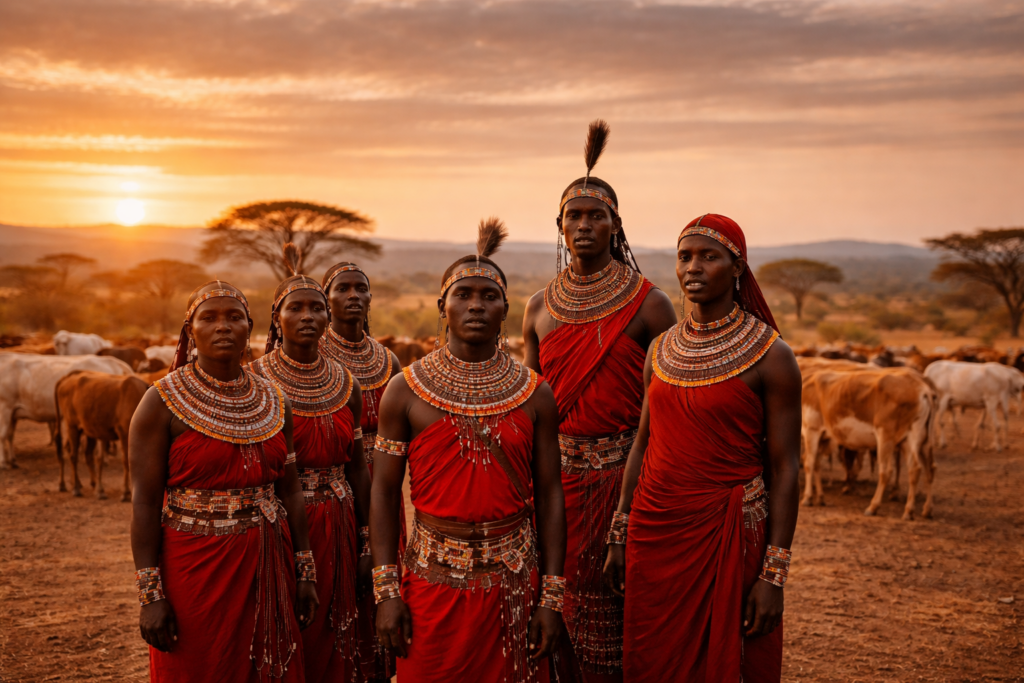

A Tribe of Beauty and Strength
In the rugged landscapes of northern Kenya, where the arid sun scorches by day and the nights are wide and star-filled, lives the Samburu people. Semi-nomadic pastoralists, the Samburu are known for their vibrant colors, striking beadwork, cattle culture, and deep resilience. Their way of life is a living tapestry of tradition, belief, survival, and adaptation.
Who Are the Samburu?
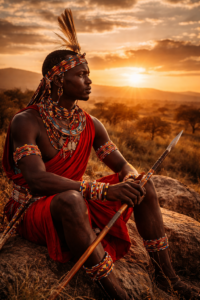
The Samburu are a Nilotic ethnic group, closely related to the Maasai, but with distinct customs, dialect (of Maa), dress, and age-set structures. Their homeland lies across the arid plains and rocky outcrops of northern Kenya; a region both beautiful and challenging. Despite modern pressures, many Samburu families still maintain a traditional pastoral lifestyle.
Their population is estimated to be in the several hundreds of thousands, inhabiting arid to semi-arid zones in Samburu, Isiolo, Laikipia, and Marsabit counties.
Land and Livelihood
Samburus live in the dry and rugged areas of northern Kenya, where survival is entirely dependent on their knowledge of the environment. The economy of the Samburus is mainly pastoral, with cattle, goats, and camels being the backbone of their economy.
Samburus migrate with the seasons in search of grazing and water. The migration is not blind, however; they have migration patterns based on their ancestral knowledge. Cattle are not just a measure of wealth, but also dignity.
Culture, Dress & Adornment
For the Samburu, people do not keep culture in museums or write it down in books; they carry it within themselves. They express it through speech and silence, in the way elders sit and children listen. They carry it through presence. To belong to this world is to know without always being told.
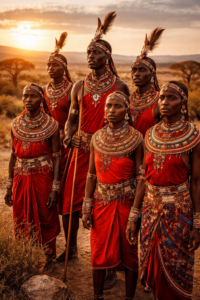
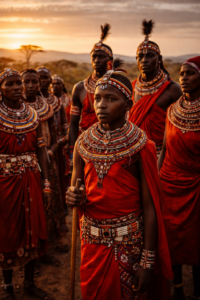
The Samburu do not choose what they wear by chance; it says something. Red shuka cloth looks striking against the pale earth tones, a declaration of who they are, that they are present. Beads lie on the wearer like words, each color, each design, each layer a commentary on the wearer. Adornments are not decoration but recognition.
To see a Samburu man or woman fully adorned means seeing their identity made visible.
Social Structure & Rites of Passage
Samburu society organizes itself around age-sets. A boy does not simply become a man; the community initiates him into becoming. Through rites of passage, elders guide him into warriorhood, where he joins the morans; the warriors who defend the cattle and the people. And then strength yields to wisdom. The warrior becomes an elder. The voice that was once behind now leads.
Nothing is rushed.
Each stage of life is earned.
Initiation (including circumcision) and marriage are major ceremonies that define moral and cultural responsibilities within the community.
Spiritual Beliefs & Values
The Samburu worship a supreme creator known as Nkai (or N’gai). They see life as something held together by forces both seen and unseen. The supreme being, Nkai, is not distant. People feel its presence in the rain, in drought, in the health of cattle, and in the thin line between life and death.. The Samburu spirituality is not separate from day-to-day life. To be alive is to be conscious of what gives life and what can take it away. Respect, courage, and unity are not ideals. They are necessities.
They believe deeply in the power of nature and the ancestors. Ceremonies invoke rain, protect herds, heal sickness, and bind the community together in gratitude and renewal.
Diet, Living, & Daily Life
There is a rhythm in daily life, a rhythm of need and knowledge. Milk provides sustenance. They reserve meat for special occasions. Blood, drawn in a manner that respects life, provides sustenance without extinguishing it. These practices are not unusual. They are adaptations, perfected over time.
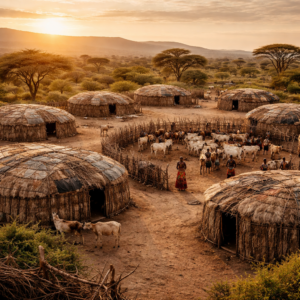
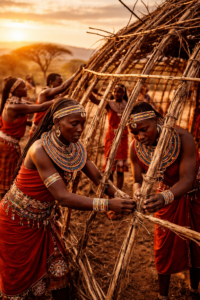
Homes are small, dome-shaped huts called manyattas, made with sticks, mud, and dung, surrounded by thorn fences for protection. Women construct the huts, while men manage herding and security.
Morning arrives early. Activity begins.
Cattle must be driven. Water must be located. Life must be sustained.
Traditions, Music, & Celebration
When the Samburu come together, they don’t celebrate; they affirm. Song is not for performance; it is for remembrance. The voices carry stories that are older than the people singing. Movement is for rhythm; rhythm is for unity. In these moments, the individual loses themselves in the whole. What is left is community; felt, heard, and seen.
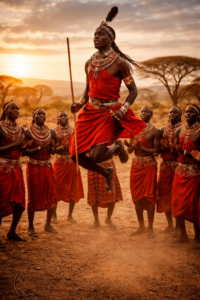
Music, dance, and oral storytelling are the heartbeat of Samburu culture. Warriors leap and chant in rhythmic unison; women sing layered melodies of joy, blessing, and remembrance. Ceremonial events such as warrior graduations (Eunoto), marriages, and blessings are colorful, communal, and deeply spiritual.
Challenges and Modern Change
The Samburu world is not untouched. The land becomes less predictable. Rain arrives later or not at all. Livestock becomes weakened. Paths that were clear are no longer so. Modern systems bring new promises. Education. Infrastructure. New livelihoods. They welcome some while others feel awkwardly juxtaposed with tradition. But the Samburu are not leaving what they have had. They are changing, adapting and moving forward with what must endure.
The Samburu face growing pressures from climate change, diminishing grazing lands, and water scarcity. Access to education and healthcare remains uneven, and younger generations increasingly move to towns in search of opportunities.
Yet, their cultural resilience endures. Eco-tourism and community-based conservancies now offer sustainable income, while local leaders work to preserve Samburu identity in a changing world.
More Than Tradition
The Samburu are a living example of adaptability and balance; thriving in harsh environments through deep knowledge of their land and social cohesion. Their way of life teaches lessons about harmony between people, nature, and tradition.
For Kenya and the world, they stand as a reminder that cultural heritage and ancestral wisdom remain powerful guides in the face of modern challenges.


