



















































Introduction
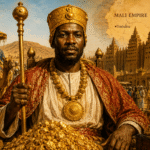
Before Europeans arrived in West Africa, the Mali Empire was an existing and thriving great civilization in the medieval era. Located at the meeting point of the Sahara Desert and the Niger River valley was the Mali Empire, which was known for its richness, stability, flourishing trade, and centers of learning. While a lot of people recognize the Mali Empire through its legendary richness, the truth is that the Mali Empire existed even before the reign of Mansa Musa.
The Mali Empire brought together different people, held some of the world’s most lucrative goldfields, and established trade links between Africa and other parts of the world including North Africa, the Middle East, and Europe. They knew that wealth depended on more than natural resources, and they did their best to govern, trade, communicate, and educate.
In essence, studying the Mali Empire is equivalent to discovering an episode in the history of Africa.
The Birth of an Empire
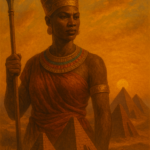
The history of the Mali Empire dates back to the early thirteenth century. Prior to the establishment of the Mali Empire, the Ghana Empire dominated West African trade. As Ghana weakened due to various internal conflicts and attacks by other groups, small kingdoms began fighting for dominance. In these uncertain times, a great ruler known as Sundiata Keita arose.
According to Mandinka folklore, Sundiata was able to triumph despite the obstacles he faced in his own life, and went on to unite the Mandinka kingdoms under one rule. The triumph of Sundiata in the Battle of Kirina in 1235 signaled the formation of the Mali Empire. Whereas most conquerors relied on coercion, Sundiata formed alliances with neighboring communities, fostered cooperation, respected their traditions and established institutions which helped maintain stability in his expanding empire.
Through Sundiata’s leadership, the small chiefdoms which comprised the Mali Empire were transformed into an influential kingdom.
A Land Blessed by Geography
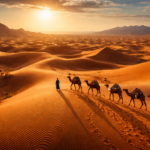
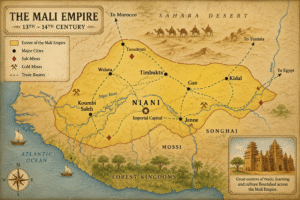
The success of the Mali Empire was partly due to its advantageous geographical location. Mali was situated at the crossroads between the vast Sahara Desert and the forests of West Africa. The northern part of the empire was connected through the vast deserts with Morocco, Egypt, and the Mediterranean Sea. In the southern part of the empire, there were fertile lands abundant in forests, waterways, and minerals. This geographic location made it possible for traders to trade in goods which were rare in different places. Gold went north. Salt went south. Knowledge traveled in all directions.
The Niger River also helped the empire prosper thanks to agriculture, fishing, and trade. Communities developed around the river, which provided food for burgeoning cities. Mother Nature provided Mali with incredible opportunities, while wise governance ensured long-term prosperity.
Gold and Salt: The Wealth of an Empire
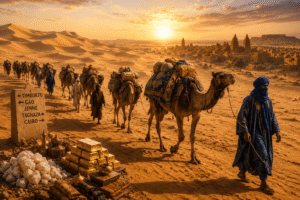
Gold made Mali famous, but salt made Mali an irreplaceable entity. The regions like Bambuk and Bure (Present day Guinea) in West Africa were abundant in gold that could be found in great amounts. People would take the gold to cross the Sahara desert. Some historians suggest that during the 14th century most of the gold of the world came from West Africa. But gold alone was unable to sustain life.
The salt extracted from the desert of Taghaza and other locations in the Saharan region kept the food fresh and provided the necessary minerals for the people living under the hot sun. Caravans traveled through the desert to bring huge chunks of salt to South in exchange for gold, ivory, leather, kola nuts, and agricultural produce.
Mali Empire managed the trading routes with surprising effectiveness and made the business one of the most profitable activities by ensuring safety of the traders and collecting the taxes. Trade was not only about money. It brought new languages, technologies, religions, arts, and knowledge to Africa and the world outside.
Sundiata Keita: The Architect of Mali
Every great empire begins with a visionary leader. For Mali, that leader was Sundiata Keita. While Mansa Musa is remembered because of his riches, it should be acknowledged that Sundiata laid down the foundation without which such affluence could not take place. The first step taken by Sundiata was to establish systems of government that combined centralization with decentralization. Instead of overthrowing local leaders, he ensured that they retained control over their lands but did so under the empire. This helped in ensuring peace in culturally varied territories.
According to Mandinka oral tradition, Sundiata established ideas of justice, cooperation and social responsibility, which remained relevant in the empire even after him.
An Empire Governed Through Wisdom
The Mali Empire covered a large territory where there were numerous ethnic groups with diverse languages and cultures. The rule over such a heterogeneous population needed not only military power but also diplomacy, justice, and good administration. The emperors appointed governors in the distant provinces, while the villages continued to be governed by local chiefs based on customary rules. There were councils of elders and advisors who assisted the ruler in making political and judicial decisions.
Justice was either based on the customary law of Africa or Islamic law, depending on the province and the people. Such an approach ensured that diverse communities could retain their identity while still supporting the empire. The Mali Empire did not seek to force a homogeneous culture on its diverse population but rather appreciated diversity in order to ensure its stability.
Cities That Connected Continents
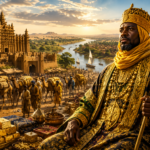
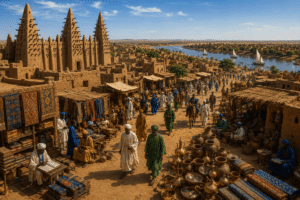
Mali Empire had among the most notable cities in medieval Africa, all being very essential for the wealth and power of the empire. The capital Niani was the center of politics and governance in the kingdom; the place where emperors made their decisions. City of Gao became the commercial city full of merchants from the Sahara, while Timbuktu gained fame all around the world as both a trade and learning center.
Traders from North Africa, Arabia and other parts of the world brought textiles, pottery, books, spices, perfumes, horses and precious metals to the cities. Marketplaces were full of activity and noise from different languages of trading people and exchange of cultures and ideas. Apart from the flourishing business environment, cities became gathering places for scholars and artisans. This way, they created a powerful and proud African civilization which successfully combined international trade with its unique culture.
Learning Before Universities Became Famous
Often, when people talk about scholarly studies in the medieval ages, the continent of Africa does not immediately come to mind. However, it is imperative to note that the Mali Empire developed an admirable academic culture much earlier than most prestigious universities were established in other parts of the world. While Mansa Musa invested in scholarship later on in his rule, scholars, traders, jurists, and even religious figures started moving to Timbuktu way before that happened.
The written word was held in high regard and books were hand-written and handed over to future generations as invaluable knowledge. Scholarly work was greatly respected, and the pursuit of education opened doors to leadership and authority. From religion and law, students studied everything under the sun including science and mathematics, creating the fertile ground for ideas to thrive and grow. This well-established practice made Timbuktu ready for the boom of scholarship under the rule of Mansa Musa. The commitment to education in the Mali Empire showed that the best way to use wealth was not to amass it, but to use it to learn.
Why the Mali Empire Became Great
Many civilizations have had access to rich natural resources, yet few were able to create a legacy from this wealth. The Mali Empire reached great heights by balancing the elements of economic success with political stability and cultural diversity. The leaders of the Mali Empire knew that no civilization can exist just by having access to gold. Instead of just taxing the trade routes, the Mali Empire leaders secured the routes and made sure that the commercial exchanges remained peaceful and the relationships with the surrounding kingdoms were established not only by military force.
The Mali Empire was hospitable to all types of travelers, merchants, and scholars coming from distant places and at the same time preserved its unique African culture and system of government. The Mali Empire cherished the sense of justice, unity of diverse groups of people, and commerce and education as much as each other. In such a way, the Mali Empire created a society where all those things coexisted successfully.
Conclusion
The rise of the Mali Empire marked one of the defining chapters in African history. Long before colonial boundaries divided the continent, Mali demonstrated that African civilizations could build prosperous economies, stable governments, vibrant cities, and international trade networks that rivaled those anywhere in the medieval world. Its success rested not only on gold but also on leadership, diplomacy, and vision. The empire transformed geography into opportunity and commerce into civilization. It laid the foundation upon which one extraordinary ruler, Mansa Musa, would later build an even greater legacy.
To remember the Mali Empire is to remember an Africa that led, innovated, and inspired. Its story reminds us that the continent’s greatest treasures were never its gold alone, but the people and ideas that turned that gold into one of history’s most remarkable civilizations.
No discussion of the Mali Empire is complete without its most famous ruler. Read next: Mansa Musa: The Richest Man in History and the King Who Changed Africa.




Great content! Keep up the good work!
Pingback: Mansa Musa: The Richest Man in History and the King Who Redefined Wealth - Real African Diary
Pingback: Sahara Desert: Exploring the Largest Hot Desert - Real African Diary