









































































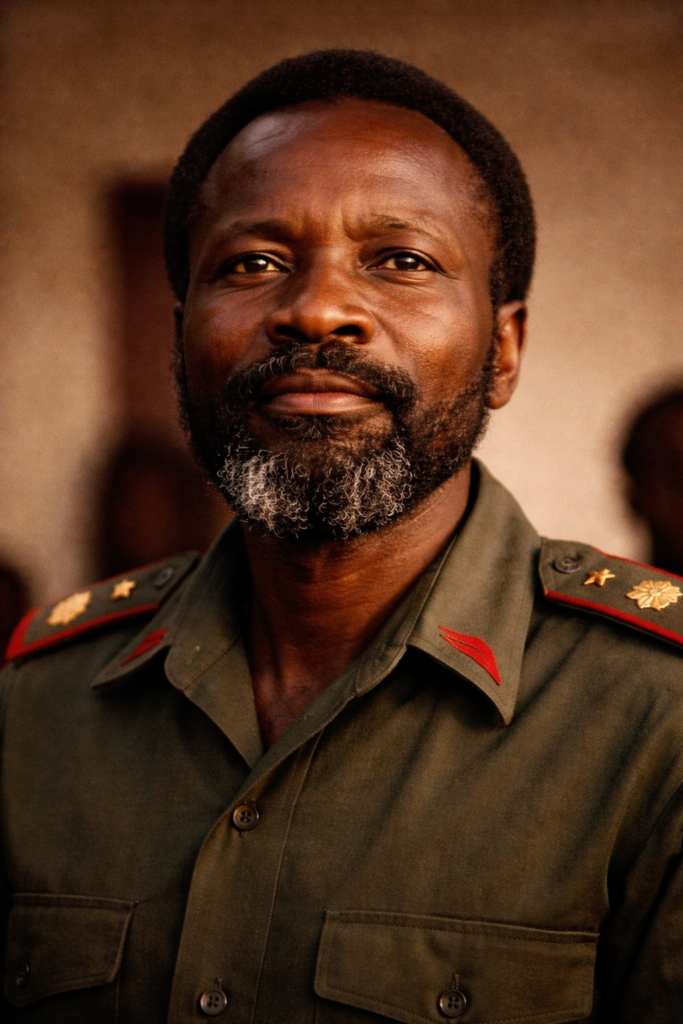

The Man Who Refused to Whisper Freedom
Samora Moisés Machel did not speak softly about liberation. He spoke with fire. He believed freedom required discipline, sacrifice, and clarity of purpose. When Mozambique rose from its centuries of Portuguese colonial rule, it did not rise quietly. It rose with Samora Machel’s voice that cut through fear, confusion, and compromise.
Machel did not inherit power; he wrested it from empire. He did not romanticize revolution; he organized it, armed it, and insisted it serve the people rather than ego. In him, Mozambique found a president and a conscience forged in the struggle.
From Nurse to Revolutionary
Samora Machel was born worlds apart from the likes of a president. He was a nurse by training, caring for Black Mozambicans whose lifespans had already been reduced by the reality of colonialism. Numerous hospitals and clinics opened his eyes to the suffering caused by policy rather than fate.
He joined FRELIMO, not because an act of rebellion would have been heroic, but because surrender was unthinkable. With Eduardo Mondlane’s tragic death by assassination in 1969, Machel came to the forefront. He did not resort to posturing. Instead he reorganized, trained his fighters and made warring factions one. He organized liberation from a scattered resistance into a cohesive movement.
Liberation as Responsibility, Not Reward
Mozambique gained its independence in 1975. The flag went up. The colonizer pulled back. Celebration followed, and then Machel could have rested on his laurels. Machel made it clear that independence without the possibility of change meant nothing to him. He addressed the workers, peasants, and soldiers in particular and called on them to be literate, productive, and unified. He told them that:
Corruption, tribalism, and laziness pose a greater threat to our freedom than the guns of the colonizers.
Unlike other leaders, Machel did not pander to the crowd. He challenged them. He reasoned that in order to have a revolution, there had to be constant renewal.
A President Who Walked Among the People
Samora Machel was a governor close to his people. He visited farms, industries, and schools. He rebuked those officials who let him down publicly. When he made a speech, it was filled with humour, rage, and lesson equally. He did not separate leadership from moral example.
Machel considered the state a weapon and not a throne. So, he insisted that Mozambique should begin with serving the poor despite a lack of much. In fact, they were surrounded by their enemies.
Standing Tall Against Apartheid
Principle came at a dear price to the people of Mozambique. Machel was uncompromising in his refusal of apartheid South Africa’s requests. He provided safe haven to freedom fighters in struggles adjacent to his own. He advocated the cause of African liberation outside of Mozambique. Such a position obviously encouraged counterattacks. The apartheid-supporting ‘destabilization campaigns’ drained the resources of Mozambique. Sabotage, proxy wars…
Machel refused to take a step back. “These attacks,” he said, “are a price of dignity.”
Death in the Mountains, Fire in Memory
Samora Machel died in an air crash at Mbuzini, near the border with South Africa, on October 19, 1986. Africans think that an accident was not enough to explain his death. There is no agreement on what happened. Suspicion exists. Death, however, did not remove his presence.
Machel exists in Mozambican politics through an institutional memory that is a benchmark: uncomfortable, demanding, and hard to follow. Machel is a leader to whom many people refer, but only a few can identify with him.
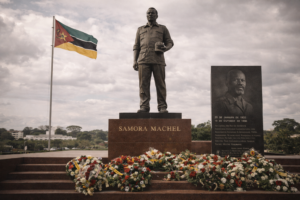
Why Samora Machel Still Matters
Africa remembers many of her leaders. Very few teach today. Samora Machel teaches that liberation requires character. Teaching that leadership entails proximity and not distance, Machel refers that freedom and a lack of discipline will swiftly decay. In a world where slogans have come to substitute for service, Machel’s example serves as a corrective. He has a message for Africa: revolution has to ripen with responsibility. Otherwise, it self-destructs with its own rhetoric.
Samora Machel burned brightly. He burned honestly. He burned for Mozambique.





This was beautiful Admin. Thank you for your reflections.