Introduction
Whenever discussions arise regarding the struggle for freedom in South Africa, Nelson Mandela’s name comes up frequently. However, there was another revolutionary figure that transformed the nation even before democracy came into being; Steve Biko. Born in 1946, Biko was not only an activist, but also a philosopher, a writer and a visionary that undermined the mental structure of apartheid. It was a time when oppression made Black South Africans believe that they were inferior and Biko defied that notion. The Black Consciousness Movement that he inspired urged individuals to shed their fears, accept themselves and regain their dignity. Not only did he call for political liberation of Black people from the oppressive regime of apartheid, but he also urged them to liberate their minds as a prerequisite to social and political freedom. While Steve Biko’s life was short-lived due to death at the age of 30, his teachings have managed to survive him.
Early Life: From Humble Beginnings to Revolutionary Thought
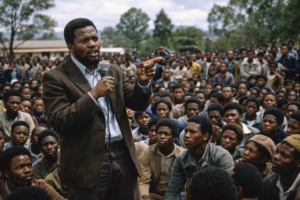
Steve Bantu Biko was born on December 18, 1946, in King William’s Town (Qonce) of South Africa’s Eastern Cape to a humble Xhosa family. Steve was exposed to the brutal effects of the apartheid regime from an early age, as this system deprived Black South Africans of their right to equal opportunities and recognition. This experience is what developed Biko’s sense of political awareness and fueled his dedication to social change.
In 1966, Steve enrolled in the University of Natal Medical School where his leadership and activist abilities took full bloom. During his time as a member of the National Union of South African Students (NUSAS), he became more discontented with the fact that this body was headed by whites and did not represent the needs of the black community. In 1968 Steve helped in founding the South African Students’ Organization (SASO). SASO comprised of solely black students and would later form the basis of the Black Consciousness Movement (BCM), which advocated for self-respect and pride among the black South Africans.
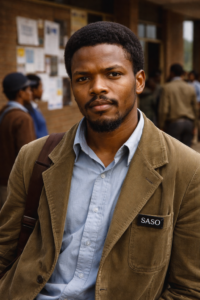
The Birth of Black Consciousness
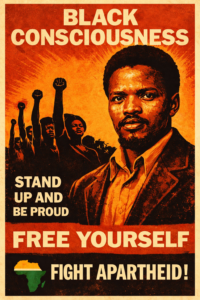
The Black Consciousness Philosophy was an ideology that was fostered by Steve Biko through SASO which encouraged Black South Africans to restore their self-respect and take pride in their identity, as well as ignore the effects of apartheid on their minds. It was his opinion that political freedom would not be possible until mental liberation was achieved. According to him, the existence of apartheid depended not only on the laws and violence that existed under this regime, but also the ability of Black South Africans to be convinced of their inferiority. As he himself said:
The most potent weapon in the hands of the oppressor is the mind of the oppressed.
It was through Black Consciousness that Biko turned philosophy into action. He, along with other activists, organized the establishment of the Black Community Programs (BCP), which included setting up health clinics, education projects and community development initiatives which focused on bettering the lives of the Blacks in South Africa. In 1972, he formed the Black People’s Convention (BPC), which took Black Consciousness from campuses to communities all over South Africa.
Persecution and Banning by the Apartheid Government
The influence of Steve Biko grew so much that the apartheid government felt threatened by it. This resulted in placing a banning order on Biko in 1973 which limited many aspects of his personal and professional life. As per this order, Biko could not give any speech in public, associate with more than one person at once, travel freely without permission and have his writings published in newspaper or other media outlets. Thus he had to remain confined within the limits of his birthplace called King William’s Town.
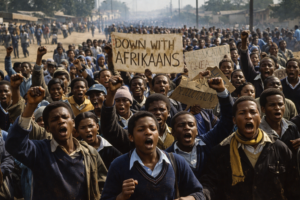
But in spite of being under the strict surveillance of government, Biko continued to organize protests against apartheid and influence the people with his philosophies of Black Consciousness Movement. These ideas found their way in the hearts of young people of South Africa who decided to resist apartheid and demanded equality for themselves. These philosophies of Steve Biko gave rise to the Soweto Uprising of 1976 when more than 20,000 students rebelled against the compulsory use of Afrikaans in schools. The brutal actions of police against them resulted in many deaths and injuries.
Arrest, Torture, and Death in Custody
Steve Biko was arrested on August 18, 1977, at a police roadblock under South Africa’s Terrorism Act and detained. While detained, Steve suffered physical assault by security officers, who tortured him to cause injuries to the head. Despite being critically ill due to head injuries, Steve Biko did not receive appropriate treatment, and the security officials moved him more than 1,000 kilometers from Port Elizabeth to prison in Pretoria despite his critical state. Biko succumbed to a brain injury on September 12, 1977, aged just 30 years.
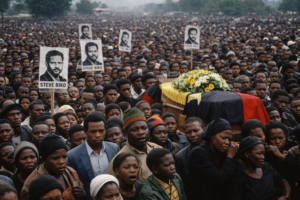
The government of apartheid regime attempted to mislead people that Biko had died through a “hunger strike.” This effort to cover up the true circumstances of Biko’s death later unraveled. Steve Biko died from the injuries inflicted to him while in custody. The brutal killing of Biko shocked people all over the world, increased criticisms against apartheid and made Steve Biko an important symbol of liberation movement, whose views influenced people even after his death.
Personal Life and Complexities
Just like many other important historical figures, Steve Biko lived an interesting life full of significant successes and controversies. Being a charismatic and intelligent man, Biko created close bonds with several women throughout his life. In addition to having children with his wife, Ntsiki Mashalaba, he also became father to two children born from his relationship with Dr. Mamphela Ramphele, an important anti-apartheid activist and thinker. He also had children from other relationships.
Nevertheless, these controversial aspects of his life did not diminish his significant contribution to the fight for freedom of South Africa. The importance of Steve Biko will always lie in his courage, philosophy of Black Consciousness and his relentless effort to give dignity back to oppressed peoples. Just like other great men, he was a complicated person whose mistakes did not diminish his great success in the public sphere.
Biko’s Enduring Legacy
Steve Biko’s legacy continues to live on in South Africa and all around the world even long after his tragic demise. In fact, his Black Consciousness philosophy is among the greatest ideas that have come out of the struggle against apartheid in South Africa. Today, his words continue to resonate in many books, songs, researches, articles and movies. Some of the best books include Don Worsds’ Biko and the movie Cry Freedom, produced in 1987.
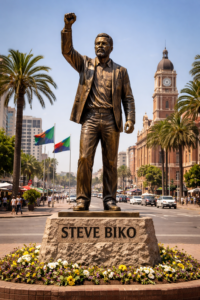
However, the legacy of Steve Biko extends much further into the current generation than just in the history books. Today, there are many monuments and institutions named after him including schools, universities, hospitals, museums and memorial gardens in order to commemorate the great contribution he has made to freedom and human dignity. He rests in peace at the Steve Biko Garden of Remembrance in Ginsberg Township. Over forty years since his tragic demise, his message is inspiring justice, equality and African self-determination around the world.
Conclusion
While the death of Steve Biko may have taken away his voice, it magnified his message. The apartheid regime had underestimated how a single man could influence an entire nation, despite being imprisoned, gagged and even beaten to death. The philosophy of Black Consciousness would continue to thrive even after his death, as people began to realize that change starts with a liberated mind.
Steve Biko taught everyone about the power of ideas. The oppressive government had tried everything possible in order to crush its ideology, which was based on the premise of fear. Today, Steve Biko remains a reminder of what happens when a free mind refuses to succumb to oppression. He will always remain an icon of intellectual strength, black pride and African resilience. More than four decades since his death, the words of Steve Biko still echo in the minds of many people:
Black man, you are on your own.