



















































Introduction
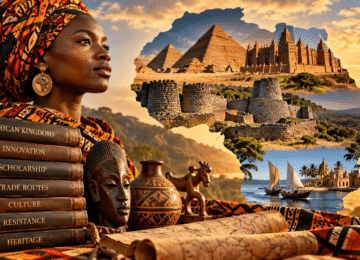
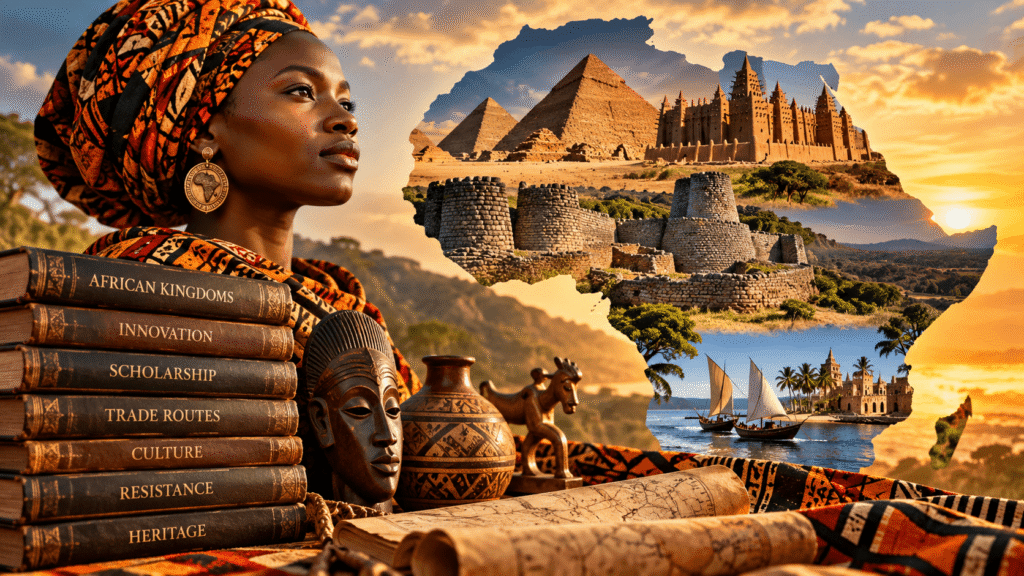
What if you were to open your world history book and find that Africa only gets a few pages before going on to European exploration, slave trade, and colonization? It would give you an incomplete view of the history of humankind. Africa has a long history of state formation, intellectual activity, trade, technological advancement, interactions and political change. African societies have built their own cities, formed their own kingdoms, created systems of government and interacted with societies beyond their borders.
However, many historians of the world do not provide these events with much coverage. They tend to see Africa as a place where events happen as a result of actions elsewhere, instead of being a continent where Africans made things happen themselves. Africa’s history must never be reduced to a footnote because Africa has always been an integral part of the main story of humankind. It will help us to understand how civilizations developed, how ideas spread and how societies interacted.
Africa Occupies a Central Place in Human History
The history of Africa plays a very vital role in studies related to human origins. Archaeological studies in this region have enabled the scientists to understand different stages of human evolution which took place in eastern and southern Africa. But it is not just the prehistoric times when Africa played a significant role. Different societies were shaping their environment and developing political, economic and cultural structures in recorded history. The best example is the ancient Egyptian civilization but there were other civilizations too. Kush, Aksum, the Swahili trading towns and the civilizations of West and Southern Africa should also be considered.
These different societies followed different historical trajectories. Some became great traders, some became important political powers and others developed different religions and arts. The idea of considering Africa a side note to history ignores the diversity of its history and gives the false impression of Africa playing an occasional role in human civilization.
African Kingdoms Built Powerful Political and Economic Systems
Long before European colonial rule, African rulers governed territories, organized trade, negotiated alliances and managed resources. Their societies developed political institutions suited to their circumstances, geography and economic needs.
The Mali Empire and the wealth of West Africa
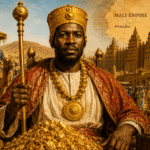
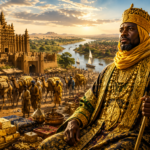
The Mali Empire grew to become one of the most powerful empires in West Africa during the medieval times. Its placement within the trading networks enabled it to bring communities, markets, and trading networks together throughout the Sahara Desert region. Goods like gold, salt, among others, were traded through these networks to facilitate merchants, towns, and political centers. The rulers controlled areas that had valuable natural resources and trade routes. The ruler of Mali, Mansa Musa, is renowned for his opulence after his pilgrimage journey to Mecca in the fourteenth century.
However, limiting the history of the Mali Empire to the wealth of one of its rulers fails to capture the whole picture of governance, trade, learning, and networks. It was part of a larger African world that consisted of traders, scholars, artisans, and political figures.
Great Zimbabwe and the power of Southern Africa
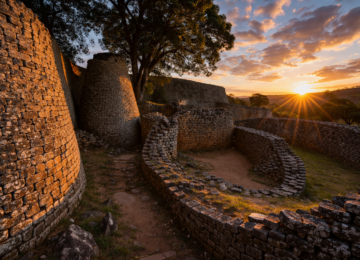
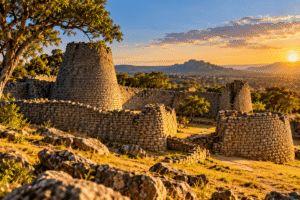
In Southern Africa, Great Zimbabwe became an important urban and political center. Its architectural achievements illustrate a high degree of understanding of construction skills and organizational capacity to conduct large-scale construction work. Great Zimbabwe was also part of international trading relations. The significance of its history contradicts the assumption that complex urban centers were created in Africa as a result of the influence from outside. This is a reminder that African communities have created institutions, accumulated wealth, and followed their political and economic interests. The history of these societies should be studied in the same way as that of any other civilizations.
African Scholarship Deserves Greater Recognition
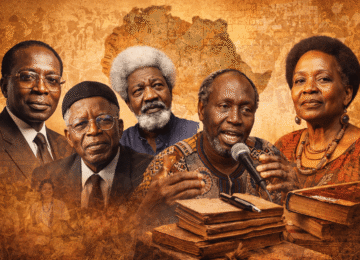
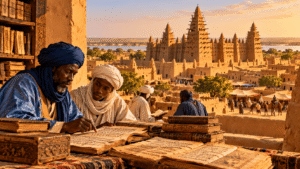
History of intellectual activity on the African continent is much more diverse than achievements listed in many basic books. Timbuktu was the center of Muslim scholarship in the fifteenth and sixteenth centuries in modern-day Mali. There were mosques, schools, scholars and manuscripts that preserved valuable information and supported education. The strategic location of the town in the systems of trade connections in West Africa and trans-Saharan trade brought scholars and businessmen to exchange ideas, teach students and distribute manuscripts. UNESCO appreciates Timbuktu as the center of intellectual and spiritual life.
Nevertheless, Timbuktu is only a part of the intellectual history of the continent. Different communities of the continent preserved knowledge through various means such as written texts, oral traditions, poetry, music, proverbs and specific practices to transfer memories of the past, explanation of the culture and teaching of descendants. Oral history should be particularly appreciated. Lack of many written sources cannot indicate absence of the history of a society. It is necessary to investigate all sources, written and oral, critically. Acknowledgment of the African scholarship provides additional insight into knowledge preservation and sharing.
African History Is Also a Story of Innovation and Exchange
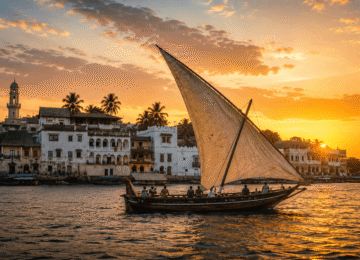
Historical contributions made by Africa cannot be separated from migration, trade, skills and ideas that moved around the continent. Agricultural techniques, metal work practices, artistic skills, architecture and trade systems were all developed and evolved based on local expertise and changing environmental factors. The Kingdom of Aksum, located in current Ethiopia and Eritrea, developed into a powerful civilization with trading links throughout the Red Sea region. It is part of Africa’s history in which African civilizations took part in global networks at various times in antiquity. On the coast of East Africa, Swahili cities provided links between Africa and the Indian Ocean traders. This contact fostered movement of goods, languages, religious beliefs and cultural practices.
Africans were proactive participants in such networks. The traders conducted business, rulers established relations, craft makers modified skills and communities created unique cultures through contact. This history goes against the perception that innovation was always brought into Africa. Africans developed their own knowledge base, modified external influences and were involved in broader contacts. Such an appreciation leads to the proper understanding of world history and diverse paths along which knowledge, technology and culture moved through civilizations.
Colonialism Should Not Define the Entire African Past
Colonialism profoundly transformed African societies as European powers seized territories, imposed political systems, redirected economies and extracted resources. Colonial administrations also reshaped education and historical interpretation, often prioritizing European perspectives. However, African history neither began with colonial conquest nor ended with independence. Before colonial rule, African societies had experienced centuries of political change, commerce, migration, intellectual activity and cultural development. During colonialism, Africans resisted occupation, negotiated its pressures and organized movements for freedom. After independence, African states confronted challenges involving governance, economic development, national identity and international relations.
Focusing almost exclusively on colonialism leaves important parts of this history unexplored. It obscures earlier societies, African decisions during periods of upheaval and the diverse paths countries followed after independence. Such an approach can also portray Africans as passive recipients of external forces rather than active participants in shaping their futures. A fuller account recognizes both external pressures and African agency. It examines conflict alongside cooperation and acknowledges hardship without reducing entire societies to suffering. Colonialism matters, but it should never define the whole African historical experience.
The Slave Trade Must Be Studied Without Erasing African Agency
Transatlantic slave trade caused immense harm to African societies and led to changes in economic, social structures within several continents. Its implications are very important to the discussion of inequality, identity, historical memory, and reparations. Nevertheless, studying this history is not just about presenting Africans as victims. The experience of the slave trade in African societies was varied. Some societies refused to be slaves, others tried to protect their people from being captured, while some authorities and businessmen were involved in systems of capture and selling of people. The transatlantic slave trade was driven by demand, maritime power, colonisation and plantation economy.
In studying this history, it is necessary to look at these interactions without generalising Africa as one political and moral agent. It is also necessary to consider the history of those people who were slaves and their descendants and what they did to become free, preserve culture and political rights. This allows us to understand all of the parties who took part in the trade and also prevents centuries of African history from being summarised in one tragedy.
African History Helps Young People Understand Identity and Belonging
History shapes the way people view themselves and their place in the world. When educational materials overlook African accomplishments, it might be difficult for the students to relate the communities to the larger narrative of humankind’s evolution. A more thorough historical background would remedy that. The students who study history of African states, scholars, artists, merchants, inventors, political movements get to know about more diverse historical experiences. They realize that there has never been a homogeneous African society and people of the continent create their destinies by different means.
Knowledge about their history is helpful for the young Africans as it can provide deeper insight into culture without idealization of the past. Each society has its own achievements, disputes, conflicts and transformations. History teaches to look at all aspects objectively. Studying African history would help the students dispel stereotypes and critically analyze any assertions rather than take anything for granted. Historical narratives do not appear out of thin air but emerge from the analysis of evidence and comparison of societies. This would help all students. Those who are not African would get a fuller picture of the interconnected world where civilizations arose.
African History Must Occupy a Greater Place in Education and Public Life
Changing how the world understands African history requires deliberate action. Schools and universities should expand their coverage of African civilizations, intellectual traditions, political systems and trading networks. Educators can place African developments alongside events in Europe, Asia and the Americas to demonstrate how societies influenced one another. Publishers and media organizations can also broaden public understanding through documentaries, podcasts, museums and digital publications that explore neglected histories and present credible evidence. African researchers, writers and cultural institutions must help preserve this heritage. They can document oral traditions, support archaeological research, publish accessible historical accounts and make archival materials available to wider audiences.
UNESCO’s General History of Africa project offers an important example. Launched in 1964, it brought African and international scholars together to develop a comprehensive account of the continent’s past beyond perspectives inherited from colonial historiography. The project highlights the importance of sustained research, collaboration and investment. Recovering neglected histories requires more than changing textbook language; it demands credible evidence and continued scholarship. Ultimately, education must present African history as an essential part of world history, not an optional subject.
Conclusion
The history of Africa should not derive its relevance from any other continent. The relevance of African history emanates from the contributions made to the human civilization by the different African civilizations throughout history. From ancient kingdoms, trading routes, scholarly centers and liberation movements among others, there is a diverse historical experience in Africa. Treating African history as merely a footnote diminishes our understanding of Africa and undermines the general narrative of human development. However, bringing back the lost historical experience does not imply glorifying the past and overlooking its controversies and injustices. It entails conducting an in-depth analysis and study of African societies through the same rigorous and objective approach as other societies.
The process entails much more than simply incorporating the names of important Africans into textbooks. It implies rethinking some preconceived ideas about Africa, preserving historical records and treating the Africans as agents in determining their own destinies.
In essence, African history is not a footnote to the history of humanity; it is a core part of it.