









































Introduction
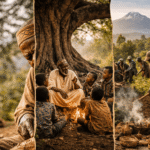
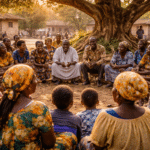
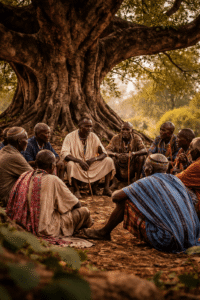
Beneath the sacred Mugumo tree, elders convened not only to talk but to guide the people. They did not write laws; they carried them in memory, in ritual, and in the flow of daily life. Through them, the system of thought that gave birth to one of the most enduring cultures in Africa flowed. The people who followed this guidance were the Gĩkũyũ, and the guiding principles were known as the Ngemi cia Gĩkũyũ; the foundations on which society was built.
These guiding principles were not abstract ideas; people lived them. They governed leadership, defined wisdom, revealed spirituality, defined wealth, and celebrated skill. They were the complete system of thought.
What Are Ngemi cia Gĩkũyũ?
Ngemi cia Gĩkũyũ is an expression that means “the foundational principles of the Gĩkũyũ people.” These principles were shared with the community through the use of proverbs, ceremonies, and storytelling. The Gĩkũyũ elders never separated philosophy from life; they lived it. Each pillar has a unique role to play in the community:
Uthamaki – leadership and authority
Ugo – wisdom and knowledge
Urathi – prophecy and spiritual knowledge
Utonga – wealth and resourcefulness
Ucamba – skill and craftsmanship
These five pillars bring balance to our society.
Uthamaki: Leadership as Responsibility
In the Gĩkũyũ culture, leadership did not belong to one individual. It resided among the council. The elders would sit together, listening more and speaking less. They would consider the situation with the guidance of experience and the interests of the people. No leader stood above the people. Leadership required accountability, and power required humility. A leader who did not listen to advice would not last. The people wanted to be served, not ruled.
Uthamaki, therefore, did not glorify power. It controlled it; it ensured that it remained among the people, in dialogue and with accountability. It is in this way that the Gĩkũyũ developed a government that represented the voice of the people and not the desire of one.
Ugo: Wisdom Beyond Knowledge
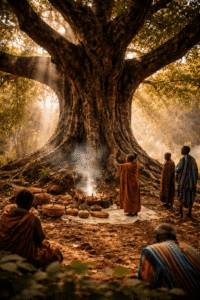
Wisdom among the Gĩkũyũ did not come from a book. It came from life. The elderly carried history in their words. The words were not only in proverbs and stories but also in silence. A wise person not only knew what to say but also when to say it and when not to say anything. By the fireside, knowledge was shared from one generation to another. The children did not only learn but also learned by listening and remembering. The shared understanding of this pillar is: A wise person does not rush to say something. He or she understands first.
Ugo ensured that knowledge benefited the community. The knowledge was not for pride but for living.
Urathi: The Voice of the Spirit
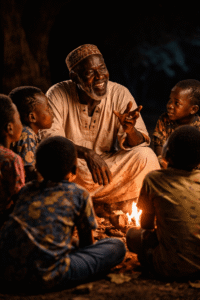
To the Gĩkũyũ, life was not only what the eye could see. To them, the world of the living, the world of the dead, and the world of the divine were intertwined. Spiritual leaders, the seers, prophets, and elders, helped the people interpret the world and keep the three worlds in harmony. Sacred places, too, had great importance. The Mugumo tree was a place of prayer, sacrifice, and communication. The distinction between the spiritual and the physical was not made.
Urathi was the custodian of ensuring that the world was in harmony, not only with itself but also with the unseen world.
Utonga: Wealth as Collective Well-Being
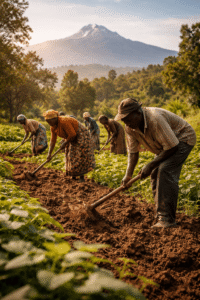
The Gĩkũyũ people did not view wealth in terms of coins and assets. Rather, wealth was defined by one’s holdings of land and livestock, as well as the strength of family and community ties. The ability to provide for oneself and others and thus make life sustainable formed a crucial part of the definition of wealth. People who enjoyed an abundance in resources had the duty to give away much more than they received. Hard work, effectiveness, and success were all valued, but they paled in significance to the need to achieve balance.
Through Utonga, wealth was understood in terms of responsibility and not ownership. The principle encouraged people to be generous and wise custodians of the community’s resources.nIn such ways, Utonga brought wealth back to life and made it possible for resources to sustain families and foster relations between people.
Ucamba: The Pride of Skill
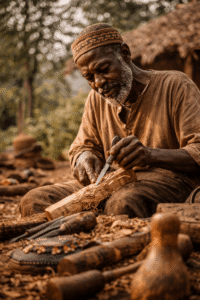
It is through creation that a society thrives. The people of Gĩkũyũ country were those whose survival depended on craftsmanship and skills such as making shelters, fashioning tools, farming, and generally molding things from scratch. For them, the ability to craft anything was crucial to survival and symbolized the ability to exercise discipline, creativity, and focus.
The concept of Ucamba took craftsmanship a step further. The connection between one’s craftsmanship abilities and his contribution to the greater good of a community was made evident in this philosophy. Any person skilled in an art form helped not himself alone but the whole community. From this description, it can be concluded that skillfulness was more than just a necessity. It was an art, something that provided sustenance but also allowed a community member to preserve his dignity by contributing to the community. It preserved his heritage and his identity.
Through Ucamba, the Gĩkũyũ people demonstrated the importance of not just surviving but also living creatively and being useful members of a community.
A Philosophy of Balance
The Five Pillars of the Gĩkũyũ society cannot exist independently; they need each other to achieve harmony.
- Leadership without wisdom lacks focus.
- Wisdom without spirituality lacks meaning.
- Spirituality without wealth is unable to support life.
- Wealth without skill will neither survive nor thrive.
They reinforce each other in order to build a balanced system where there is no overwhelming element or an element that exists on its own. This way, there is proper distribution of power, wisdom, prosperity, and all the resources. From this integrated set, the Gĩkũyũ have developed not only a way of life, but also a philosophy of life that determines their identities, decisions, and societal harmony.
Why Ngemi cia Gĩkũyũ Still Matter
In an era that reveres personal accomplishment, such pillars are of great significance. Such teachings teach that development cannot be realized by achieving personal success alone, but also through collective well-being. It teaches that the leader should serve his subjects, knowledge leads to wise decision-making, spirituality binds the members together, and wealth elevates others besides uplifting the owner.
Ngemi cia Gĩkũyũ are founded on balance. While encouraging the individual’s development, they never promote anything at the detriment of the rest of the community. The leader does not rule but protects and advises while the wealthy does not live separately but shares his riches to empower others. Similarly, the skilled is never proud of his skills but offers them to the benefit of others.
The concept of Ngemi cia Gĩkũyũ is based on social consciousness and sense of belonging. It shows that for a community to prosper, all its members must feel recognized and accepted as part of the larger society. Ngemi cia Gĩkũyũ continue to provide timeless lessons in social values.
Conclusion
Culture was not all that the Gĩkũyũ created; they created a philosophy of life, one that was balanced, responsible, and communal. The Ngemi cia Gĩkũyũ continues to communicate, even in the present day, shaping thoughts, leadership, and relationships.
- Leadership that listens and serves is one of its channels.
- Wisdom that provides insight to decision-making is another.
- Spirituality that binds the living and those unseen is yet another.
- Wealth that uplifts others and moves around is another channel.
- Skill that creates, builds, and sustains is another.
Ngemi cia Gĩkũyũ is a contemporary way of life rather than something from the past; it manifests itself in sharing, dispute resolution, and what people consider as success. In essence, this philosophy tells us that there will be no harmony if progress happens without balance, yet balance brings harmony and continuity. They teaches us a lesson applicable beyond the Gĩkũyũ community: society is successful not because individuals become successful, but because they remind themselves how to live, work, and walk together.



Pingback: The Great Zimbabwe Ruins - Real African Diary