








































Introduction
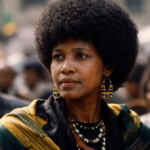
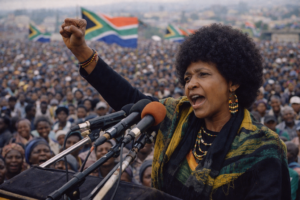
Winnie Mandela is arguably one of the most enigmatic and incredible liberation figures on the African continent. She did not just espouse and advocate for the struggle against apartheid; she bore that struggle on her body, in her home, and in confronting apartheid head-on.
Although many voices within prison walls were silenced, Winnie Mandela came to symbolize the face of resistance within South Africa. The apartheid government was afraid of Winnie Mandela not because of any position, but because she did not allow them to erase her.
Childhood, Culture, and African Formation
Born as Nomzamo Winifred Madikizela in 1936 to a traditional African family living in Bizana in the Eastern Cape, Winnie had spent most of her early years within an African home that was greatly influenced by Xhosa culture, community, and Christianity.
She went on to qualify as a social worker, a rare profession available to Black women in apartheid-ruled South Africa. In this job, she saw first-hand the effects of forced removals, police brutality, dysfunctional families, and racism. While apartheid radicalized many people in theory, apartheid radicalized her through experience.

Marriage to a Prisoner, Not a Husband
Winnie married Nelson Mandela in 1958. Four years later, the apartheid government arrested him. Their marriage immediately became a battleground. From then on, Winnie remained under close monitoring by the authorities. She became the subject of frequent raids at her home by the police, as well as arbitrary arrests. She brought up children on her own as she remained under harassment with the intent of alienating and breaking her psychologically.
Winne has not achieved stardom status because she is Mandela’s wife. She was made dangerous because she would not behave like one.
The Apartheid State Versus One Woman
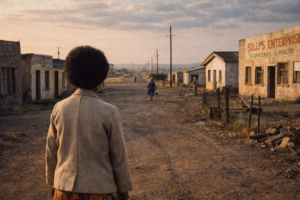
The apartheid regime treated Winnie Mandela with extreme brutality: the authorities detained her through banning orders, restricting her from speaking, forbidding her from attending any form of gathering, and isolating her from the political network. They later exiled her to Brandfort, a rural, hostile town chosen deliberately to sever her influence. As it would later turn out, the regime exported resistance.
In Brandfort, Winnie:
- called upon his organization of local women
- exposed poverty and state neglect
- she transformed isolation into political relevance
Township Politics and the Birth of a Symbol
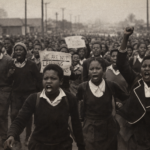
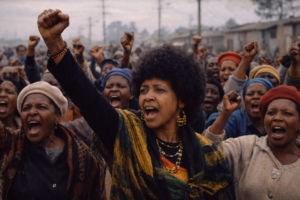
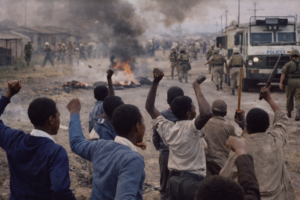
By the late 1970s and 1980s, the townships in South Africa were burning with revolutionary resistance. For the youth, it meant bullets, prison, and death. But Winnie Mandela stood with them. She attended funerals, rallies, and she also confronted soldiers. The house in Soweto had become a center of politics, not by intention but because of necessity.
The Township people called her “Mother of the Struggle” for the following reasons:
- sheltered activists
- spoke when others disappeared
- confronted violence without apology
The apartheid government knew all about symbolism. They knew that Winnie Mandela was a symbol of defiance against their government that could not be incarcerated.
Militancy, Violence, and the Question of Context
Winnie Mandela was known for her militancy during the late apartheid years. Her alleged involvement in violence, particularly with the Mandela United Football Club, remained and continues to be highly controversial. Any deep African reading must confront the following two realities simultaneously:
- Violence characterized apartheid governance as policy.
- The infiltration, the provocation, and the menace were all permanent elements in which liberation movements operated.
It was the apartheid regime that engineered chaos, turned communities against their selves, and manipulated fear. Winnie operated in a moral battlefield, not some courtroom ideal. History often calls for purity from African women while forgiving brutality from the colonial system. That is a distortion of truth.
African Womanhood and Political Defiance
Winnie Mandela challenged all the colonial stereotypes about African womanhood. She flouted silence, obedience, and respectability politics. She demonstrated that African women were able to:
- lead mass resistance
- combine motherhood with militancy
- directly confront state power
Her challenge was to both apartheid and patriarchy.” For the male leadership in the political struggles for freedom, her refusal to play a secondary role was quite troubling.
After Liberation: Revered, Feared, Uncontained
Following the disintegration of apartheid, South Africa commemorated reconciliation. Winnie Mandela could not be categorized with this restoration project. She was still vocal, radical, and unwilling to idealize compromise. Her continued presence served as a reminder to the nation to appreciate the slow arrival of freedom and the continued lag between political and economic freedom.
Yet, across Africa and the diaspora, she remains:
- a feminist icon
- a symbol of uncompromising resistance
- a reminder that liberation hurts those who strive hardest for it
Conclusion
Winnie Mandela was not meant to offer consolation. She symbolized struggle in all its unglamorous, raw and unmitigated glory; messy, painful, fearless and ongoing. Winnie Mandela lived her life, embodying the victories and complexities of a liberation struggle against arguably one of the most evil regimes of the twentieth century. She had no need of history being accommodating towards her nor did she demand forgiveness from history. Rather, she demanded to be acknowledged by history.
In the absence of hope for freedom and justice, Winnie Mandela became an embodiment of resistance for many South Africans. Her fearless stand against terror, isolation and persecution kept alive the struggle for the end of the apartheid regime in South Africa. To properly remember Winnie Mandela is to know that African freedom was not granted but rather achieved at great personal sacrifice on behalf of women and men who were committed to never disappearing. Among the countless voices, that of Winnie Mandela stands out.




I found this post very helpful.