
Introduction
Stone Town is not a place you simply visit; it’s a place you feel. It is a living museum, where coral-stone houses whisper secrets of sultans, sailors, revolutionaries, and spice traders. The scent of cloves wafts through its narrow alleyways like memory itself, and each carved wooden door speaks of a story more ancient than empires.
To step into Stone Town is to step into Swahili soul. A mix of Africa, Arabia, Persia, India, and the Indian Ocean. It is a cultural crossroads chiseled into stone, softened by sea breeze, and polished by centuries of human passage.
Here, history breathes. Culture sings. Heritage lives, not behind glass, but in the daily rhythm of life.
A City Built From Coral and Carved in Story
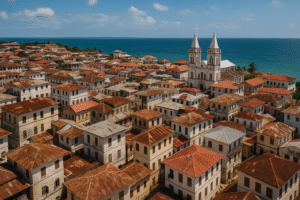
The architecture of Stone Town is not just beautiful, it is symbolic. Houses are of coral stones compressed together, glowing gold at sunrise, cooling to deep bronze at sunset. The wooden balconies hang over narrow alleys no wider than a man’s shoulders. The walls bear fingerprints of traders, fishermen, freed slaves, and merchants who shaped the Swahili coast.
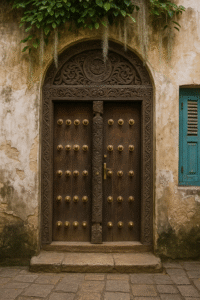
Probably the most iconic of Tucson’s symbols are its wooden doors: massive, hand-carved masterpieces decorated with brass studs. Some tell stories of Indian influence; others carry Quranic inscriptions. Every door is a biography, every carving a chapter. Walking these streets is like reading a library without opening a single book.
The Soul of Spice: A Legacy of Trade and Story
Zanzibar is the heart of the Spice Islands. Cloves, cinnamon, nutmeg, and cardamom have shaped the island’s economy, cuisine, and identity. Spice caravans once set off from Stone Town to Arabia, India, and further inland into Africa, carrying wealth and stories with them.
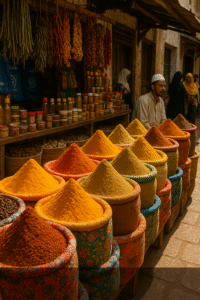
Today, spice markets burst with color, the piles of turmeric neatly stacked, the vanilla pods lying braided as ropes, the fresh ginger perfuming the air. The vendors take up Swahili rhythms that dance across busy stalls:
“Karibu dada! Karibu kaka!” (Welcome, sister! Welcome, brother!)
To smell these spices is to inhale history.
Where Africa Meets the Sea: The Waterfront of Memory
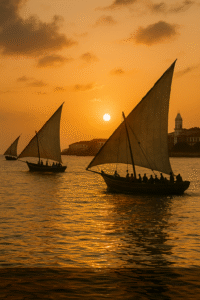
The sun sets over the Indian Ocean, and Stone Town changes. The dhows cut across the horizon like shadows of an older world. The fishermen drag in their nets, and with the evening, children run, playing taglike games near Forodhani Gardens, where night-market vendors light coal fires to prepare Zanzibar’s famous street foods: octopus, urojo, sugarcane juice and Zanzibari pizza.
The sea here is more than scenery; it’s the city’s bloodstream. It carried traders, language, religion, music, and all the cultural influences that make Stone Town a world of its own.
Swahili Culture Alive in Every Breath
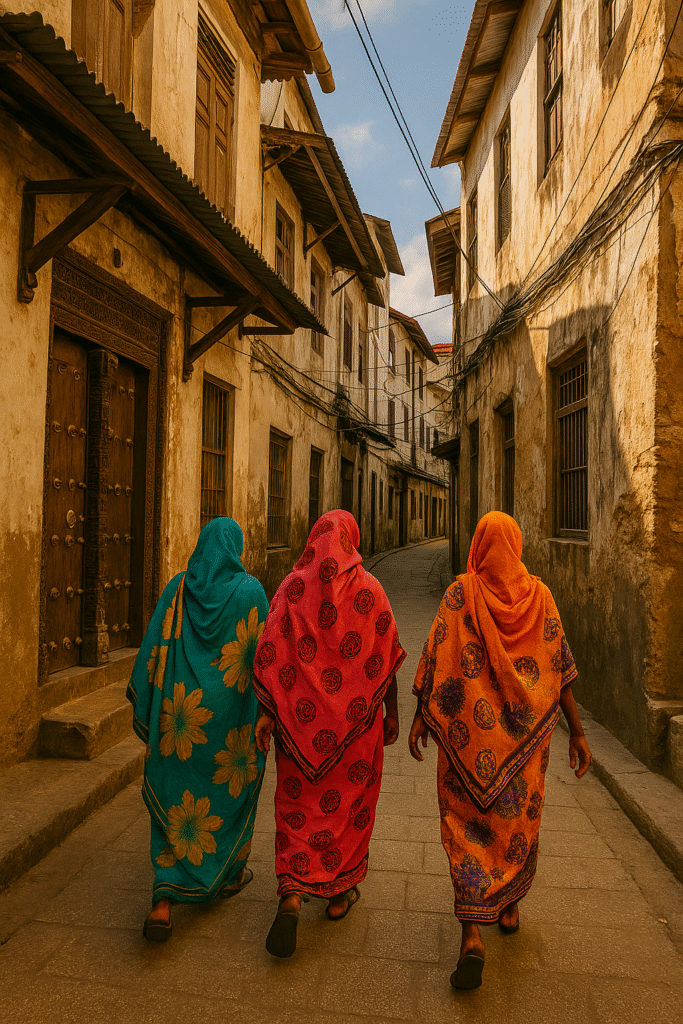
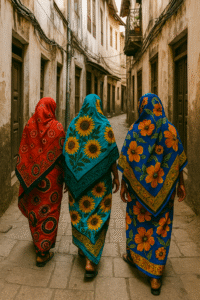
Stone Town is one of the few places where you can hear Swahili spoken in its purest, most melodic form: the coastal tongue shaped by centuries of trade. Children greet visitors with shy smiles, women in colourful kangas walk with a undulating swing of the hips, and the elderly sip coffee outside centuries-old mosques. You feel culture here, not as performance but as daily life.
- The call to prayer echoes between stone walls.
- Vendors of coconut hum as they chop fresh madafu.
- Taarab music drifts from open windows.
- Elders debate politics in the shade of fig trees.
This is not a museum frozen in time, this is a city alive with heritage.
A Tapestry of Africa, Arabia, and the World
Stone Town is among the few places where cultures blend:
- African warmth
- Arab elegance
- Persian artistry
- Indian color
- European architectural traces
It’s a reminder that identity, much like the ocean, is fluid: moulded by tides and time, by travel. Food tells the same story: biryani, pilau, octopus curry, chapati, coconut stews. Every flavour is a journey, every dish a map.
The Heartbeat of Heritage Sites
Within Stone Town, there are monuments of great significance:
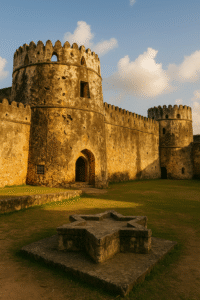
- Old Fort — the ancient defense wall of stone and coral.
- House of Wonders was once the tallest building in East Africa.
- The Old Slave Market — a sobering reminder of Zanzibar’s role in the slave trade.
- The Sultan’s Palace – echoing with the grandeur of an island kingdom.
These places are not static histories; they are emotional landscapes.
Stone Town Is Not a Destination; It Is an Experience
The past walks beside you in Stone Town. It hums in the markets, whispers through alleyways, glitters on the ocean, and smiles from the people. It is a place where heritage lives not behind barriers, but in everyday life.
Stone Town isn’t only one of the oldest cities in Africa, it is one of its brightest souls. Leaving Stone Town means leaving with pockets full of memory and a heart full of history.