Introduction
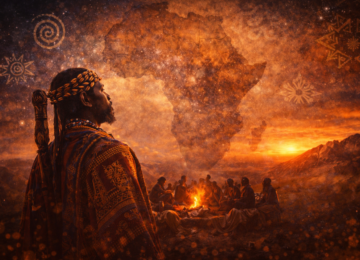
For centuries, the drum has been beating throughout Africa even before the human voice. From one place to another, from village to village, across rivers, fields and ages, the message of the drum would call people to come together and dance, sing, recall, or commemorate. For those who understand the cultural code of the drum, there is much more behind this instrument than mere rhythm. In such a way, music and dancing have always been more than mere recreation. They were an inseparable part of major events in people’s lives from birth and naming, through initiation and wedding, harvest celebration and funeral, and up to commemoration of the past. Any beat, dance, or chant could convey certain messages about identity, community, belonging, or religion. The ways these arts are practiced vary widely all over the continent. Nevertheless, many communities employ music and dance as a means of integrating individual performers and audience into one cultural process of communication.
The Drumbeat of Life
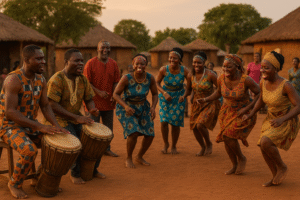
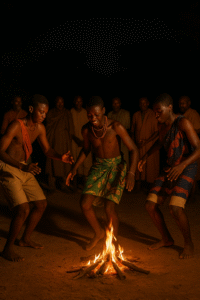
In most African societies, the drum plays a much larger role than merely being an instrument to play music. It may be used to mark ceremonies, express emotions, create rhythm, and bring people together. In some Akan communities, drums have been linked with proverbial messages and communication that is either royal or ceremonial in nature. Yoruba culture, on the other hand, allows for drums to accompany religious ceremonies and spiritual performances. Drums and rhythmic performance have also been significant in ceremonies, celebrations, and expressions among the Zulu and other southern African cultures. The djembe and ngoma are two examples of different forms of African drumming rather than one form that is found throughout the continent. Once the beat is started, the dancers react with movement, forming a dialogue between sound and movement. Music can be an avenue of connecting the past with the present, bringing both spiritual and mundane activities together in the same community setting.
Birth and Naming Ceremonies
In most African communities, the coming of a child is usually marked by songs, music, prayer, ululation, and gatherings. Birth is not always viewed as a simple affair, in which a couple gives birth to a child within the confines of their homes, but rather a process through which the child becomes part of a bigger network of relations. For example, in Yoruba societies, naming ceremonies provide a unique opportunity for members of a family and the elderly to receive a child in their community. Prayers, songs, praise names, and blessings can be some of the ways of welcoming a child in the community and wishing him or her certain qualities in life. In the case of the Kikuyus of Kenya, traditional notions of birth have also involved the child being welcomed into the family, community, and nature. There could be music, dances, and other activities in the process of welcoming the new-born baby. The type of rhythms used in such ceremonies could be soft and happy, due to the significance of the arrival of a new life.
Initiation Rites
Initiation has traditionally been a rite of passage from one life stage to another among various African communities. Initiation songs, dances, teachings, and rituals vary across communities. However, music can foster an environment characterized by discipline, identity, and transformation. In the Xhosa culture, the ritual of ulwaluko has traditionally been linked with male initiation; however, there are various rites of passages for young women and men in other communities. In such communities, the ritual can include music and movement alongside teachings and celebrations. Rhythmic performance may foster endurance, confidence, and identity. It means that the dance will go beyond the physical aspect to take up the narrative of transitioning into adult life and responsibility. It is evident that the elders and other community members are critical to guiding the younger generations in the transition process. Initiation can link younger generations with the values and traditions of the community. The rhythm is used to emphasize the fact that there will be some changes, and adulthood brings responsibilities to individuals as well as communities.
Weddings: The Harmony of Two Lineages
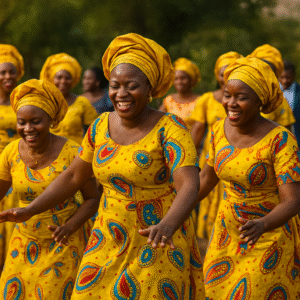
In many weddings in Africa, music and dance make the event not just about two individuals but also about bringing together two families and the entire communities to which they belong. It becomes the venue for two groups of people, each of whom has a history, friends, and social relations to share. Music becomes the language with which people express their happiness and goodwill. In the case of the Ewe community in Ghana, agbadza is among the traditional dances that are used during such social and ceremonial events. Various communities in Kenya have their own wedding songs, dances, and music performances. For example, in the case of Kikuyu, mwomboko evolved from the interplay of indigenous movements and colonial ballroom dancing. Such an approach proves that African traditions of dance may change without losing their local meanings. Ululation, drumming, singing, and synchronized movements make the event a performance for the families and the invited guests who will take part in it rather than watch.
Harvest Festivals
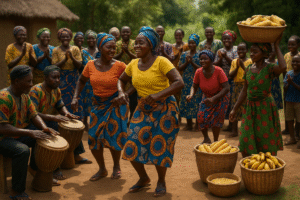
Whenever harvest times come and the community comes together to show appreciation for the bounty, music and dance have usually been an essential component of this form of thanksgiving. Through such harvest festivals, the connection between agriculture and society becomes clear because one is made aware that food production is dependent on the availability of land, labor, favorable weather conditions, and cooperation among others. For example, the Homowo festival celebrated in Ghana is linked to commemoration of times of scarcity and the success of overcoming it through food and music festivities including drumming, dancing, and feasting. There are many other harvest festivals among different African societies where their nature is determined by local produce, culture, beliefs, and climate. At such events, both men, women and even children get involved in singing, playing musical instruments, dancing and having common meals. The motions and rhythm become a communal performance of thanksgiving that highlights agricultural activities in the center of the celebration. Thus, instead of seeing the abundance as an individual effort, these cultures view it as the collective effort of survival.
Mourning and Farewell
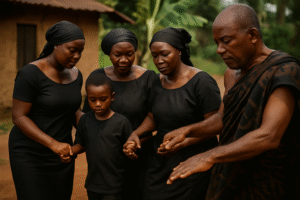
Another way through which music and dance may serve in some of the most challenging times within the African community life is when there is death, mourning, and farewell. Music, drumming, ululation and ceremonial dances are used within various communities as means of expressing grief through music while respecting and remembering the deceased person. Within the Dagara community of Burkina Faso, the process of mourning involves singing, expressions of communal grief, and other ways through which grief may be confronted within the community. Tero buru is one of the most common mourning processes among the Luo community in Kenya. These kinds of practices vary widely in significance and form and should not be viewed in simple terms of “dancing away” from grief. The music provides a common ground for those feelings that people find it hard to share individually. It brings mourners together, it expresses the memories and gives room for communal support. It is within this context that rhythm becomes an expression of grief and reminiscence. Tears, songs, movement, silence and narrative may exist at once.
Modern Echoes
Nowadays, however, African music and dance continue to develop as they circulate among traditional rituals, churches, schools, festivals, recording studios, nightclubs, and the Internet. In places like Lagos and Nairobi, contemporary artists often incorporate indigenous rhythms and instruments in their use of electronic music, Afrobeats, hip-hop, gospel, jazz, and other world music genres. Musicians may reinterpret older styles of music without directly imitating them, thus making music that will appeal to younger generations. Moreover, traditional dance has received new venues in cultural festivals, schools, theater, television, and online venues, in which performances are no longer limited to the community they originated from. This does not mean that every modern performance retains the same cultural significance as the ritual of old. Context is everything, and cultural practices may change when they enter commercial or technological spheres. But the ongoing presence of African rhythms in contemporary culture reflects the adaptability of African music and dance. Drumming, singing, dancing, and communal reaction continue to serve as the wellspring of creativity.
Conclusion
Music and dance have been a part of life events such as birth, initiation, marriage, harvest, mourning, celebration, worship, and remembrance all across Africa. While they take different forms depending on the community, what remains consistent is their ability to bring people together. The beat of a drum can signify something, songs can be used to retain memories, and dances can convey feelings beyond words. It has also been interesting to see how adaptable these traditions have been. From being practiced in villages, they can now be performed in churches, schools, theaters, festivals, recording studios, and even digitally without vanishing away. However, one should bear in mind that there is no one African rhythm or dance. Thousands of communities, languages, history and cultures exist in the continent. But one thing that is common in many of them is that they use music and movement as tools for expression and socialization. Dances have always served various purposes in African communities including celebration, remembrance, mourning, welcoming and even belonging.
As long as the communities keep practicing these traditions and passing them down, the rhythm of Africa lives in its cultural memory.