Introduction
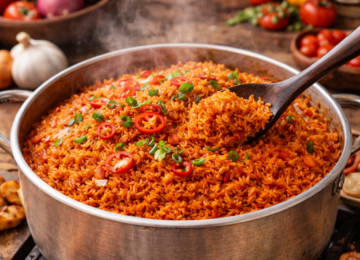
Ethiopia is a country characterized by ancient kingdoms, spiritual heritage, and numerous cultural groups that have been brought together by rhythm, ceremony, and cuisine. In the array of culinary delights found in Ethiopia, few can compare with the significance of Injera and Doro Wat. The spongy bread that is known as Injera, which is made from teff and acts as a serving plate as well as utensils, and the slow-brewed chicken stew known as Doro Wat, flavored with berbere spices, are recognized as the national dish of Ethiopia.
In more ways than one, Injera and Doro Wat represent hospitality, unity and celebration. These meals are eaten from the same platter, thus stimulating interaction, generosity, and unity. Whenever these meals are served at religious ceremonies, marriages, or family occasions, they remind Ethiopians of the fact that food is more than just sustenance—it is a way of passing on traditions and strengthening bonds within their community that dates back several thousand years.
Injera: The Bread That is Also a Plate, a Spoon, and a Story
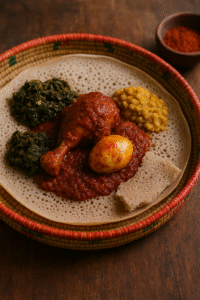
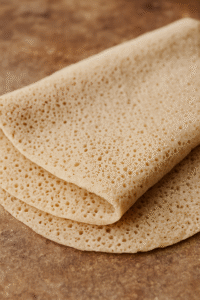
Injera is not only a bread but also the base of the traditional Ethiopian cuisine and cultural heritage. It is made of teff, an ancient grain that originates from the Ethiopian Highlands. Teff is extremely nutritious and drought-tolerant, and it is closely associated with the farming practices that have been used in Ethiopia for many years. Injera tastes slightly sour and has a soft, spongy structure that is unique to the bread.
Injera can be described as a product that takes time and effort to prepare. Teff flour is mixed with water and is fermented in order to create the batter which is then poured in circles on the clay griddle called a mitad. While baking, the small holes appear in the injera, allowing it to absorb the flavors of the stews that are put on top of it.
In Ethiopian households, injera is used as a plate, a spoon, and food. The whole family gathers around a table covered with injera and tears it in order to eat their meals together from the same dish.
Doro Wat: The Spicy, Ceremonial Chicken Stew
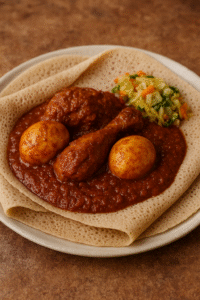
While injera could be considered the basis of Ethiopian cooking, Doro Wat is the crown of the traditional dishes of this land. Known as the national dish of Ethiopia, it is a chicken stew, which is famous for its deep taste and aroma. The main ingredient of this stew is berbere, which is a traditional spice blend of this country and includes chili, cumin, fenugreek, cardamom, cloves, korarima, garlic, ginger, basil and other spices in the right proportions.
The cooking process involves a lot of care and patience. Firstly, onions are browned without using any oils. Then the berbere and spiced clarified butter called niter kibbeh are combined to give the signature taste. Finally, the chicken pieces are slowly cooked until tender, and eggs are hard boiled and then added into the stew towards the end.
Doro wat is served at special occasions in the lives of Ethiopians. They cook this dish at times of religious festivals, weddings, celebrations and other significant events.
Conclusion
Eating injera and Doro Wat is not just eating, but participating in a tradition which brought families of Ethiopia together for ages. The meal is often followed by a famous coffee ceremony of Ethiopia where roasted coffee beans, incense and slow talk create a hospitable environment. Food is cooked patiently, shared generously, and eaten while enjoying the company of relatives and friends, embodying the world vision which emphasizes the importance of community, respect, and unity.
Today, Ethiopian dishes have traveled across continents while maintaining their identity. Ethiopian restaurants are found today in Addis Ababa, London, Berlin, Toronto and Vancouver among many other cities around the world. Every platter of injera and Doro Wat served at these restaurants has a tale of culture, persistence and belonging associated with it. Every plate of injera and Doro Wat serves as a reminder of Ethiopia’s greatest recipes which include spices, history, hospitality and community spirit.