










































































Introduction
In the heart of Africa, where the soil is rich and the wind carries songs of the ancestors, there have always existed beings who walk between the visible and invisible worlds. They are known by many names: sangoma in Southern Africa, mũganga in East Africa, babalawo among the Yoruba, laibon among the Maasai, and inyanga among the Zulu. Though the title may change, their purpose has always remained the same: to heal, to guide, and to restore balance. Yet today, these healers find themselves in a world where modern medicine is the chief occupant of hospitals and pharmacies and where many associate indigenous healing with witchcraft and superstition. To some, the healer is a symbol of wisdom; to others, a practitioner of the forbidden.
So the question is: When did wisdom become witchcraft? And who defined that the African way of healing was inferior?
The Ancient Science of the African Healer
Long before the advent of colonial medicine, Africa had its own medical systems rooted in observation, experimentation, oral tradition, and spiritual philosophy. One did not wake up and decide to be a healer but was called into this work through dreams, visions, or ancestral visitations. This was no light calling, for it carried great responsibility-the healer thus became the spine of the community. The African healers understood the human being not as a structure of flesh and bone but as a many-layered being: body, spirit, memory, ancestry. In order to heal illness, one needed to understand not just symptoms but origins. They believed that sickness could rise from:
- A physical imbalance: infection, toxins, fatigue
- An emotional burden: grief, heartbreak, fear
- Spiritual perturbation: ancestral disconnection, or broken communal ties
Treatment was not simply a matter of taking herbs, but involved talking, narrating stories, chanting, praying, purification rituals, interpreting dreams, and herbal diagnosis. This is an integrated approach, which modern medicine is only now beginning to appreciate.
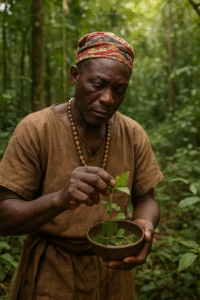
Herbal Wisdom: Medicine Rooted in Nature
The role of healer was bestowed on an individual considered to be familiar with the forest. Unlike guesswork, this was informed by experience, experimentation, and memory shared generation after generation. Healers were aware of specific roots for fever reduction, barks to relieve labor pains, leaves for blood purification, and seeds to combat infections. Seasonal changes, soil composition, and the characteristics of plants made up their medicinal knowledge base. This information was communal, transferred between generations through elders and apprentices. Healing practices were thus scientific as well as traditional, based on evidence.
It is important to note that many contemporary pharmaceutical products originate from plant compounds used by African healers. For instance, quinine for malaria originated from bark. Willow provided the basis for aspirin. Poppy resin produced morphine. There is thus a commonality between the two healing practices. However, modern medicine recognizes plant compounds but disregards indigenous knowledge as primitive. This is neither true nor factual. The former is an indicator of bias while the latter fails to acknowledge the validity of indigenous knowledge.
The Spiritual Role of the Healer
For the healer of Africa, healing requires the restoration of spiritual equilibrium. Sickness is a sign of disconnection; a forgotten debt to the ancestors, a break in the chain of kinship, or silent suffering. Not only the body cries out; memory, relation, and spirituality do, too. And the healer hears their call. In doing so, the healer assumes multiple roles:
- Counselor to people struggling with the burdens of existence
- Medium to individuals seeking approval from the spirits of their forebears
- Guide during times of confusion and crises of belief
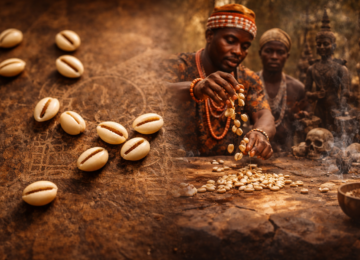
By means of divination, whether through bones, sacred relics, mirrors, or trance states, the healer penetrates beyond superficial symptoms. They discern patterns, track genealogies, and analyze dreams. They uncover the underlying story behind the sickness; its stresses, its sorrows, and its mysteries left unresolved. For the uninformed observer, such practices will seem mystical. Within the context of African philosophy, however, it represents a holistic approach to understanding. For life, it asserts, exists as a unified whole. Its physical and spiritual dimensions evolve in tandem.
To heal, then, entails more than treating the body. It involves reconnecting oneself, one’s community, and even one’s ancestors.
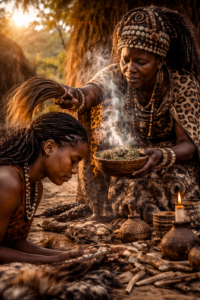
So Where Did the Witchcraft Label Come From?
The demonization of African healing, thus, was not something inherent in the practice but stemmed from the misunderstanding of colonizers as well as their attempts to control the process. In response to encountering unique African spiritual traditions such as drumming, chanting, ceremonies, communal dancing, and talking to the ancestors, the Europeans responded by interpreting these practices according to their own religious beliefs, labeling any deviance from their teachings as pagan and evil. Very soon, this interpretation was backed up by governmental policies criminalizing traditional healing as witchcraft. In addition, churches actively promoted the idea that spiritual guides were forces of evil instead of guardians of knowledge.
Finally, urbanization and westernized education further contributed to this change in attitude towards the practice. Many Africans gradually started to consider traditional medicine as an outdated belief system and tried to legitimize their knowledge in the eyes of the rest of the world. All these factors explain why the term witchcraft in this context is a reflection of colonialists’ biases against African healing. At the same time, the tradition has survived despite all the criticism.
The Revival of Ancestral Healing
However, today, there is a silent revolution taking place. Africans’ youth is questioning its origins and the ways to maintain their health and their heritage. They seek the wisdom of the elder community, no longer regarding them as a fossilized remnant from the past, but as the holders of knowledge. All across Africa, there is an increase in cooperation. Medical practitioners work with herbal healers, who share the information on how plants can help alleviate pain and treat diseases. Universities, cultural institutes, and other entities start documenting the medicinal uses of local plants in order to save this knowledge.
In addition, there is also a change in perceptions. The stigmatized aspects, which were ridiculed only a few years ago, receive attention. Although, the stigmatization does not disappear all at once, it gradually becomes less and less prominent from one generation to another. Such changes do not aim at rejecting conventional medicine. On the contrary, they seek to bring harmony between physical healing methods and spiritual practices, science and ancestors’ wisdom. Because truth does not pass away. It just bides its time until people become ready to revive it and appreciate.
Conclusion
Using the term “witch” for healers in Africa shows ignorance. Moreover, it discredits the rich culture of knowledge accumulated by these healers. They have maintained systems where community, nature, spirit, tradition, and medicine are all united in one system. Africans believe in the harmony between different spheres of life. That is why they say that health goes beyond not suffering from diseases. For Africans, a person should be healthy physically and spiritually.
It is wrong to assume that healers are evil people. On the contrary, they are representatives of the spiritual realm. Moreover, they connect people with other worlds and maintain the tradition and memory passed on by our ancestors. Ancestral people were not ignorant. In fact, they observed everything that happened around them. As a result, they were able to accumulate knowledge which helped them survive. In addition, they did the work of scientists and doctors. The point is to combine ancient wisdom with knowledge developed by science. Only in this way will it be possible to achieve real healing.



Way cool, some valid points! I appreciate you making this article available, the rest of the site is also high quality. Have a fun.
Pingback: How African Traditional Healers Bridge the Physical and Spiritual Worlds - Real African Diary