Introduction
In Africa, the smell of fermenting sorghum is evident in courtyards, homes, and public meetings, all with a history of thousands of years. Before industrial brewers revolutionized the drinking habits of the continent, beer was being produced using local grains through knowledge that had been passed on from generation to generation. Sorghum, a grain which is suitable for Africa’s tough conditions, came to be a vital part of this culture of brewing beer. But beer has always been more than just a drink in many African communities. It is used during ceremonies, as a welcome drink, as a way of paying respects to ancestors, and to bring families together during critical events. The process of brewing it has been as much part of the tradition as its consumption.
From umqombothi of Southern Africa to the pito of West Africa or burukutu of West Africa, all these drinks provide a great window to the rich food culture of Africa. Each has its own ingredients and method of making, along with its own history.
Roots of an Ancient Brew
Sorghum plays a significant role in the agricultural history of Africa. This resilient cereal grows well in conditions that other crops cannot tolerate. Its grains have been used for thousands of years to make porridge, flatbreads, and other traditional foods. However, the ability to ferment sorghum grain has also made it a valuable ingredient of beer.
Traditional beer brewing usually includes the malting, cooking, and fermentation of the grain; however, there can be many variations depending on the local customs and traditions of the specific community. While some communities use sorghum along with millet and maize, others use specific malting and fermentation methods. Although the traditions of brewing grain-based beers in Africa have existed for many centuries, it is impossible to talk about one origin and even one way of spreading these traditions across the continent. Nevertheless, it is evident that sorghum brewing has become part of the local cultures and agricultural traditions.

Brewing Traditions Throughout the Continent
There is no such thing as an African sorghum beer; rather there is a wide variety of beer, unique in many respects, created on the basis of indigenous grains, climate conditions, technology and customs. In Southern Africa, the most popular traditional beer is umqombothi, made from sorghum and maize, a dense and opaque beer which is drunk at gatherings and major ceremonies of the Xhosa and Zulu communities. Busaa is a traditional beer in Kenya, whereas mtama is a beer in Tanzania. There is another group of beers – pito and burukutu in Ghana and Nigeria and dolo in Burkina Faso and neighboring Sahel regions. In addition, there are such varieties of beer as ikigage in Rwanda, merissa in Sudan, and doro and Chibuku in Zimbabwe.
There can be differences in naming, brewing process, time of fermentation, density, and circumstances of consumption. There are some kinds of beer that are brewed in households, but there are those that entered commercial markets. The common point about all these varieties is their skillful fermentation process, which turns indigenous grains into food and drink.
The Women Behind the Brew
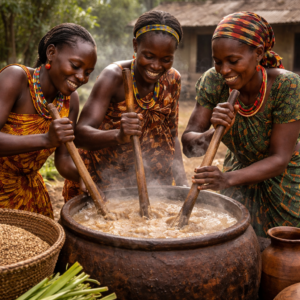
In many African societies, women have been playing a pivotal role in making of traditional grain beer. This skill is passed down from mothers, grandmothers, and other experienced brewers to younger generations, teaching them how to choose grains, malt and ferment beer. This requires patience and judgment in recognizing changes caused by temperature, ingredients used and the season. Moreover, brewing has offered opportunities for women to earn money and take part in local economies. Selling of traditional beer may assist in earning some money that goes towards paying for school fees or keeping financial independence. Thus, the place of brewing turns into a place of exchanging of information and strengthening of social ties among women.
Women’s contributions do not stop with the production of the beer. Preserving the recipes and modifying the processes according to the changing situation is part of their contribution in ensuring that the culinary tradition is preserved. Their knowledge is very significant in explaining how such traditions continue through generations.
The Communal and Spiritual Role
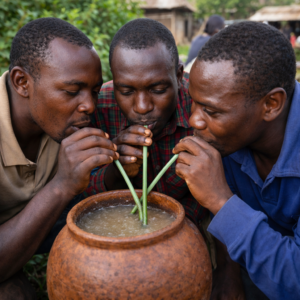
Traditional sorghum beer has great significance in the spiritual and social lives of several African societies. According to the different traditions practiced by different communities, the drink may be served during weddings, rites of passage, harvest festivities, funerals, and family gatherings where extended family members meet. Serving from the same cup or serving beer to guests is an expression of friendship and respect that turns an ordinary agricultural product into a social symbol.
In some Southern African cultures, there is also a tradition of using traditional beer in ancestor reverence rituals. There could be specific rites of preparation and presentation of beer which would reflect connections among living family members, dead relatives and the spiritual legacy. In other communities grain beer is also used during meetings of community discussions, celebrations or neighbourly reunions.
These traditions are neither practiced everywhere in Africa nor are alike. There are communities where beer has more of a spiritual significance than a social one while in others, it might mean the opposite. The common thing about all these traditions is the significance of gathering.
Modern Revival and Commercial Adaptation
Industrial brands like Chibuku in Southern Africa have now commercialized sorghum beer and bottled the traditional taste for urban consumption. However, in towns and villages, the old practice still goes on; untouched by machine, hand-stirred, and sanctified by tradition.
There is a new generation discovering its value again; a natural, probiotic, and culturally authentic beverage that roots them to identity in a rapidly globalizing world.
A Taste of Africa’s Soul
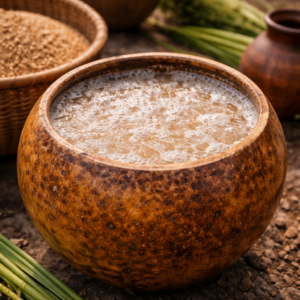
To drink sorghum beer is to experience the earth, the stories, and the soul of Africa. It is not just fermentation, it is memory trapped in flavor. As elders raise their calabash and youth rediscover the brew afresh, traditional African sorghum beer remains what it ever has been: a living bridge across the divide between past and present. A toast to identity, to unity, and to the enduring force of tradition.